English
 For Schools
 For Homeschool

The Keeper of the Seafloor
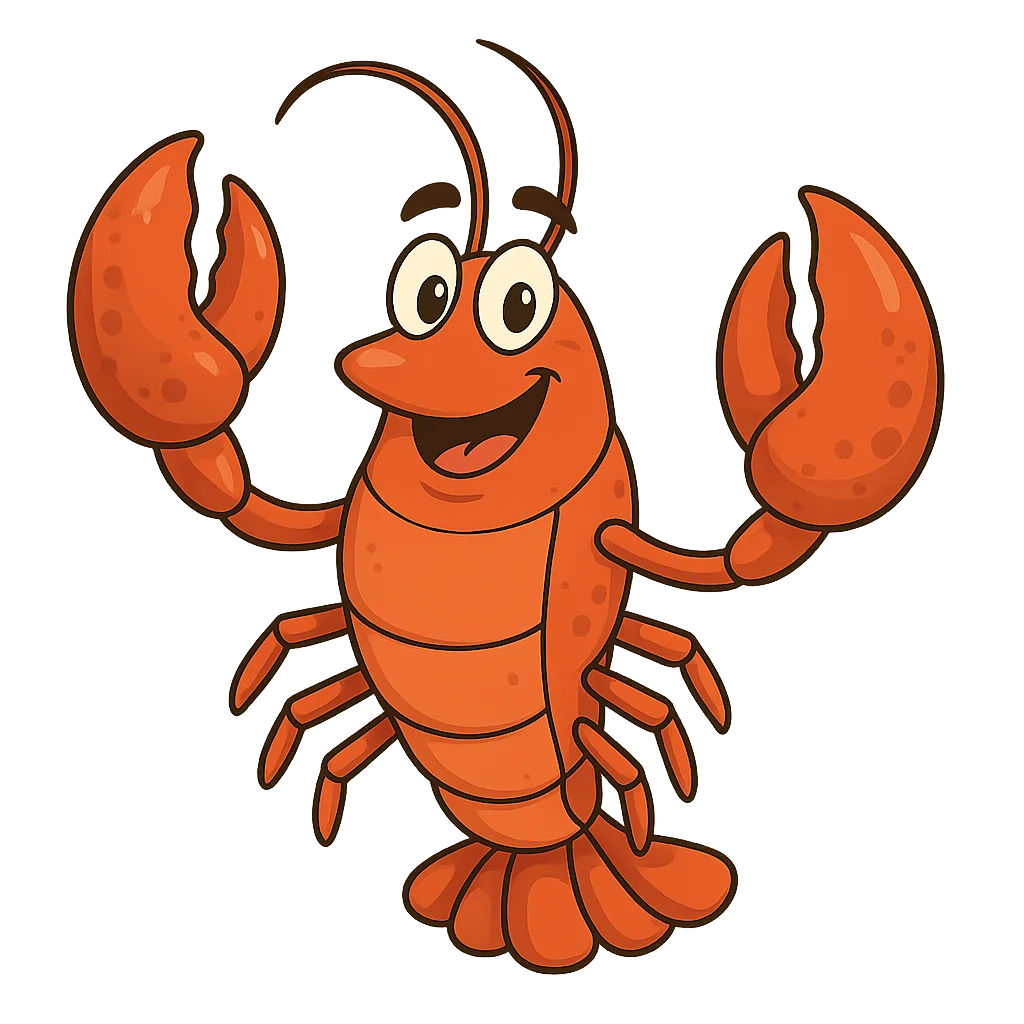
Hello! My name is an American lobster, and my story begins not with a roar or a rush, but as a tiny, quiet speck in the vast Atlantic Ocean. I didn't have a cozy nest; instead, I started my life as one of thousands of eggs my mother carried safely tucked under her tail. When I hatched, I was a larva, no larger than a mosquito, and I was immediately swept into the currents. For the first few weeks of my life, during the summer of my hatching year, I was part of the plankton, a drifting community of tiny organisms floating near the sunlit surface of the ocean. This was a dangerous time. To grow, I had to molt, shedding my too-tight shell to reveal a new, soft one underneath. Each time I molted, I was completely vulnerable to predators until my new armor hardened. I went through this scary process multiple times, growing a little bigger with each change. Eventually, I became just heavy enough to sink, leaving the drifting world behind. My journey downward was the beginning of a new chapter: my search for a permanent home on the rocky seafloor.
Finding my place on the ocean bottom was like discovering a new world. The seafloor was a kingdom of shadows, rocks, and sand, and I searched until I found the perfect rocky crevice to call my own. This little cave became my fortress, protecting me from predators while I focused on my most important jobs: finding food and growing. For a lobster, growing means molting, and it's a lifelong process. I had to shed my old, constricting exoskeleton to expand into a larger one. This is slow work; it can take me five to seven years just to grow to about one pound in weight. To find my meals, I rely on my two very different claws, which are my most essential tools. I have a large, bumpy 'crusher' claw, which is powerful enough to smash through the hard shells of clams, snails, and crabs. My other claw is a sharper, quicker 'cutter' claw, perfect for tearing my food into bite-sized pieces. Life here involves skirmishes with other sea creatures, and sometimes I might lose a leg or even a claw in a fight. But I have a kind of superpower: I can grow it back over my next few molts, a process called regeneration.
Navigating my dark, underwater world would be difficult if I relied only on my eyes. My eyesight isn't very good, especially in the deep, dim light of the seafloor. But what I lack in vision, I make up for with my other senses, which are truly incredible. My two long antennae are constantly waving and exploring the water around me, but they do more than just feel. They, along with thousands of tiny bristles on my legs, can taste and smell chemicals in the water. This remarkable ability allows me to detect my next meal from far away, long before I can see it. It also warns me of approaching danger, giving me time to retreat into my crevice. Thanks to these adaptations, we lobsters can live for a very long time if we are lucky and avoid predators and traps. Some of my relatives have been known to live for over 100 years. The largest of my kind ever recorded was a true giant, found off the coast of Nova Scotia in 1977. He weighed an astonishing 44 pounds, a testament to how long and large we can grow.
My life is about more than just surviving and growing; I play a vital role in my ocean home. You could call me a caretaker of the seafloor. As both a predator and a scavenger, I help keep the marine ecosystem in balance. By hunting, I help control the populations of other animals like sea urchins and crabs. By scavenging, I clean up the leftovers and decaying matter on the ocean floor, which keeps the environment healthy. My kind has shared the ocean with humans for a long time. The first major lobster fisheries began way back in the mid-1600s. Today, I am glad there are many rules in place to protect us. There are size limits to make sure we have a chance to grow, and laws require that any egg-carrying females are returned to the sea to ensure the next generation. These conservation efforts help my family and I continue to crawl, dig, and thrive in our Atlantic home, playing our important part in the great ocean story for generations to come.
Activities
Take a Quiz
Test what you learned with a fun quiz!
Get creative with colors!
Print a coloring book page of this topic.