English
 For Schools
 For Homeschool

A Fox of the Frozen North
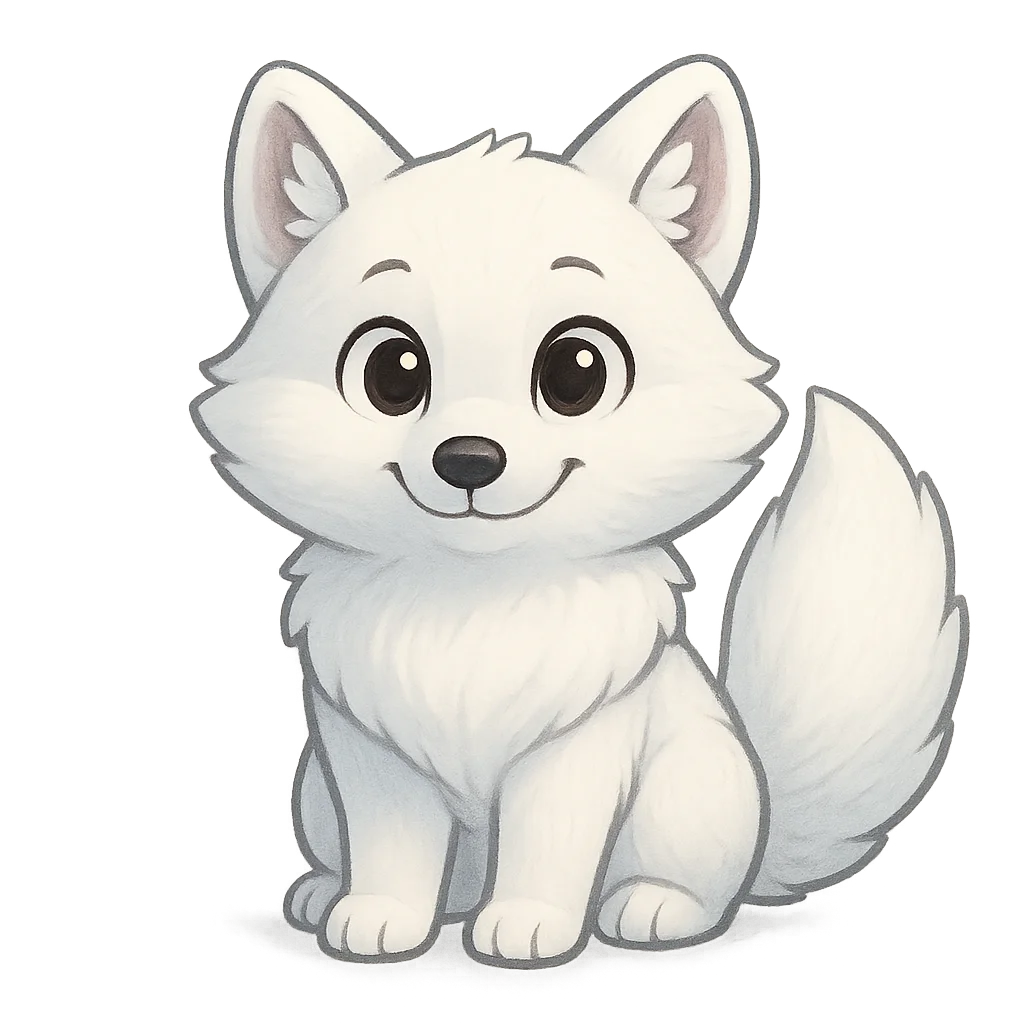
Hello from the top of the world. My name is often spoken on the wind here, whispered as the polar fox or the white fox. I am an Arctic Fox. My home is the vast, cold tundra that circles the northernmost parts of the planet—a land of snow and ice that holds a surprising amount of life. To scientists, I am known as Vulpes lagopus, a name that means 'hare-footed fox'. They gave me this name because of the thick fur that covers the pads of my paws, which act like snowshoes and keep my feet warm. This is just one of the special adaptations I have for surviving in this extreme environment, but the most famous is my incredible, color-changing coat.
My coat is a masterpiece of survival, and it undergoes a remarkable transformation twice each year. During the long, dark winter, I am wrapped in a thick, luxurious coat of pure white fur. This coat is so dense that it traps a layer of air against my skin, insulating me from the biting cold. It also provides the perfect camouflage, making me nearly invisible against the snow as I hunt. But when the seasons turn and the snow begins to melt around May, I start to shed this heavy winter layer. In its place grows a shorter, thinner coat of brownish-gray fur. This new look helps me blend in with the rocks and sparse vegetation of the summer tundra. My entire body is designed to conserve heat. My ears are short and rounded, my nose is small, and my magnificent, bushy tail is long enough to wrap around myself like a warm blanket when I curl up to sleep.
Life in the tundra requires skill and resourcefulness, especially when it comes to finding food. My ancestors have honed these survival skills since the Pleistocene epoch, thriving through ancient ice ages. My favorite meal is the lemming, a small rodent that scurries in tunnels beneath the snow. I have excellent hearing, and I can pinpoint their exact location just by listening. Once I’ve locked onto a target, I leap high into the air and dive headfirst into the snow, a hunting technique called pouncing. It's an effective way to catch my prey. However, I am also an opportunist, which means I don't pass up other food sources. I'll eat birds, their eggs, and whatever else I can find. Sometimes, I follow a much larger hunter, the polar bear, from a safe distance. When the bear is finished with its meal, I move in to scavenge the leftovers.
My family life is centered around a den, but not just any den. We live in complex underground networks with many tunnels and entrances. These dens are so well-constructed that they are often used by generations of my family for hundreds of years. Each spring, my mate and I will find a den to raise our litter of pups, which are called kits. We work together to hunt and protect them until they are old enough to venture out on their own. We are also known for our incredible endurance and ability to travel vast distances. In 2018, scientists were amazed when they tracked a young female fox who journeyed from Norway all the way to northern Canada. She covered more than 3,500 kilometers in just 76 days, a powerful example of how far we will go in search of food and a new territory.
Despite my resilience, my world is changing, and my species is facing new challenges. The warming climate is a significant threat. As global temperatures rise, the sea ice that I often use as a hunting platform during winter is melting earlier each year. This shrinking ice limits my ability to find food. At the same time, the warmer weather allows my bigger cousin, the red fox, to move farther north into my traditional territory. Red foxes are larger and can outcompete me for both food and the best den sites. This new competition adds another layer of difficulty to my survival. Scientists are studying my populations closely to understand how these changes are affecting us and to find ways to help protect our future in the Arctic.
My story is one of adaptation and survival in one of the world's harshest environments. The Arctic Fox plays a vital role in the Arctic ecosystem by controlling prey populations and influencing vegetation dynamics, though its classification as a keystone species is not universally agreed upon. By hunting rodents like lemmings, I help keep their populations in balance. As a scavenger, I help clean up the tundra, ensuring that nothing goes to waste. The Arctic Fox is an integral part of the Arctic ecosystem, but its presence alone does not necessarily indicate overall ecosystem health. The survival of creatures like me is deeply connected to the well-being of this entire frozen world. My journey continues, a testament to the resilience of life at the top of the world.
Activities
Take a Quiz
Test what you learned with a fun quiz!
Get creative with colors!
Print a coloring book page of this topic.