
 English
 For Schools
 For Homeschool

A Bald Eagle's Story of Hope
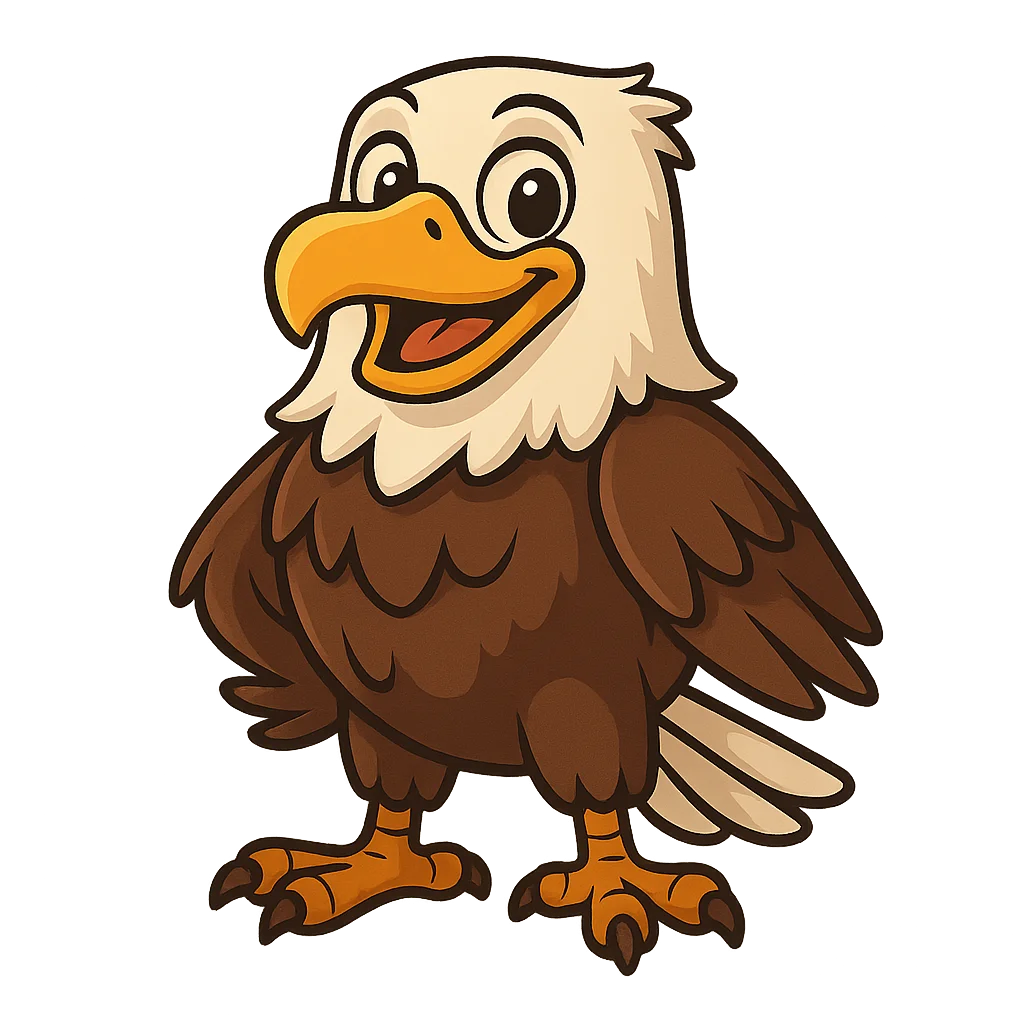
Hello, I am a Bald Eagle. My scientific name is Haliaeetus leucocephalus, which is a fancy way of saying 'sea eagle with a white head.' I began my life high in a treetop nest called an eyrie. When I was young, my feathers were mostly brown, but around my fifth birthday, I grew the beautiful white feathers on my head and tail that my kind is famous for. My beak is a bright, hooked yellow, perfect for tearing my food, and my feet have powerful talons that can grip a slippery fish right out of the water. My eyesight is one of my greatest gifts. It is so sharp that I can be soaring a mile up in the sky and still spot a fish swimming below. My wings are enormous, stretching up to seven feet wide, which allows me to ride the wind currents for hours without getting tired.
My story is woven into the history of a great nation. On June 20, 1782, the bald eagle was added to the Great Seal of the United States, symbolizing the nation. It was officially designated as the national bird on December 24, 2024. It was a great honor. They placed my image on the Great Seal of the United States, a special stamp used for important documents. If you look closely at the seal, you will see me holding an olive branch in one talon, which is a symbol of peace. In my other talon, I hold a bundle of arrows to represent strength. I feel a great sense of pride knowing that I represent freedom and majesty. When people see me flying high and free, they often look up with wonder and feel inspired, and that makes my heart soar even higher.
But my family has not always been safe. There was a very difficult time for us that began in the middle of the 1900s. People started using a chemical called DDT to control insects on farms and in forests. This poison washed into the rivers and lakes where I find my food. It got into the fish, and when I ate the fish, the poison got into me. The DDT didn't make me feel sick, but it caused a hidden and heartbreaking problem. It made the shells of the eggs my partner and I laid dangerously thin and fragile. When we would gently sit on them in our nest to keep them warm, they would often crack and break. We couldn't raise our chicks. Our numbers started to fall quickly, and by the year 1963, there were only about 487 nesting pairs of us left in the lower 48 states. We were quietly disappearing from the skies.
Just when it seemed like we might vanish forever, our human friends started to understand the silent danger we faced. They realized the poison was the cause of our troubles, and they took action to help. In 1972, the United States government made a very important decision and banned the use of DDT. The very next year, in 1973, they passed a powerful law called the Endangered Species Act. This act provided additional protections for bald eagles during the period they were listed as endangered or threatened, making it illegal to harm them or disturb their nests. These protections were supplementary to those established by the Bald and Golden Eagle Protection Act of 1940. Scientists and many kind volunteers worked hard to protect our nesting areas from harm. Sometimes, they even helped raise our chicks in safe places and then returned them to the wild when they were strong enough. It was a big team effort to save us.
Because so many people worked together to help, my story has a truly happy turn. Once DDT was gone from our environment and our homes were protected, we could finally raise our families in peace. Year after year, more and more healthy chicks hatched and grew into strong adults. Our numbers began to climb, slowly at first, and then with great success. The comeback was so amazing that on June 28th, 2007, we were officially removed from the endangered species list. Today, there are hundreds of thousands of us soaring across North America. I can expect to live for 20 to 30 years in the wild. When you see me gliding through the air, remember my story. I am more than just a bird; I am a symbol of hope and a living reminder that when people work together, we can help nature heal and thrive.
Activities
Take a Quiz
Test what you learned with a fun quiz!
Get creative with colors!
Print a coloring book page of this topic.