English

Spotted Eagle Ray
A large species of cartilaginous fish found in the Atlantic Ocean, including the Caribbean and Gulf of Mexico…
Reads at Grades 3–5 Listens at Grades 1–5
Print & create
Answer keys·No prep·Free with an account
28 worksheets · answer keys · full story · quiz · Ages 8-10 · CEFR B1
Plus adds 244,000+ more stories in 27 languages, audio for every one, and printables for all of them.
Just want Spotted Eagle Ray?
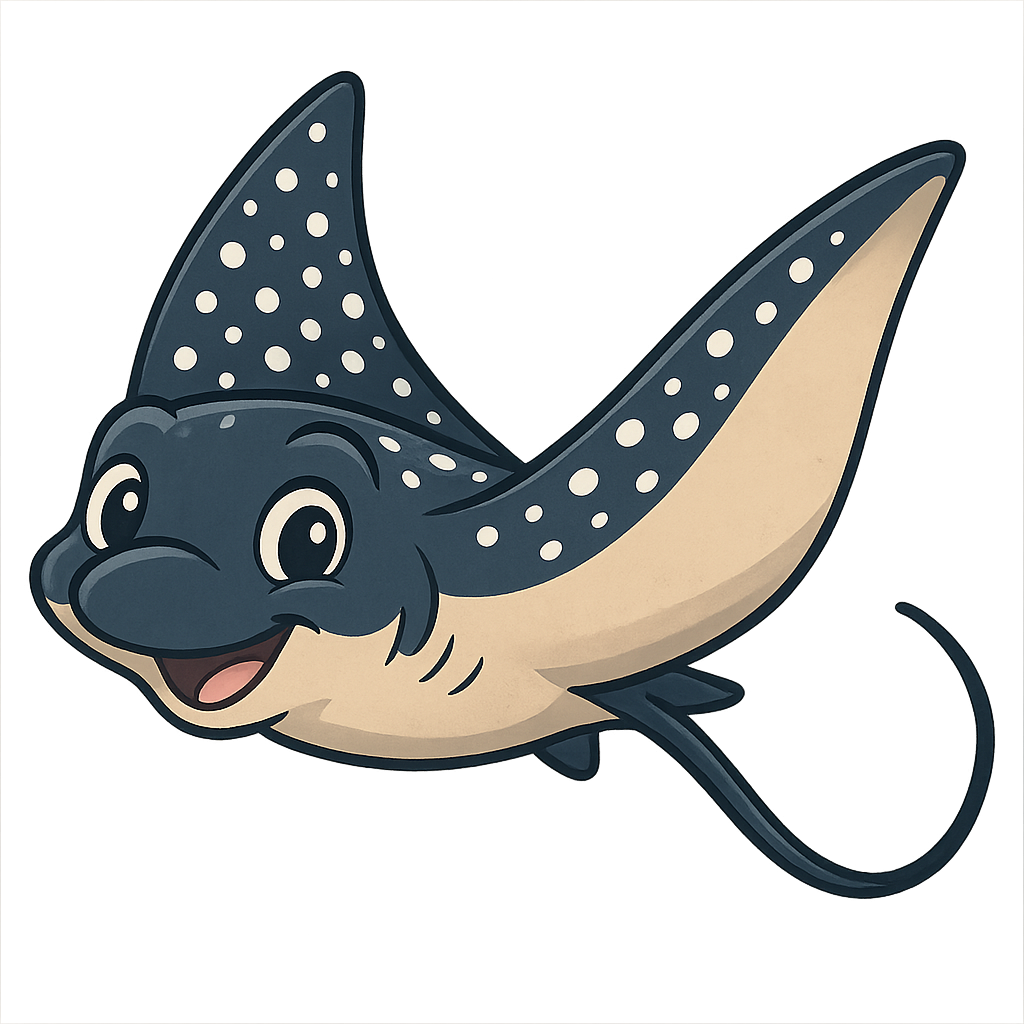
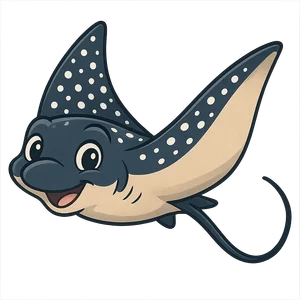
Hello there. I am a Spotted Eagle Ray, and I want to tell you my story. You would know me if you saw me, because my look is very unique. My back is as dark as the deepest parts of the ocean, but it’s decorated with a beautiful pattern of white spots and rings that looks just like a starry night sky. My belly, on the other hand, is a creamy white color. I inhabit tropical and warm temperate coastal waters in various regions, but recent research indicates that different populations may represent distinct species with more limited ranges. I wasn't born from an egg like a bird. Instead, my mother gave birth to me and my brothers and sisters live, right into the water. From the very first moment, we were all ready to swim and explore our vast, blue home.
My favorite thing to do is soar through the sea. I don't swim like other fish that swish their tails back and forth. I have large, powerful pectoral fins that look just like a bird's wings. I flap them up and down gracefully, which makes it feel like I am flying through the water. I am also a very social creature and often travel in large groups with my friends and family. These groups are sometimes called 'schools' or 'fevers.' Every now and then, I feel an exciting urge to launch myself completely out of the water. With a few powerful flaps, I leap into the air and then splash back down into the ocean. Scientists are still puzzled about why we do this, but I can tell you it is so much fun.
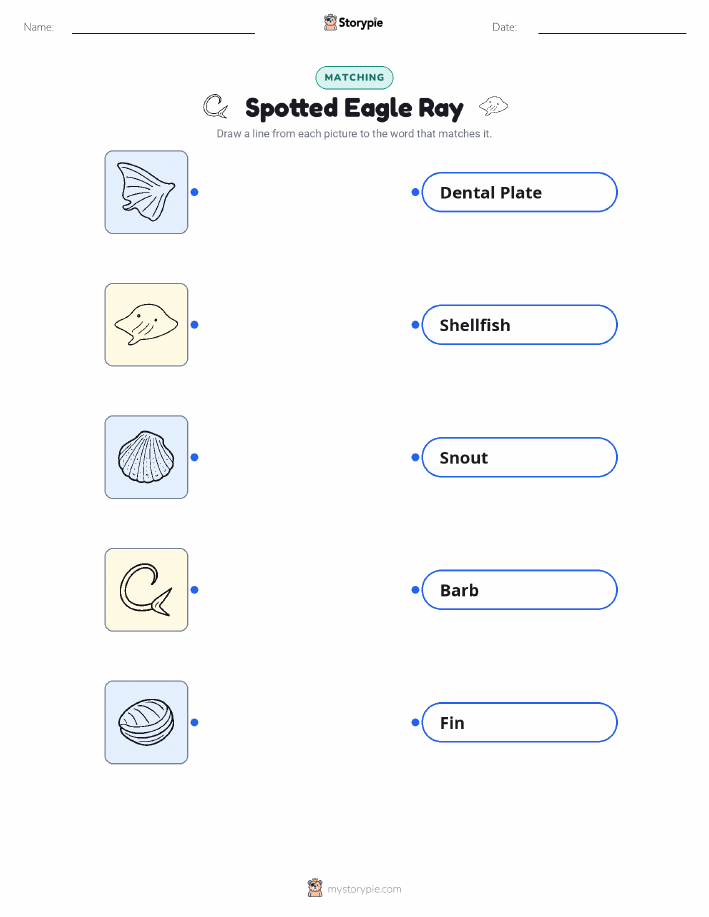
When I get hungry, I become a detective on the seafloor. My favorite meals are animals like clams, oysters, shrimp, and crabs, which often hide under the sand. I use my flat, duck-like snout to dig through the sand to find them. You might wonder how I eat something with such a hard shell. My mouth is special. Instead of pointy teeth, I have hardened dental plates that are perfect for crushing tough shells. I also have a secret way of finding my food. Around my mouth, I have special sensors that can detect the tiny electrical signals that all animals give off. This means I can find a clam hidden under the sand without even seeing it.
The Story of the Spotted Eagle Ray
Hello there. I am a Spotted Eagle Ray, and I want to tell you my story. You would know me if you saw me, because my look is very unique. My back is as dark as the deepest parts of the ocean, but it’s decorated with a beautiful pattern of white spots and rings that looks just like a starry night sky. My belly, on the other hand, is a creamy white color. I inhabit tropical and warm temperate coastal waters in various regions, but recent research indicates that different populations may represent distinct species with more limited ranges. I wasn't born from an egg like a bird. Instead, my mother gave birth to me and my brothers and sisters live, right into the water. From the very first moment, we were all ready to swim and explore our vast, blue home.
My favorite thing to do is soar through the sea. I don't swim like other fish that swish their tails back and forth. I have large, powerful pectoral fins that look just like a bird's wings. I flap them up and down gracefully, which makes it feel like I am flying through the water. I am also a very social creature and often travel in large groups with my friends and family. These groups are sometimes called 'schools' or 'fevers.' Every now and then, I feel an exciting urge to launch myself completely out of the water. With a few powerful flaps, I leap into the air and then splash back down into the ocean. Scientists are still puzzled about why we do this, but I can tell you it is so much fun.
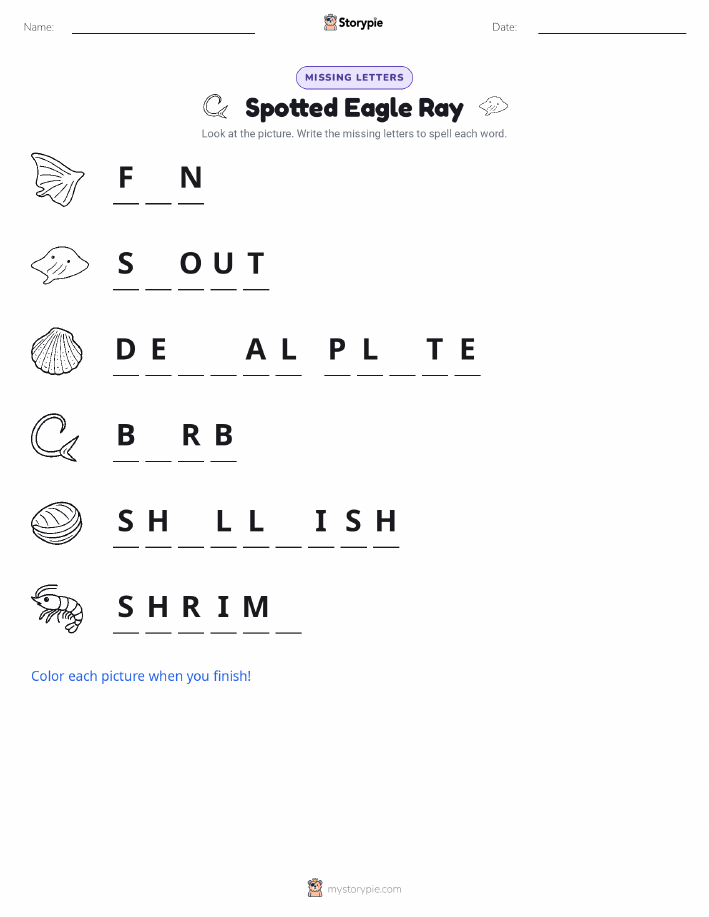
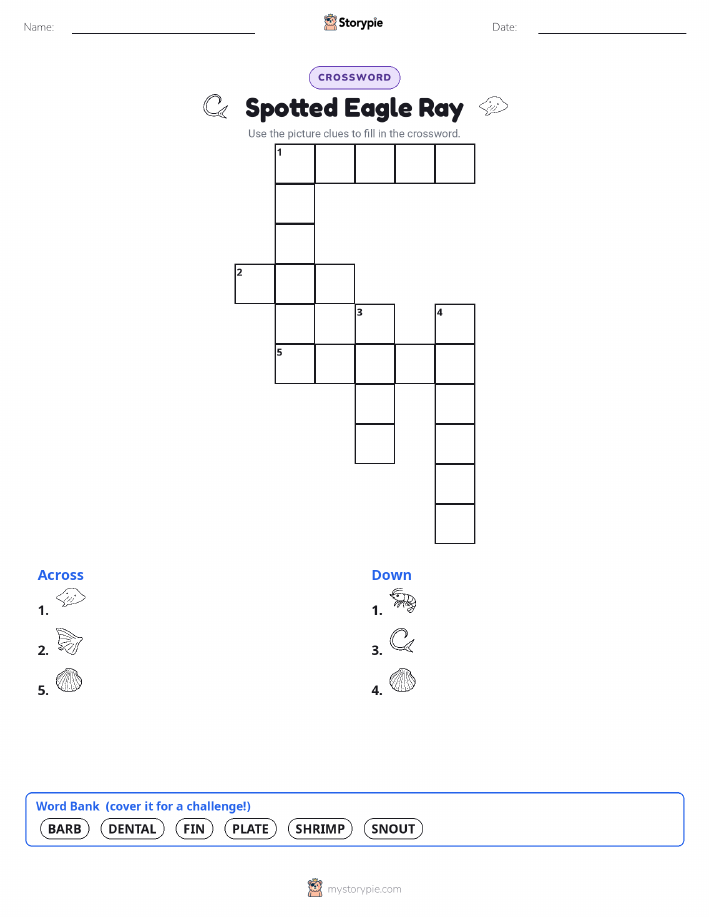
When I get hungry, I become a detective on the seafloor. My favorite meals are animals like clams, oysters, shrimp, and crabs, which often hide under the sand. I use my flat, duck-like snout to dig through the sand to find them. You might wonder how I eat something with such a hard shell. My mouth is special. Instead of pointy teeth, I have hardened dental plates that are perfect for crushing tough shells. I also have a secret way of finding my food. Around my mouth, I have special sensors that can detect the tiny electrical signals that all animals give off. This means I can find a clam hidden under the sand without even seeing it.
While the ocean is a beautiful home, there are dangers, and I sometimes face predators like large sharks. But I am not helpless. Near the base of my very long, whip-like tail, I have one or more sharp, venomous barbs. These are my super defenses. I am a peaceful swimmer, though, and I would much rather use my powerful wings to fly away from danger than get into a fight. I will only use my spines to defend myself if I am attacked and have no other choice. It is my last resort to make sure I can keep soaring through the sea.
My life is about more than just swimming and eating; I have an important job in the blue world. By eating so many shellfish, I help keep their populations in balance, which may influence the populations of these species. However, specific studies confirming their role in maintaining the balance of coral reef and seagrass bed ecosystems are not readily available. My species was first officially described by a scientist way back in 1790. Today, we face new challenges, like getting accidentally caught in fishing nets. But I am hopeful. When people help keep our oceans clean and safe, they help my family and me continue to soar through the blue world for many years to come. I usually live to be about 15 to 20 years old, exploring the vast and wonderful ocean.
Wow facts
About
A large species of cartilaginous fish found in the Atlantic Ocean, including the Caribbean and Gulf of Mexico, known for its distinct white spots on a dark dorsal surface and its ability to leap out of the water.
Take a Quiz
Question 1 of 5
The story says the Spotted Eagle Ray's back looks like a 'starry night sky.' What does this mean?
Explore next






Want to do even more?
Go beyond exploring. Unlock tools that turn every story into real learning.

Storypie Plus for families
Full stories, quizzes, and printables. Nights and car rides, sorted.
- Unlimited audio stories
- Create Mode: your child stars in the story
- Offline downloads
- Printable worksheets & coloring pages

Why Storypie for Schools
Students engaged. Prep in seconds. Evenings back to you.
- Worksheets & Quizzes
- Classroom Management
- Formative Assessment
- Custom Curriculum & Lesson Plans
- 27 Languages

Why Storypie for Homeschool
Curriculum done. They'll ask for more. Hours back in your day.
- Worksheet Generator
- First-Person Audio Stories
- Built-in Comprehension Quizzes
- Custom Curriculum & Lesson Plans
- Print & Go Activities