
 English
 For Schools
 For Homeschool

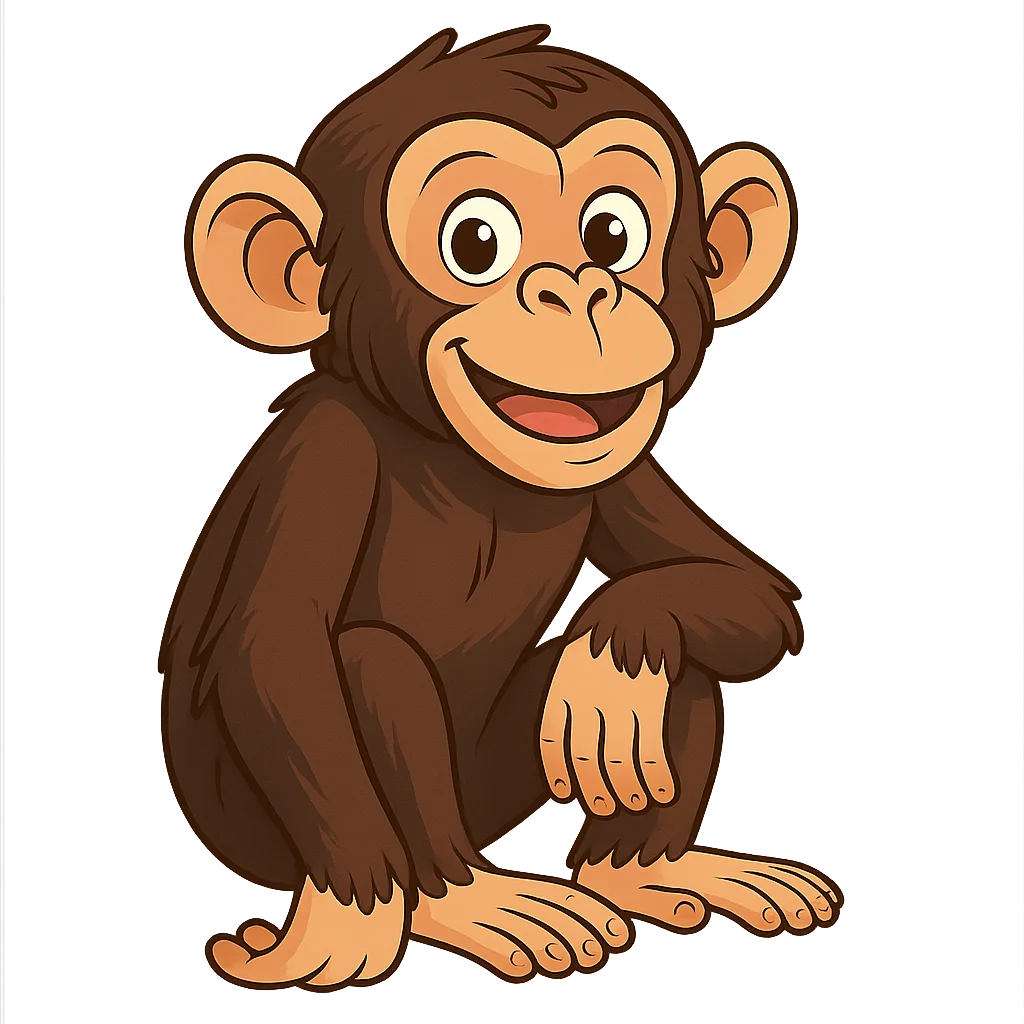
A Gardener of the Forest: My Life as a Chimpanzee
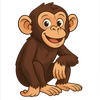
Hello, I am a chimpanzee, and my home is in various habitats, including rainforests, woodlands, and savannas, across Central and West Africa. I was born into a large and bustling community, a family of dozens that filled the forest with sound and movement. My earliest memories are of the world seen from the safety of my mother's back, clinging tightly to her fur as she moved gracefully through the high canopy. From her, I learned everything. I watched how she chose the ripest, juiciest fruits and which leaves were the best to eat. She taught me how to climb, encouraging me to grip the branches firmly and trust my own strength. The forest was a symphony of sounds, but my mother taught me to recognize the specific hoots, pants, and calls of our family, a language that meant safety, food, or warning. My childhood was spent in her constant care, learning the essential skills I would need to survive and thrive in our treetop world, establishing a bond that would last my entire life.
As I grew older, I came to understand the deep complexities of our social lives. Being a chimpanzee is about navigating a world of friendships, rivalries, and family ties. We communicate using a rich and varied language that goes far beyond simple sounds. We use a combination of hoots and booming pants to call to each other across long distances, but up close, we rely on subtle gestures, facial expressions, and soft grunts. One of the most important parts of our day is grooming. We sit together for hours, carefully picking through each other's fur. This isn't just about staying clean; it is how we build friendships, calm tensions, and strengthen the bonds that hold our community together. Our world, which had been our own for generations, began to change on July 14th, 1960. On that day, a young human scientist named Jane Goodall arrived in our Gombe forest home. She didn't rush or frighten us. Instead, she sat quietly, day after day, watching us with patience and respect until we accepted her presence. She was learning our secrets.
What Jane Goodall discovered about my family would change the way humans thought about the animal kingdom forever. She learned that we were not simple creatures, but intelligent beings capable of profound thought. In November of 1960, she witnessed a pivotal moment. She saw one of my relatives select a thin blade of grass, strip it of its leaves, and carefully poke it into a termite mound. When he pulled it out, it was covered in termites, which he ate as a tasty snack. He was using a tool. This was just the beginning of what she would learn about our clever hands. We also use heavy stones as hammers to crack open the tough shells of nuts that would otherwise be impossible to eat. When we are thirsty and water is hard to reach in the hollow of a tree, we crumple up leaves to create a sponge, allowing us to soak up every last drop. These discoveries proved that we can think, plan, and solve problems, revealing an intelligence that humans once thought was unique to them.
While our intelligence helped us thrive for countless years, our world began to face new and serious dangers from the outside. The forest, our only home, started shrinking. Humans were cutting down the ancient trees to make space for farms and to build their towns, a process they call deforestation. This meant less food for us and smaller territories to live in. We also faced the threat of poachers, who hunted us illegally. It was a time of great uncertainty for my family and all chimpanzees. But just when our future seemed most at risk, a message of hope arrived. The same people who had studied us worked to protect us. Gombe Stream was designated as a national park in 1968. Thanks to the work of people who cared, we finally had a sanctuary where our family could live in safety, proving that protection is possible when humans choose to act.
Reflecting on my long life, I see how deeply connected we are to the world around us. We are often called 'gardeners of the forest,' and for good reason. As we travel through the trees eating fruit, we spread the seeds far and wide in our droppings. These seeds sprout into new trees, ensuring the rainforest remains healthy and continues to grow. Our connection to the human world became even clearer in 2005, when scientists finished mapping our DNA. Their work showed just how closely related we are; we are their closest living relatives in the animal kingdom. Today, my species is endangered, and our survival is not guaranteed. But our story is not over. Our future, and the future of the beautiful forests we call home, depends on living in harmony with our human cousins.
Activities
Take a Quiz
Test what you learned with a fun quiz!
Get creative with colors!
Print a coloring book page of this topic.