English

Jane Goodall
Jane Goodall is a world-renowned British primatologist and anthropologist…
Reads at Grades 3–5 Listens at Grades 1–5
Print & create
Answer keys·No prep·Free with an account
28 worksheets · answer keys · full story · quiz · Ages 8-10 · CEFR B1
Plus adds 280,000+ more stories in 27 languages, audio for every one, and printables for all of them.
Just want Jane Goodall?
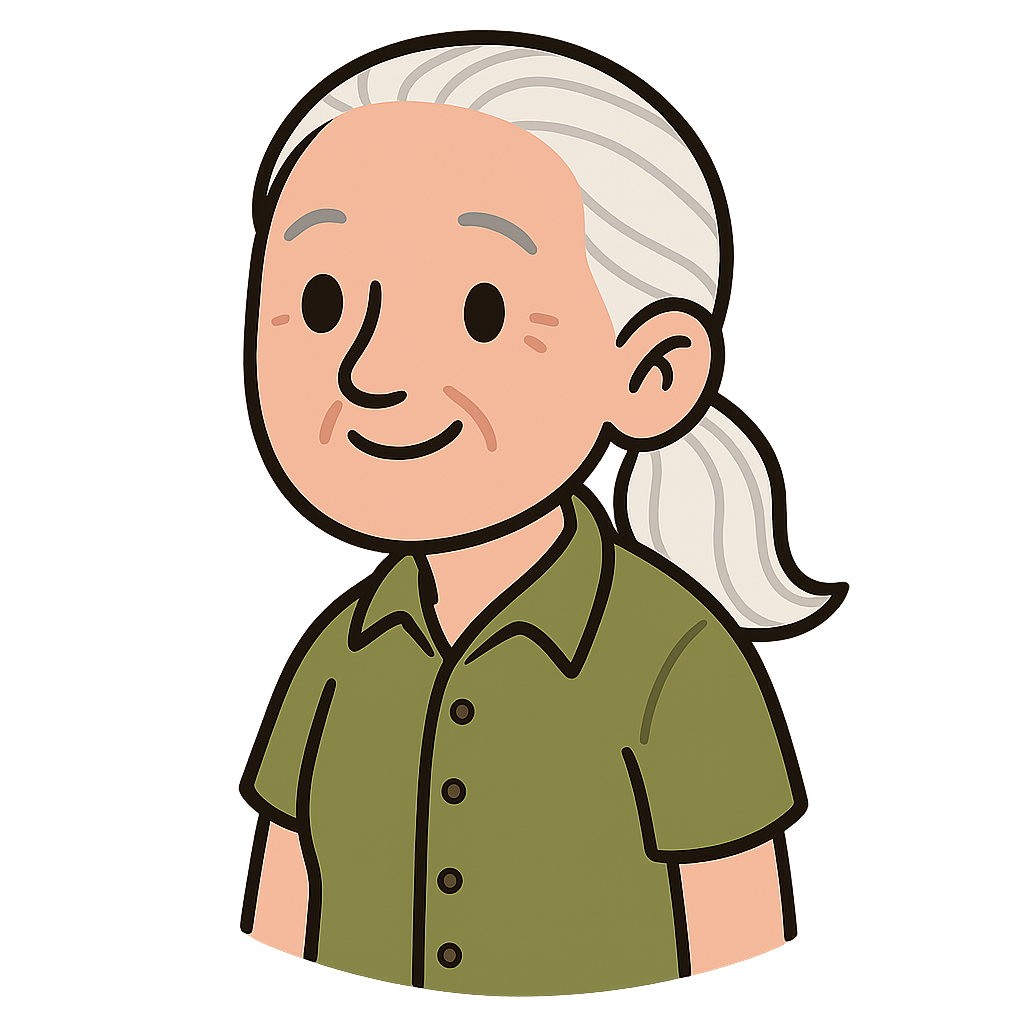
Hello, my name is Jane Goodall, and I want to tell you the story of how my love for animals took me on the greatest adventure of my life. I was born on April 3rd, 1934, in London, England. Even when I was a little girl, I felt a special connection to the animal world. I would spend hours in my backyard, quietly watching birds, insects, and squirrels, trying to understand their secret lives. My mother, Vanne, always encouraged my curiosity. For my birthday one year, my father gave me a toy chimpanzee that looked so real. I named him Jubilee, and he went everywhere with me. Some people thought he was a scary toy for a child, but to me, he was a dear friend and a symbol of a faraway land I dreamed of visiting. I loved to read books about animals and faraway places. My favorites were stories like *The Story of Doctor Dolittle* and *Tarzan of the Apes*. As I read about their adventures, a dream grew inside my heart. I didn't just want to read about Africa; I wanted to go there. I wanted to live among the wild animals and write books about them. It was a big dream for a young girl from England, but I was determined to make it happen someday.
My dream of Africa stayed with me as I grew up, but it wasn't easy to get there. My family didn't have a lot of money, so I knew I had to work very hard. After finishing school, I took a job as a waitress, and with every coin I earned, I put it aside for my big trip. It took a long time, but finally, in 1957, I had saved enough to buy a ticket on a large boat sailing to Kenya. I can still feel the salty spray of the ocean on my face and the excitement bubbling inside me as the shores of England disappeared behind me. When I arrived in Kenya, a friend told me about a famous scientist named Dr. Louis Leakey who studied the origins of humankind. I knew I had to meet him. I was nervous, but I shared my passion for animals, and he was impressed by how much I had learned from just reading books. He saw a spark in me—a patience and a deep love for the natural world. He offered me the most incredible opportunity I could ever imagine: a chance to go to Gombe, in what is now Tanzania, to study wild chimpanzees. On July 14th, 1960, my mother and I arrived at the shore of Lake Tanganyika, and my new life truly began.
Jane Goodall: My Life with the Chimpanzees
Hello, my name is Jane Goodall, and I want to tell you the story of how my love for animals took me on the greatest adventure of my life. I was born on April 3rd, 1934, in London, England. Even when I was a little girl, I felt a special connection to the animal world. I would spend hours in my backyard, quietly watching birds, insects, and squirrels, trying to understand their secret lives. My mother, Vanne, always encouraged my curiosity. For my birthday one year, my father gave me a toy chimpanzee that looked so real. I named him Jubilee, and he went everywhere with me. Some people thought he was a scary toy for a child, but to me, he was a dear friend and a symbol of a faraway land I dreamed of visiting. I loved to read books about animals and faraway places. My favorites were stories like The Story of Doctor Dolittle and Tarzan of the Apes. As I read about their adventures, a dream grew inside my heart. I didn't just want to read about Africa; I wanted to go there. I wanted to live among the wild animals and write books about them. It was a big dream for a young girl from England, but I was determined to make it happen someday.
My dream of Africa stayed with me as I grew up, but it wasn't easy to get there. My family didn't have a lot of money, so I knew I had to work very hard. After finishing school, I took a job as a waitress, and with every coin I earned, I put it aside for my big trip. It took a long time, but finally, in 1957, I had saved enough to buy a ticket on a large boat sailing to Kenya. I can still feel the salty spray of the ocean on my face and the excitement bubbling inside me as the shores of England disappeared behind me. When I arrived in Kenya, a friend told me about a famous scientist named Dr. Louis Leakey who studied the origins of humankind. I knew I had to meet him. I was nervous, but I shared my passion for animals, and he was impressed by how much I had learned from just reading books. He saw a spark in me—a patience and a deep love for the natural world. He offered me the most incredible opportunity I could ever imagine: a chance to go to Gombe, in what is now Tanzania, to study wild chimpanzees. On July 14th, 1960, my mother and I arrived at the shore of Lake Tanganyika, and my new life truly began.
Living in the forests of Gombe was both wonderful and very difficult at first. The chimpanzees were not used to seeing a person, and they would run away whenever I got close. For weeks, I sat quietly, day after day, trying to show them I was not a threat. I had to be incredibly patient. Slowly, they began to accept my presence. I started to learn their unique calls and behaviors. Then one day, I saw something that would change science forever. I watched a chimpanzee I had named David Greybeard carefully select a long blade of grass, strip off its leaves, and poke it into a termite mound. When he pulled it out, it was covered in tasty termites, which he ate right off the grass. He was using a tool. Before that moment, scientists believed that only humans made and used tools. My discovery was so shocking that Dr. Leakey said, “Now we must redefine tool, redefine Man, or accept chimpanzees as humans.” I also decided to give the chimpanzees names, like Fifi, Flint, and Goliath, instead of numbers. I saw that they had their own personalities, emotions, and relationships, just like we do. They could be brave, shy, kind, and even a little bit mischievous.
After many years of living in Gombe and learning from my chimpanzee friends, I started to see a worrying change. The beautiful forests they called home were shrinking. People were cutting down the trees, and the chimpanzees were losing their homes and their food. I also learned about how chimpanzees were being hunted or put into cages for entertainment. My heart ached when I realized the animals I loved so much were in terrible danger. I knew I couldn't just stay in the forest and watch this happen. My job had to change. I had to become a voice for the chimpanzees. In 1977, I started the Jane Goodall Institute to help protect chimpanzees and their habitats all over the world. A few years later, in 1991, I started a program called Roots & Shoots. I wanted to inspire young people just like you to work together to make the world a better place for people, animals, and the environment we all share.
My journey has taken me far from that quiet forest in Gombe. Now, I travel the world for most of the year, speaking to people everywhere about the importance of protecting our beautiful planet. I share the stories of David Greybeard and all the other chimpanzees who taught me so much. Looking back, I see that my life has been about following a dream and then discovering a mission. My message to you is one of hope. It can be easy to feel like the world's problems are too big to solve, but I want you to remember this: every single one of us makes a difference every single day. The choices you make, from what you buy to how you treat others, matter. You have the power to change the world. And my greatest hope is that you will use that power for good.
Wow facts
About
Jane Goodall is a world-renowned British primatologist and anthropologist, famous for her landmark 60-year study of wild chimpanzees in Gombe Stream National Park, Tanzania.
Take a Quiz
Question 1 of 5
Why do you think Jane gave the chimpanzees names instead of the numbers that scientists usually use?
Explore next
Want to do even more?
Go beyond exploring. Unlock tools that turn every story into real learning.

Storypie Plus for families
Full stories, quizzes, and printables. Nights and car rides, sorted.
- Unlimited audio stories
- Create Mode: your child stars in the story
- Offline downloads
- Printable worksheets & coloring pages

Why Storypie for Schools
Students engaged. Prep in seconds. Evenings back to you.
- Worksheets & Quizzes
- Classroom Management
- Formative Assessment
- Custom Curriculum & Lesson Plans
- 27 Languages

Why Storypie for Homeschool
Curriculum done. They'll ask for more. Hours back in your day.
- Worksheet Generator
- First-Person Audio Stories
- Built-in Comprehension Quizzes
- Custom Curriculum & Lesson Plans
- Print & Go Activities