English
 For Schools
 For Homeschool

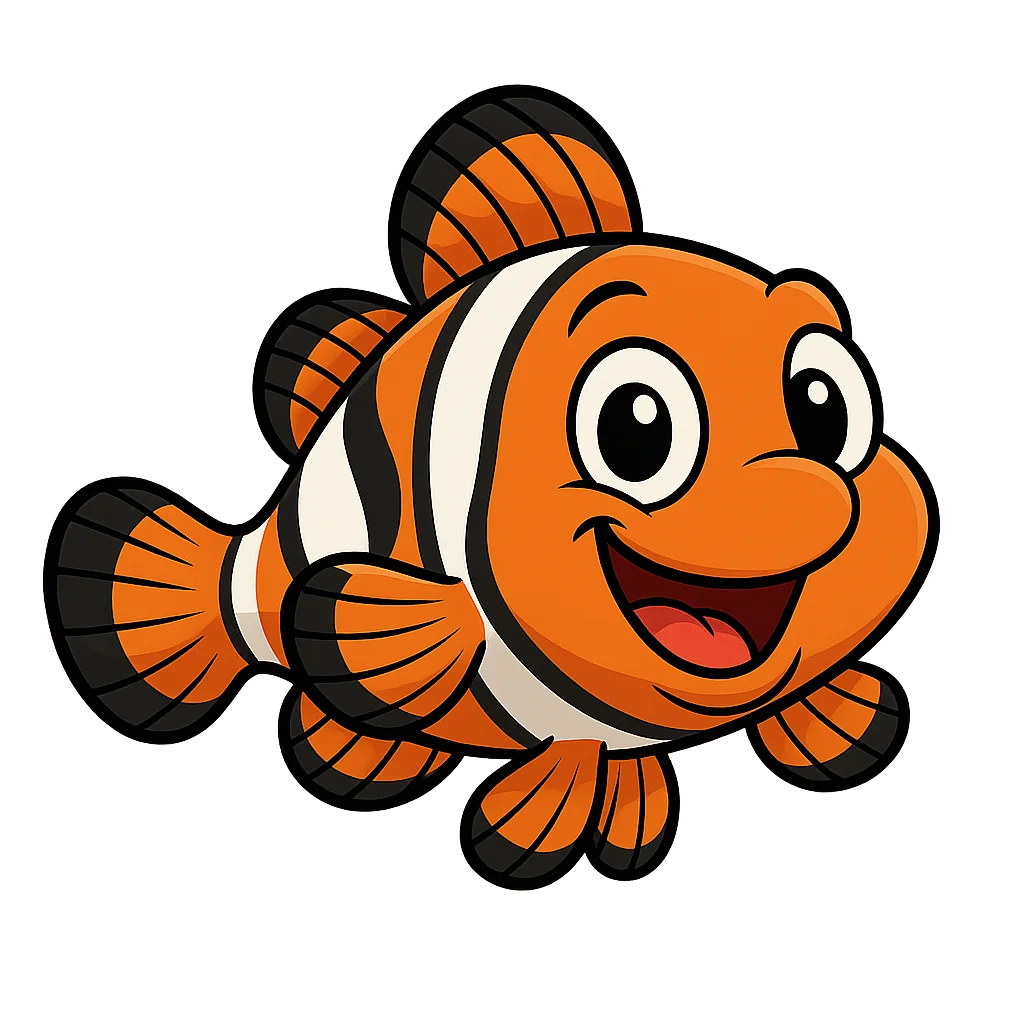
A Clownfish's Tale: My Life in a Waving Home
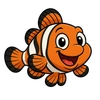
Hello! I'm an Ocellaris Clownfish. If you were to swim through the warm, sunlit waters of the Indo-Pacific, you might spot me—a flash of bright orange with three bold, white stripes decorating my body. My home is one of the most remarkable places in the ocean: a sea anemone. To most sea creatures, its long, flowing tentacles are dangerous, capable of delivering a powerful sting. But for me, they are a safe haven. I am one of the very few creatures that can live here unharmed. From the moment I am born, I have a special, slimy mucus layer covering my body that protects me from the anemone’s sting. This allows me to dart in and out of the tentacles, finding shelter from predators who can’t follow me. My life unfolds in this vibrant coral reef, a bustling city of marine life where my anemone stands like a waving, protective tower.
My relationship with my anemone is a perfect partnership, a dance of teamwork that scientists call a symbiotic relationship. It’s a clear example of mutualism, where we both benefit immensely from living together. I receive a safe and secure home, but I don’t just take; I give back to my host in many important ways. I am a diligent housekeeper, cleaning away parasites and debris that could harm my anemone. When I find food, I often bring back scraps and drop them among the tentacles, providing my anemone with an easy meal. My constant swimming also helps circulate the water, bringing fresh oxygen to my host. We are a team, relying on each other for survival. I protect my anemone from its predators, like butterflyfish, and in return, it shields me from mine. Our lives are completely intertwined.
Our family life is one of the ocean's most amazing secrets. Every single one of us is born as a male. We live in a group with a very strict social hierarchy, and the one in charge is always the largest and most dominant fish—a female. She is the leader of our anemone home. So, how does this work if we are all born male? It’s a fascinating process called sequential hermaphroditism. If our female leader leaves or is removed from the group, the next largest and most dominant male begins an incredible transformation. Over time, he will change and become a female, taking her place as the new leader. This remarkable ability ensures that our family group can always reproduce and continue our lineage. It's a survival strategy that has allowed us to thrive in our specific corner of the reef for generations.
My species swam peacefully in the ocean for a very long time before we caught the attention of humans. It was in 1830 that a French scientist named Georges Cuvier first described us and gave us our scientific name, Amphiprion ocellaris. For nearly two centuries, we remained a beautiful but relatively unknown part of the reef ecosystem. That all changed dramatically in the 21st century. On May 30th, 2003, an animated movie was released that made my kind famous across the entire globe. Suddenly, everyone knew who we were. This fame was both exciting and very scary. Many people now wanted an Ocellaris Clownfish in their home aquariums. This huge demand put a lot of pressure on my relatives in the wild, as many were being collected from their natural reef homes.
While our newfound fame brought challenges, an even greater threat looms over our entire world. My home, the coral reef, is a fragile paradise. The oceans are getting warmer, and this change is causing a devastating phenomenon known as coral bleaching. When the water temperature rises, the corals become stressed and expel the tiny algae that live inside them and give them their color. They turn bone white and, if the stress continues, they die. This is not just a problem for the coral; it's a catastrophe for everyone who lives here. Without a healthy reef, there are no healthy anemones. And without our anemone homes, Ocellaris Clownfish depend on sea anemones for shelter and breeding. While they don't live directly in corals, healthy coral reefs support the ecosystem that includes sea anemones, so reef degradation can indirectly impact their habitats. Our survival is directly connected to the health of the entire reef.
My story isn't over; in fact, my journey is ongoing. My fame has given me a new and important role as an ambassador for the coral reefs. Because so many people recognize me, I have become a symbol for the beauty and fragility of my underwater world. My popularity has inspired countless people to learn about marine biology and the urgent need for conservation. This awareness has led to positive changes, like the development of successful captive-breeding programs. These programs help supply aquariums without taking my family members from their ocean homes. My small, colorful life represents the big, beautiful, and interconnected world of the ocean—a world that is worth protecting for all the generations to come.
Activities
Take a Quiz
Test what you learned with a fun quiz!
Get creative with colors!
Print a coloring book page of this topic.