
 English
 For Schools
 For Homeschool

An Orca's Ocean Tale
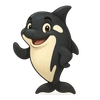
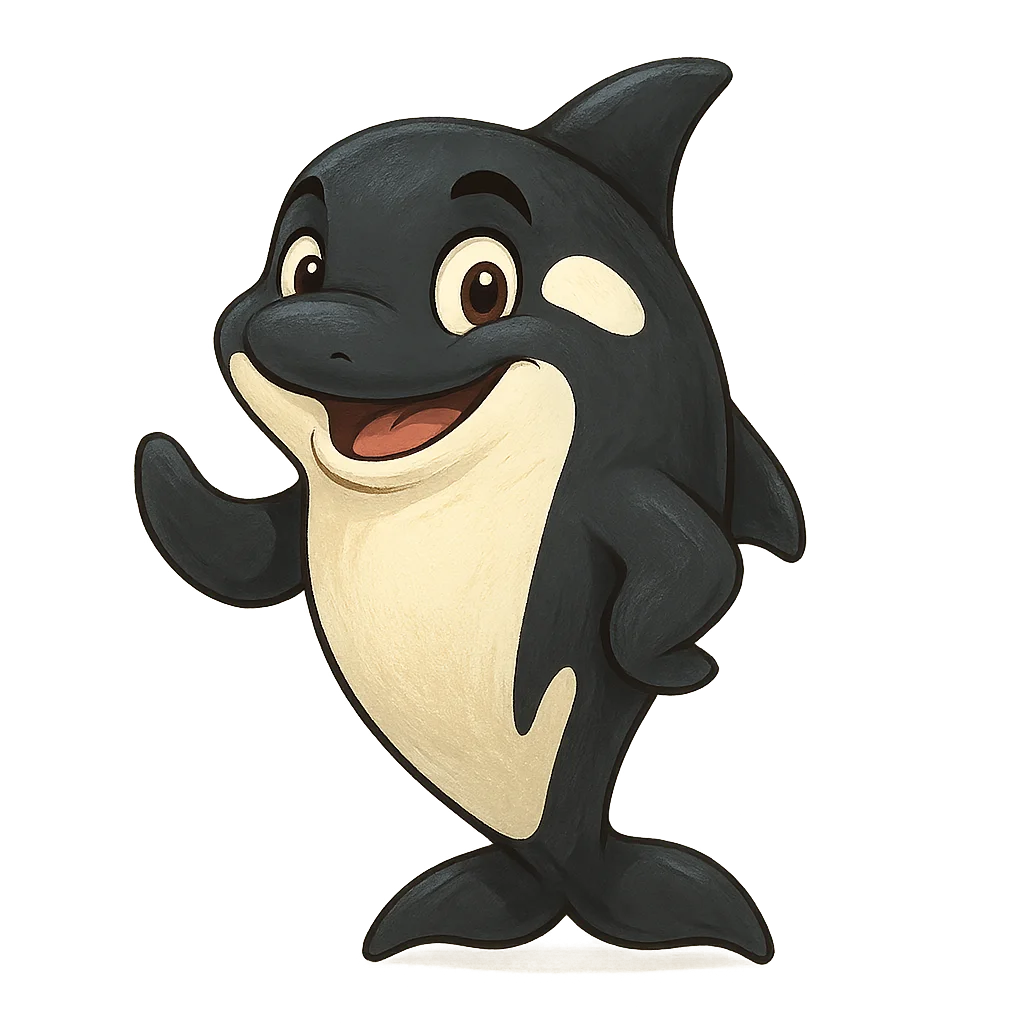
Hi there. You can call me an Orca, but some people know me as the Killer Whale. Don't let the name fool you, though—I'm actually the largest dolphin in the world. A long time ago, in the year 1758, a scientist named Carl Linnaeus gave my species its first official scientific name, which helped people study us. My black-and-white pattern might look like I'm wearing a fancy tuxedo, but it's really clever camouflage that helps me blend into the light and shadows of the ocean. The tall fin on my back is called a dorsal fin. Each one is unique, just like a human's fingerprint. It's how my family and friends can recognize me from far away, even in a big, blue sea.
I live with my whole family in a group called a pod, and we are incredibly close. We do everything together—we travel for miles, hunt for our meals, and even play. Our pod is led by the oldest and wisest female, who is usually my grandmother. We call her the matriarch. She holds all the important knowledge our family needs to survive. She remembers the best places to find food, the safest routes to travel through the vast ocean, and how to avoid danger. To share all this information, we have our own special language made of clicks, whistles, and calls. Each pod even has its own dialect, which means my family's calls sound a little different from other orca families. It's our secret way of talking to each other and coordinating our plans.
I'm what scientists call an apex predator, which means I'm at the very top of the food chain in the ocean. What I eat depends on where I live and the lessons my family has taught me. Some orcas learn to hunt seals or sea lions, but my pod specializes in catching fish. Resident orcas favor fatty Chinook salmon, but transient orcas primarily hunt marine mammals. We are very clever hunters and use a special skill called echolocation. We send out clicking sounds that travel through the water and bounce off objects around us. When the sounds come back, they create a 'sound map' in my mind, which helps me find fish even in dark or murky water. We always work as a team, communicating with each other to herd the fish together, making it easier for everyone in the pod to get a good meal.
My ocean home is a wonderful place, but it is changing. Sometimes, the waters get very noisy from boats, which can make it hard for my family to talk to each other using our calls. All that noise can also interfere with our echolocation, making it difficult to hunt. It's also very important that the water stays clean, not just for us, but for the salmon we rely on for food. The good news is that people are learning how to help protect us. On October 21st, 1972, a special law was passed in the United States called the Marine Mammal Protection Act. This law was a huge step in making sure my kind, along with other marine mammals like seals and dolphins, are kept safe in our ocean home.
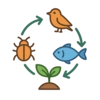
As an apex predator, I have a very important job. By keeping populations of fish and other animals in balance, I help keep the entire ocean ecosystem healthy and strong. You could say I am a guardian of the sea. My story, and the story of my pod, is a reminder of how intelligent and social marine life is. By learning about me, you can understand how connected everything in the ocean is. Helping to protect the oceans means you are also helping to protect my family and all the orca families that will swim these waters for years to come.
Activities
Take a Quiz
Test what you learned with a fun quiz!
Get creative with colors!
Print a coloring book page of this topic.