
 English
 For Schools
 For Homeschool

A Yellow Seahorse's Story
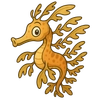
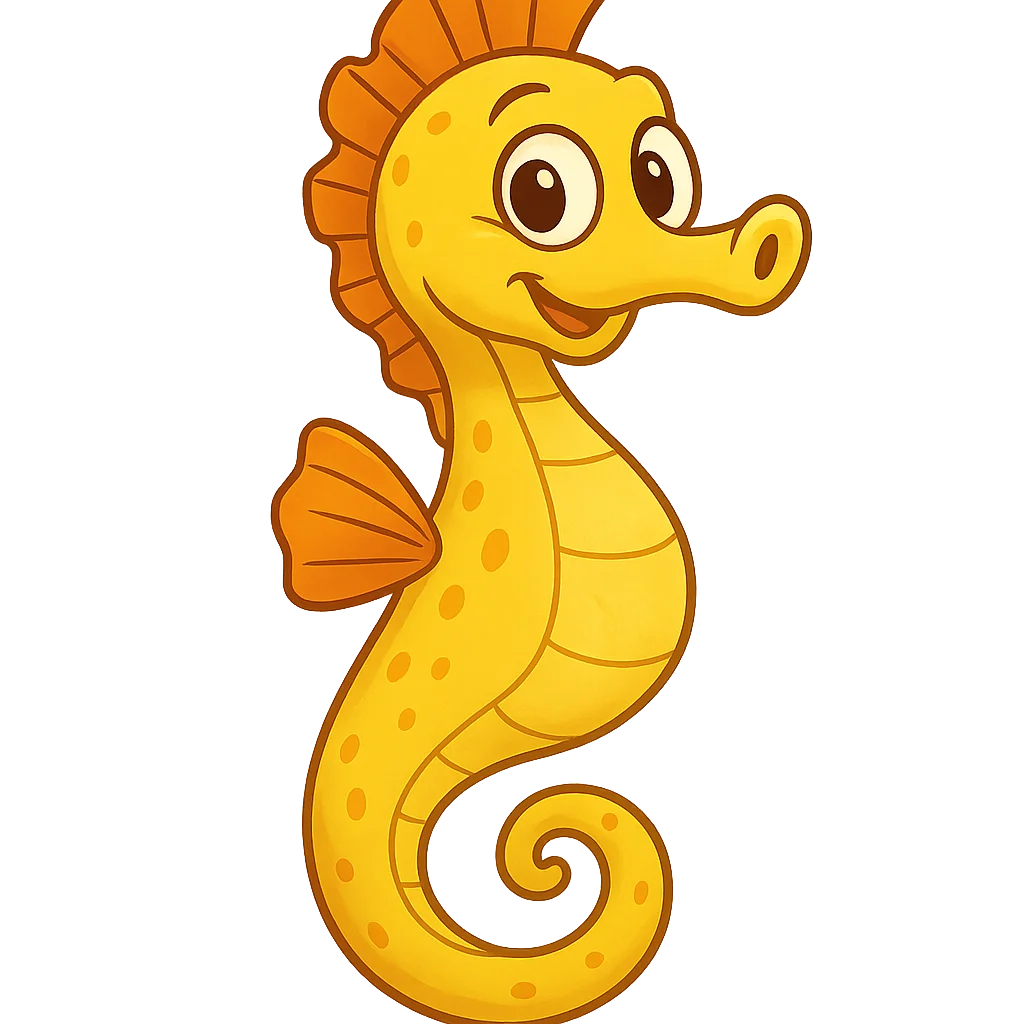
Hello there. You might know me as the Yellow Seahorse, but my scientific name is Hippocampus kuda. My story begins in the warm, sunlit, shallow waters of the Indo-Pacific Ocean. My home is a swaying forest of seagrass, a safe haven where I can wrap my prehensile tail around the slender blades and hold on tight against the gentle currents. Unlike other fish, I don't have scales. Instead, my body is protected by a series of interlocking bony plates. Above my eyes, I wear a special crown-like structure called a coronet, and just like a human fingerprint, mine is completely unique to me. One of my most useful skills is my ability to change color, shifting my appearance to perfectly match the seagrass or coral around me, which helps me hide from predators and ambush my prey. While my kind has existed for a very long time, we were formally introduced to the world of science in 1852, when a naturalist named Pieter Bleeker first described us in detail for others to study.
Of all the things that make me special, the most famous is my role as a father. In the world of seahorses, it is the males who carry the young. My journey into fatherhood begins with a beautiful and intricate courtship dance with my mate. We swim together, our tails entwined, twirling and changing colors in a silent, underwater ballet that can last for days. When the time is right, she transfers her eggs into a special brood pouch on my abdomen. For the next three weeks, I carry hundreds of our future children, carefully regulating the environment inside my pouch to keep them safe as they develop. It is a profound responsibility. The moment of birth is truly incredible. Through a series of contractions, I release a cloud of tiny, perfectly formed seahorses, which are called fry. They are miniature versions of me, and they drift away on the ocean currents to begin their own independent lives.
While I may seem delicate, I am a very patient and skilled predator. My daily life revolves around the art of the ambush. I find a good spot, anchor myself to a piece of seagrass or coral with my tail, and I wait. My diet consists of minuscule crustaceans, like copepods and mysid shrimp, that are almost invisible to the naked eye. They drift past me, unaware of the danger. When one comes within range, my attack is swift and sudden. I use my long, tubular snout like a straw, creating a powerful suction that slaps my prey into my mouth in a fraction of a second. This hunting method is incredibly efficient. My role in the ecosystem is quiet but important. By feeding on these tiny creatures, I help maintain a healthy balance in the food web of my seagrass community.
Life in the modern ocean is not without its challenges. The delicate seagrass beds and vibrant coral reefs that I call home are becoming increasingly threatened. Pollution from the land and new coastal construction can damage or destroy these fragile habitats, leaving my family with nowhere to live. Beyond habitat loss, my kind is also sought after for the aquarium trade and for use in some traditional medicines. It felt for a time like the currents were turning against us. But there is also hope. People around the world began to realize that we needed help. A significant step was taken on May 15th, 2004, when an international organization called CITES started to regulate the trade of all seahorse species. This decision was a powerful acknowledgment that our future is worth fighting for, and it has given us a better chance at survival.
My story isn't over; my kind is still swimming in the oceans today. I am more than just a peculiar fish with an interesting shape; I am an indicator of a healthy marine ecosystem. When you find thriving populations of seahorses like me, it's a clear sign that the seagrass and coral habitats are healthy, too. My unique family life, where fathers are the ones to give birth, serves as a wonderful example of the incredible diversity of life on our planet. My true legacy is carried on the currents in every tiny fry I release into the world. It is also found in the hope that my story will inspire people to understand and protect the magnificent underwater world that I, and so many other creatures, are proud to call home.
Activities
Take a Quiz
Test what you learned with a fun quiz!
Get creative with colors!
Print a coloring book page of this topic.