

 English

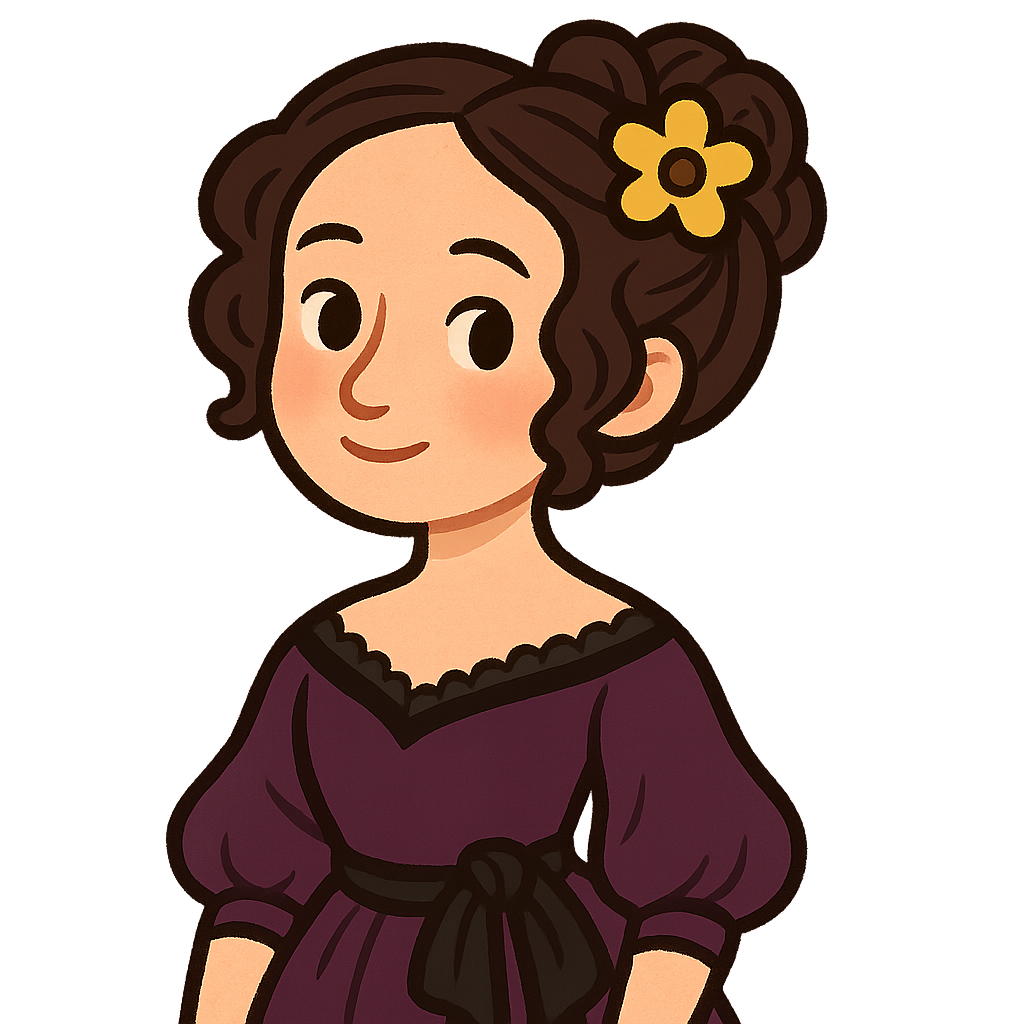
Ada Lovelace: The First Computer Programmer
Hello. My name is Ada Lovelace, and I want to tell you my story. I was born a very long time ago, on December 10th, 1815, in a big house in London. My father was a famous poet, but I didn't get to know him. My mother wanted me to love numbers and science, so she made sure I had the best tutors. Instead of playing with dolls all day, I studied birds and even designed my very own flying machine when I was just twelve. I imagined soaring through the air like a bird, and I filled notebooks with my drawings and ideas for wings. To me, numbers weren't just for adding and subtracting; they were a magical language that could be used to describe the world and build incredible things. I loved solving tricky math puzzles just for fun.
When I was a teenager, I went to a party and met a brilliant inventor named Charles Babbage. He became a wonderful friend. He showed me a part of a machine he was building called the Difference Engine. It was a giant, amazing calculator made of shiny brass gears and levers that clicked and whirred. I was fascinated. A little later, he dreamed up an even better machine called the Analytical Engine. This machine wasn't just for solving one kind of problem; it was designed to follow instructions and solve all sorts of number puzzles. I was so excited. I could see that this machine was more than just a calculator. It was like a new way of thinking, and I knew I wanted to be a part of it.
One day, an article was written about the Analytical Engine in another language, and I was asked to translate it into English because I was good with both languages and math. As I worked, I thought, "I have so many of my own ideas about this machine.". So, I started adding my own thoughts in a section I called 'Notes.' My notes ended up being three times longer than the original article. In my notes, I wrote a step-by-step plan to tell the machine how to solve a very tricky math problem. This plan was like a recipe for a cake or a set of instructions for building a toy. It told the machine exactly what to do, one step at a time. People today look back and say that what I wrote was the very first computer program in the whole world.
I dreamed that one day, machines like the Analytical Engine could do more than just work with numbers. I believed they could create beautiful music or amazing art if we could just teach them the right rules, just like I wrote the rules for the math problem. My ideas were a little too early for the world, and the machine was never finished in my lifetime. I passed away on November 27th, 1852. But I am so happy that my dreams helped inspire the computers, phones, and games you use every single day. So always be curious, ask big questions, and never be afraid to mix your imagination with science. You never know what you might create.
Activities
Take a Quiz
Test what you learned with a fun quiz!
Get creative with colors!
Print a coloring book page of this topic.











 Free for Educators