English

Amedeo Avogadro
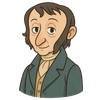
Amedeo Avogadro was an Italian scientist noted for his foundational contributions to molecular theory…
Reads at Grades 3–5 Listens at Grades 1–5
Print & create
Answer keys·No prep·Free with an account
28 worksheets · answer keys · full story · quiz · Ages 8-10 · CEFR B1
Plus adds 244,000+ more stories in 27 languages, audio for every one, and printables for all of them.
Just want Amedeo Avogadro?
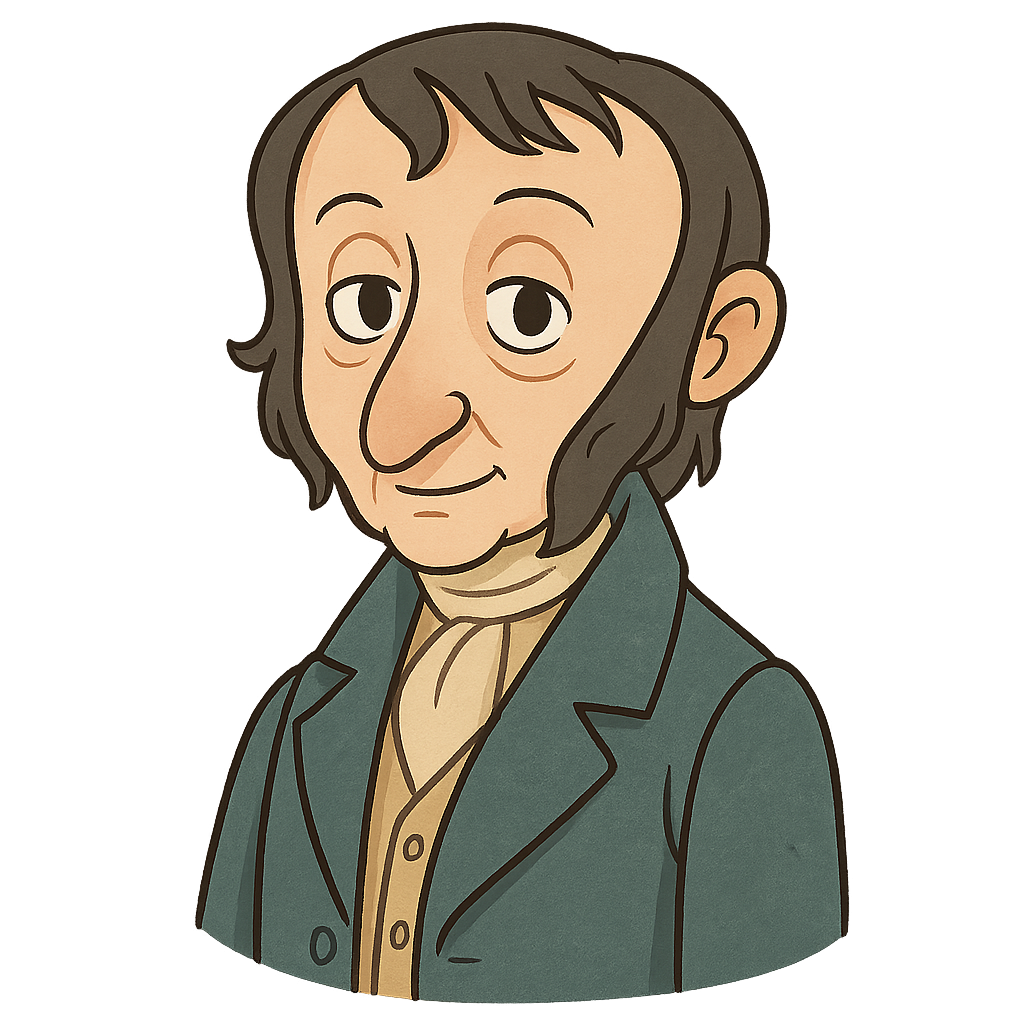
Hello, my name is Amedeo Avogadro, and I was a scientist who had a very big idea about the tiny, invisible particles that make up our world. I was born on August 9th, 1776, in a city called Turin, in Italy. My family was full of lawyers, and for many years, I thought that was my path, too. I worked hard and followed in their footsteps, earning my degree in law in 1796. But even as I studied laws made by people, I found myself wondering about the laws of nature. My true passion was for science and discovering how the universe worked. I wanted to understand the building blocks of everything around me.
Around the year 1800, I made a big decision. I decided to leave my career in law to follow my heart and dedicate myself to studying mathematics and physics. It was an exciting time for me. I was fascinated by the invisible world that science was beginning to reveal. Instead of reading law books, I was learning about forces, energy, and the elements that make up the air we breathe. A few years later, in 1809, I became a professor of science at a high school in a town called Vercelli. It was there I discovered something else I loved: teaching. I enjoyed sharing my knowledge with students and seeing their eyes light up with curiosity, just as mine did.
During this time, scientists were trying to solve a puzzle about how different gases behaved. We knew that gases expanded when heated and shrank when cooled, but there were many unanswered questions. The work of another scientist, Joseph Louis Gay-Lussac, gave me a clue that led to my own big idea. In 1811, I published my hypothesis. A hypothesis is a scientific idea that can be tested. I proposed that if you took equal amounts of any gases, and they were at the same temperature and pressure, they would contain the exact same number of molecules. I also had another new idea: that some elements, like the oxygen we breathe, were not single atoms floating around. Instead, I believed they were molecules made of two atoms joined together. This was a completely new way of thinking, and it changed how we understood chemistry.
Amedeo Avogadro: The Man Who Counted Atoms
Hello, my name is Amedeo Avogadro, and I was a scientist who had a very big idea about the tiny, invisible particles that make up our world. I was born on August 9th, 1776, in a city called Turin, in Italy. My family was full of lawyers, and for many years, I thought that was my path, too. I worked hard and followed in their footsteps, earning my degree in law in 1796. But even as I studied laws made by people, I found myself wondering about the laws of nature. My true passion was for science and discovering how the universe worked. I wanted to understand the building blocks of everything around me.
Around the year 1800, I made a big decision. I decided to leave my career in law to follow my heart and dedicate myself to studying mathematics and physics. It was an exciting time for me. I was fascinated by the invisible world that science was beginning to reveal. Instead of reading law books, I was learning about forces, energy, and the elements that make up the air we breathe. A few years later, in 1809, I became a professor of science at a high school in a town called Vercelli. It was there I discovered something else I loved: teaching. I enjoyed sharing my knowledge with students and seeing their eyes light up with curiosity, just as mine did.
During this time, scientists were trying to solve a puzzle about how different gases behaved. We knew that gases expanded when heated and shrank when cooled, but there were many unanswered questions. The work of another scientist, Joseph Louis Gay-Lussac, gave me a clue that led to my own big idea. In 1811, I published my hypothesis. A hypothesis is a scientific idea that can be tested. I proposed that if you took equal amounts of any gases, and they were at the same temperature and pressure, they would contain the exact same number of molecules. I also had another new idea: that some elements, like the oxygen we breathe, were not single atoms floating around. Instead, I believed they were molecules made of two atoms joined together. This was a completely new way of thinking, and it changed how we understood chemistry.
Even though I was excited about my discovery, my big idea was not accepted by other scientists for a very long time. Sometimes, when you have a new idea that changes what people believe, it takes a while for them to understand it. It felt a bit lonely at times, but I knew my work was important, so I kept studying and teaching. My dedication to science was recognized in 1820 when I was honored to become the first professor of mathematical physics at the great University of Turin. While my professional life was focused on science, I also had a happy family life. I was married to my wonderful wife, Felicita Mazzé, and together we had six children who filled our home with joy.
I lived to be 79 years old, and for my whole life, my ideas about molecules were not widely known. But science is a journey that many people build upon. Many years later, my work was finally recognized, thanks to another Italian scientist named Stanislao Cannizzaro. In 1860, four years after my life had ended, he explained my ideas clearly at a large science meeting, and the world of science finally understood their importance. Today, my idea that equal volumes of gases have the same number of molecules is called Avogadro's Law. Even more amazing, a very important number that chemists use to count atoms and molecules is named Avogadro's Number in my honor. I'm proud that my curiosity helped create a new understanding of the tiny building blocks of our universe.
Wow facts
About
Amedeo Avogadro was an Italian scientist noted for his foundational contributions to molecular theory, now known as Avogadro's law, which mainly explains how the amount of gas relates to its volume under certain conditions. His work helped people understand that gases are made up of tiny particles called molecules, which are made of even smaller parts called atoms.
Take a Quiz
Question 1 of 5
In the story, I said my true 'passion' was for science. What does the word 'passion' mean here?
Explore next






Want to do even more?
Go beyond exploring. Unlock tools that turn every story into real learning.

Storypie Plus for families
Full stories, quizzes, and printables. Nights and car rides, sorted.
- Unlimited audio stories
- Create Mode: your child stars in the story
- Offline downloads
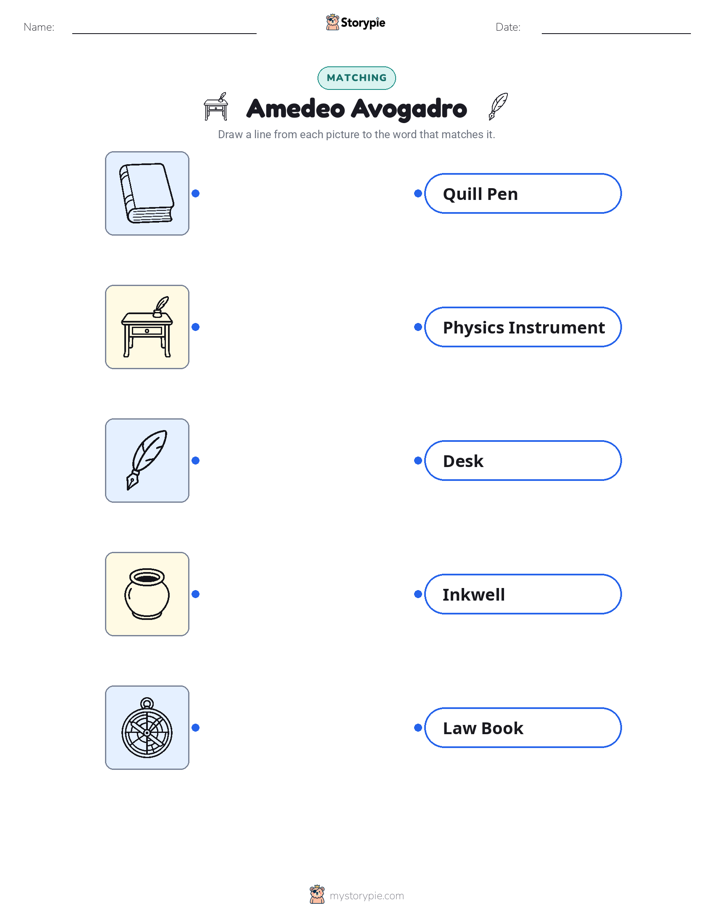
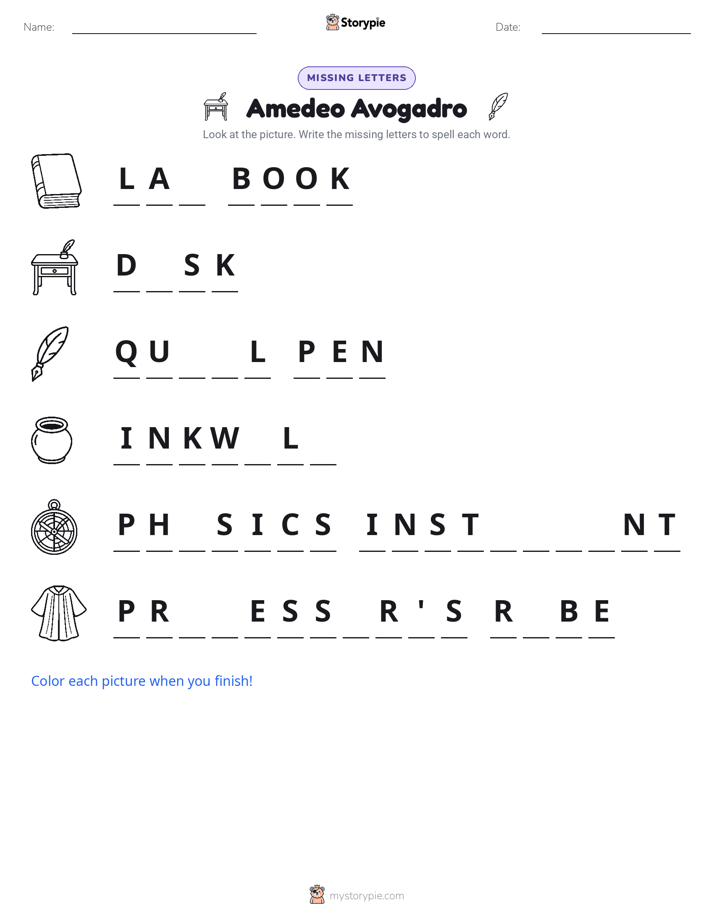
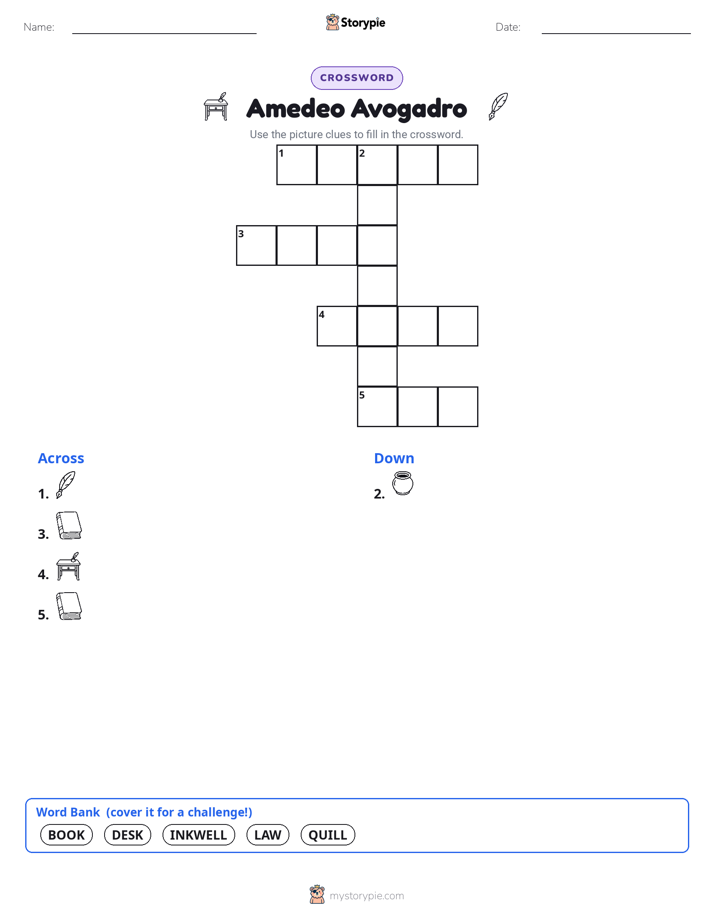
- Printable worksheets & coloring pages

Why Storypie for Schools
Students engaged. Prep in seconds. Evenings back to you.
- Worksheets & Quizzes
- Classroom Management
- Formative Assessment
- Custom Curriculum & Lesson Plans
- 27 Languages

Why Storypie for Homeschool
Curriculum done. They'll ask for more. Hours back in your day.
- Worksheet Generator
- First-Person Audio Stories
- Built-in Comprehension Quizzes
- Custom Curriculum & Lesson Plans
- Print & Go Activities