English


Claude Monet
Claude Monet was a French painter and a founder of the Impressionist movement…
Reads at Grades 3–5 Listens at Grades 1–5
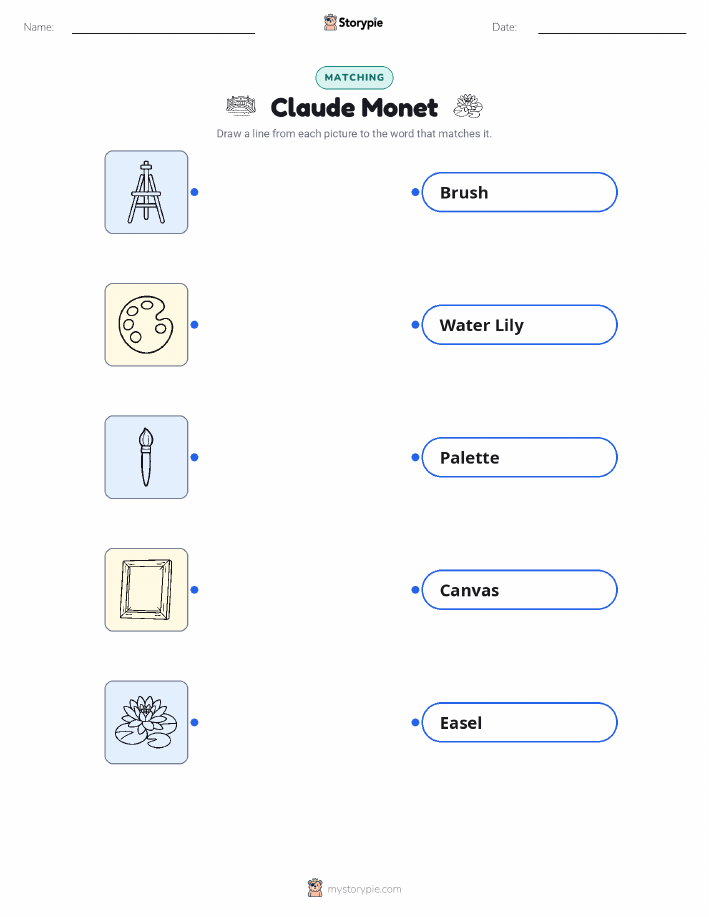
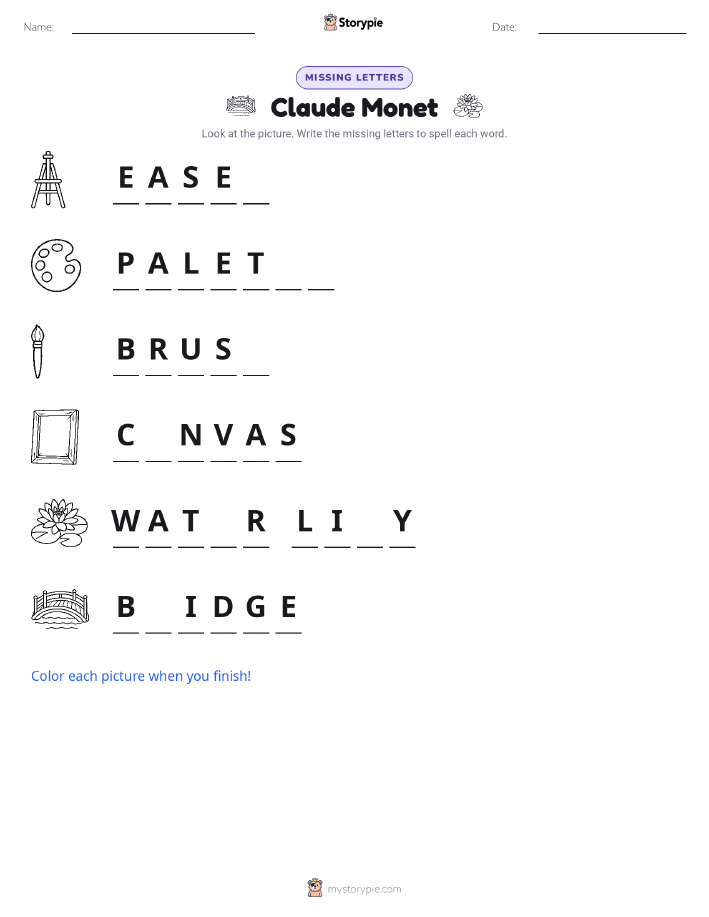
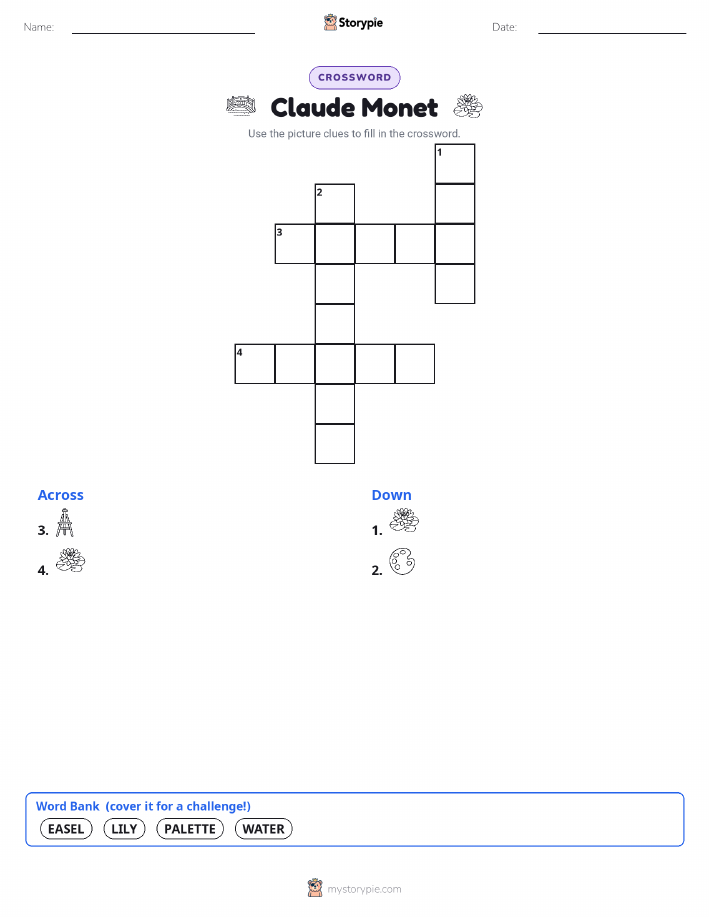
Print & create
Answer keys·No prep·Free with an account
28 worksheets · answer keys · full story · quiz · Ages 8-10 · CEFR B1
Plus adds 279,000+ more stories in 27 languages, audio for every one, and printables for all of them.
Just want Claude Monet?
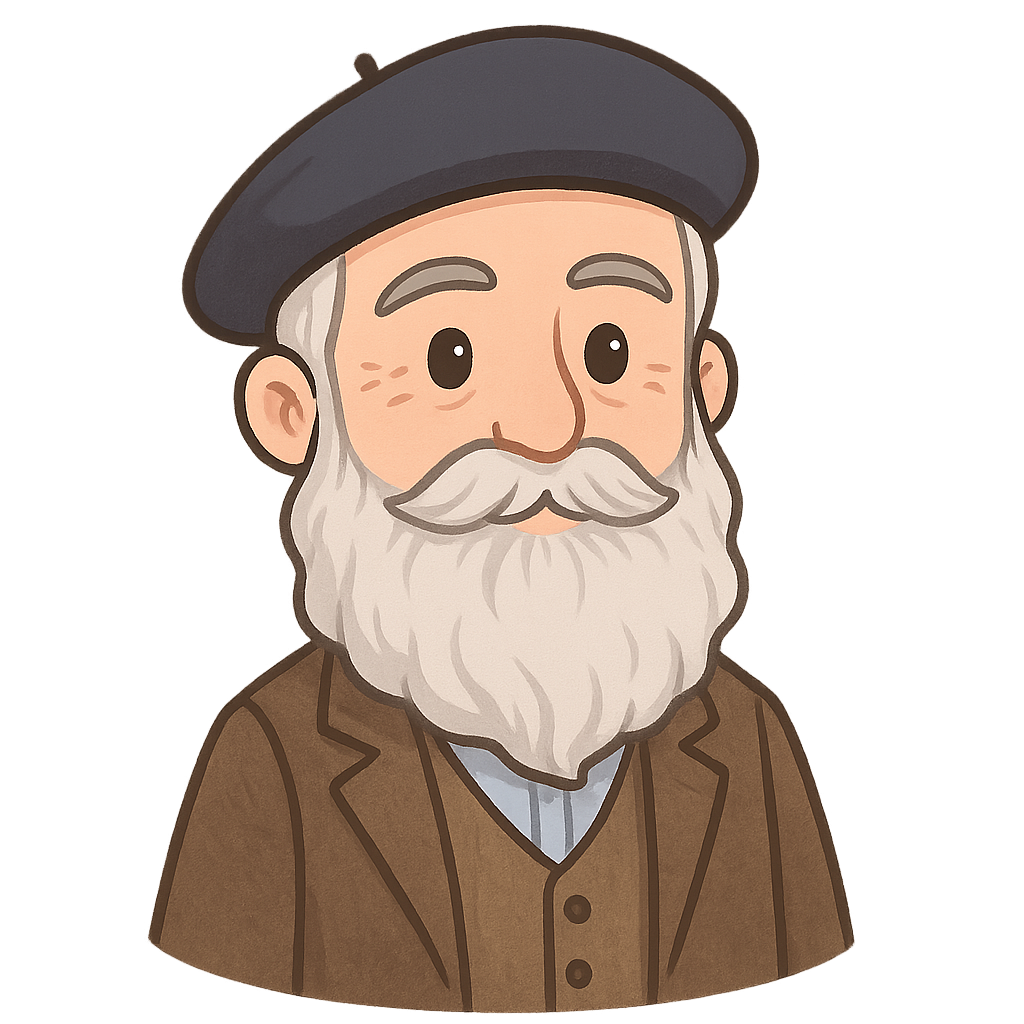
Hello! My name is Oscar-Claude Monet, but you can call me Claude. I was born in Paris, France, on November 14th, 1840. When I was a little boy, around 1845, my family moved to a town by the sea called Le Havre. I loved everything about the outdoors—the water, the sky, and the changing weather. I must admit, I enjoyed being outside much more than I enjoyed being in a classroom. My first success as an artist didn't happen with a paintbrush, but with a pencil. I became known for drawing funny pictures, which are called caricatures, of my teachers and the people in my town. It was my first step into the world of art, and it was just the beginning.
Everything changed for me around 1856 when I met an artist named Eugène Boudin. He saw something special in my drawings and taught me a completely new way to create art. He encouraged me to paint ‘en plein air,’ which is a French phrase that means painting right outside in the open air, instead of in a studio. Eugène showed me how to look closely at the world and pay attention to how sunlight and the weather can change the color and feel of everything in an instant. In 1859, I moved back to Paris to study art more seriously. However, I found the art schools there to be very strict. They wanted everyone to paint in the same old style. It was in Paris that I met other young artists, like Pierre-Auguste Renoir, who felt the same way I did. We wanted to paint the world as we really saw it, full of light and movement.
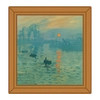
My friends and I wanted to capture the feeling, or the 'impression,' of a moment. In 1872, I painted a picture of the sunrise over the harbor in my hometown and called it 'Impression, Sunrise.' Our style was so different that the official art shows in Paris would not display our work. So, in 1874, we decided to put on our own exhibition. When a critic saw my painting, he jokingly called us all 'Impressionists' to make fun of our style. But we loved the name, and it stuck! Impressionism is all about using quick, bright brushstrokes to show how light dances on things. It's not about painting every tiny detail perfectly, but about capturing a fleeting moment. I used this style to paint a series of pictures of the Saint-Lazare train station in 1877, showing how the steam and light looked at different times of the day.
Claude Monet: Painting with Light
Hello! My name is Oscar-Claude Monet, but you can call me Claude. I was born in Paris, France, on November 14th, 1840. When I was a little boy, around 1845, my family moved to a town by the sea called Le Havre. I loved everything about the outdoors—the water, the sky, and the changing weather. I must admit, I enjoyed being outside much more than I enjoyed being in a classroom. My first success as an artist didn't happen with a paintbrush, but with a pencil. I became known for drawing funny pictures, which are called caricatures, of my teachers and the people in my town. It was my first step into the world of art, and it was just the beginning.
Everything changed for me around 1856 when I met an artist named Eugène Boudin. He saw something special in my drawings and taught me a completely new way to create art. He encouraged me to paint ‘en plein air,’ which is a French phrase that means painting right outside in the open air, instead of in a studio. Eugène showed me how to look closely at the world and pay attention to how sunlight and the weather can change the color and feel of everything in an instant. In 1859, I moved back to Paris to study art more seriously. However, I found the art schools there to be very strict. They wanted everyone to paint in the same old style. It was in Paris that I met other young artists, like Pierre-Auguste Renoir, who felt the same way I did. We wanted to paint the world as we really saw it, full of light and movement.
My friends and I wanted to capture the feeling, or the 'impression,' of a moment. In 1872, I painted a picture of the sunrise over the harbor in my hometown and called it 'Impression, Sunrise.' Our style was so different that the official art shows in Paris would not display our work. So, in 1874, we decided to put on our own exhibition. When a critic saw my painting, he jokingly called us all 'Impressionists' to make fun of our style. But we loved the name, and it stuck! Impressionism is all about using quick, bright brushstrokes to show how light dances on things. It's not about painting every tiny detail perfectly, but about capturing a fleeting moment. I used this style to paint a series of pictures of the Saint-Lazare train station in 1877, showing how the steam and light looked at different times of the day.
In 1883, I found a place that would become my greatest inspiration: a house with a large garden in a little village called Giverny. I spent years working on my garden, turning it into a living work of art. I had a flower garden bursting with every color you can imagine, and a special water garden with a green Japanese-style bridge arching over a pond. The pond was filled with the most beautiful water lilies. This garden became my favorite subject to paint. For years, I painted my water lilies over and over again—hundreds of times. I painted them in the morning light, in the bright afternoon sun, and as the sun set in the evening. I wanted to capture every change of light on the surface of the water through every season.
Even as I grew older and my eyesight started to become blurry, I never stopped painting. I could still see the colors and the light in my mind, and I put them onto my canvases. I lived to be 86 years old, and I passed away in my beloved home in Giverny in 1926. Today, people often call me the 'Father of Impressionism.' My paintings have helped people all over the world see the beauty in everyday moments—in a sunrise, a field of flowers, or the reflection of clouds on a pond. My garden at Giverny is still there for people to visit, so they can see the beautiful world that inspired me so much.
Wow facts
About
Claude Monet was a French painter and a founder of the Impressionist movement, which focused on capturing the changing effects of light and atmosphere in paintings, often created outdoors.
Take a Quiz
Question 1 of 5
What does the French phrase 'en plein air' mean in the story?
Explore next





Want to do even more?
Go beyond exploring. Unlock tools that turn every story into real learning.

Storypie Plus for families
Full stories, quizzes, and printables. Nights and car rides, sorted.
- Unlimited audio stories
- Create Mode: your child stars in the story
- Offline downloads
- Printable worksheets & coloring pages

Why Storypie for Schools
Students engaged. Prep in seconds. Evenings back to you.
- Worksheets & Quizzes
- Classroom Management
- Formative Assessment
- Custom Curriculum & Lesson Plans
- 27 Languages

Why Storypie for Homeschool
Curriculum done. They'll ask for more. Hours back in your day.
- Worksheet Generator
- First-Person Audio Stories
- Built-in Comprehension Quizzes
- Custom Curriculum & Lesson Plans
- Print & Go Activities