English

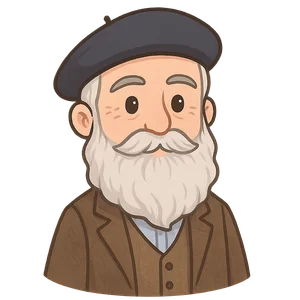
Claude Monet
Claude Monet was a French painter and a founder of the Impressionist movement…
Reads at Grades 6–8 Listens at Grades 4–8
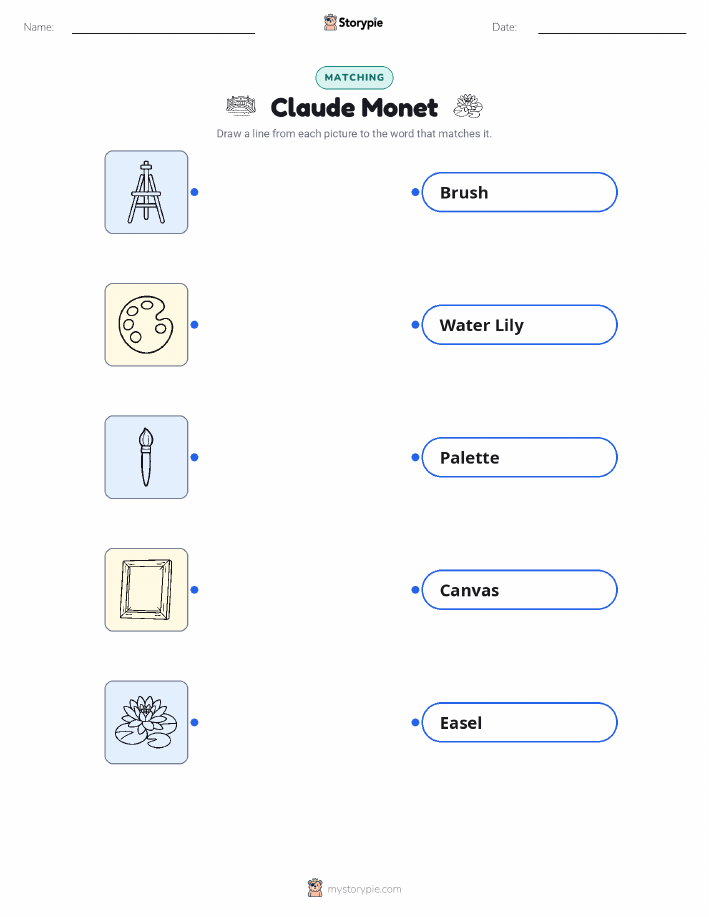
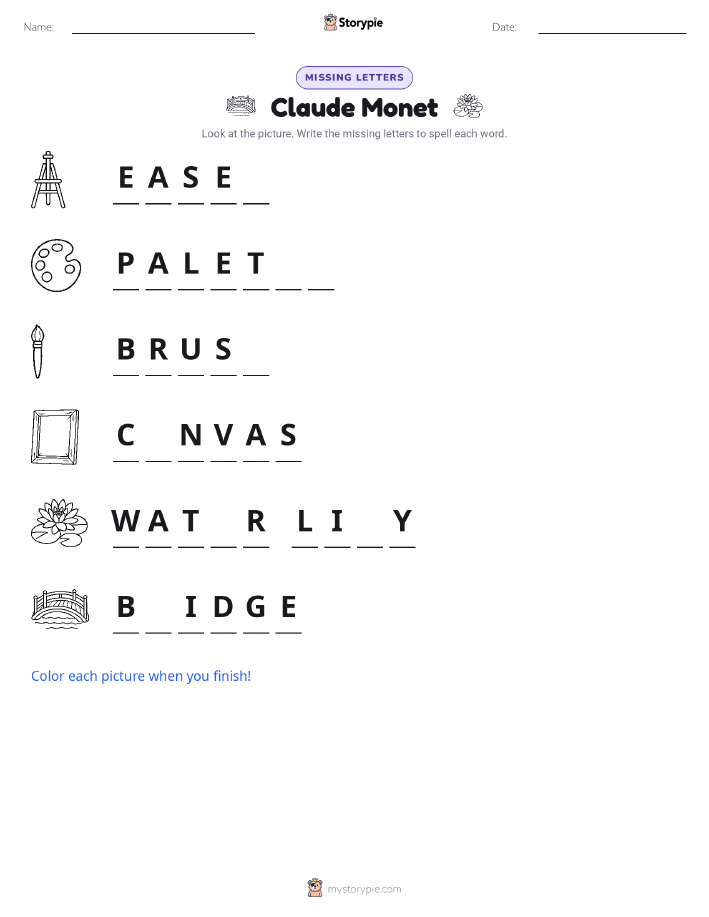
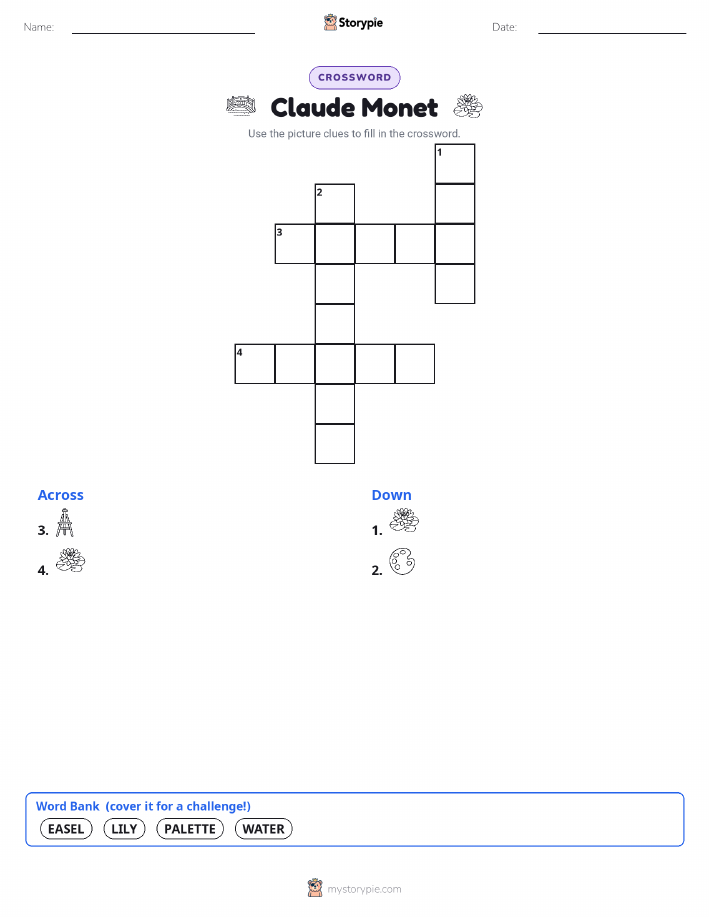
Print & create
Answer keys·No prep·Free with an account
28 worksheets · answer keys · full story · quiz · Ages 10-12 · CEFR B2
Plus adds 279,000+ more stories in 27 languages, audio for every one, and printables for all of them.
Just want Claude Monet?
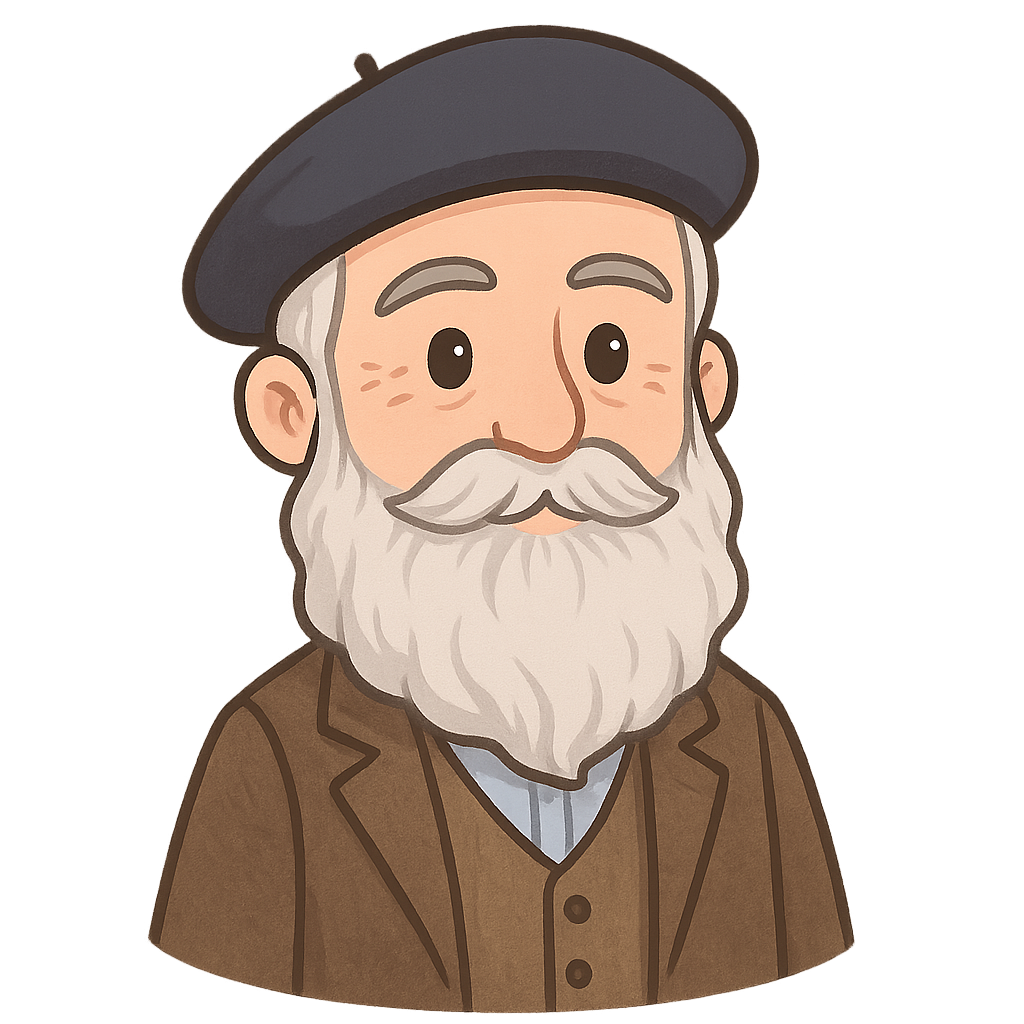
Hello, my name is Claude Monet, and I am a painter. My story begins in Paris, France, where I was born on November 14th, 1840. Though I was born in the busy city, my family moved to the coastal town of Le Havre when I was a young boy. It was there, by the sea, that I developed a deep love for the ever-changing sky and the shifting waters of the English Channel. From an early age, I knew I had a passion for drawing. I wasn't interested in traditional school lessons; instead, I filled my notebooks with sketches. I became quite well-known for drawing funny pictures, called caricatures, of my teachers and the townspeople. It was my mother, Louise, who first saw the real artist in me. She always encouraged my talent and supported my creative spirit. It was her belief in me that set the stage for a chance meeting with an artist who would completely change the way I saw the world.
Around the year 1856, my life took a pivotal turn when I met a landscape painter named Eugène Boudin. He saw potential in my drawings but challenged me to see beyond simple lines. Eugène introduced me to the practice of painting outdoors, directly in nature, which the French call painting 'en plein air.' At the time, this was a revolutionary idea, as most artists worked inside studios. He taught me to truly observe the world, especially the magic of light and how it could transform a landscape in an instant. This experience changed everything for me. I left my caricatures behind and dedicated myself to capturing the fleeting moments of daylight and atmosphere on canvas. In 1859, I moved back to Paris to formally study art. It was an exciting time, and in 1862, I met other young artists, including Pierre-Auguste Renoir and Alfred Sisley. We quickly became friends, united by our shared excitement for a new, more vibrant way of painting.
Claude Monet: Painting with Light
Hello, my name is Claude Monet, and I am a painter. My story begins in Paris, France, where I was born on November 14th, 1840. Though I was born in the busy city, my family moved to the coastal town of Le Havre when I was a young boy. It was there, by the sea, that I developed a deep love for the ever-changing sky and the shifting waters of the English Channel. From an early age, I knew I had a passion for drawing. I wasn't interested in traditional school lessons; instead, I filled my notebooks with sketches. I became quite well-known for drawing funny pictures, called caricatures, of my teachers and the townspeople. It was my mother, Louise, who first saw the real artist in me. She always encouraged my talent and supported my creative spirit. It was her belief in me that set the stage for a chance meeting with an artist who would completely change the way I saw the world.
Around the year 1856, my life took a pivotal turn when I met a landscape painter named Eugène Boudin. He saw potential in my drawings but challenged me to see beyond simple lines. Eugène introduced me to the practice of painting outdoors, directly in nature, which the French call painting 'en plein air.' At the time, this was a revolutionary idea, as most artists worked inside studios. He taught me to truly observe the world, especially the magic of light and how it could transform a landscape in an instant. This experience changed everything for me. I left my caricatures behind and dedicated myself to capturing the fleeting moments of daylight and atmosphere on canvas. In 1859, I moved back to Paris to formally study art. It was an exciting time, and in 1862, I met other young artists, including Pierre-Auguste Renoir and Alfred Sisley. We quickly became friends, united by our shared excitement for a new, more vibrant way of painting.
As my friends and I developed our unique style, we faced a major obstacle. The most important art show in France was the Paris Salon, an official exhibition run by a traditional academy. Year after year, the judges at the Salon rejected our paintings. They said our work looked unfinished, messy, and too different from the dark, detailed paintings they considered proper art. We grew frustrated with being told our vision was wrong. So, in 1874, we took a bold step and decided to organize our own independent exhibition to show our work directly to the public. For that show, I displayed a painting I had created in 1872 of the port in my hometown, which I titled 'Impression, Sunrise.' One art critic, intending to make fun of my painting’s title and our style, mockingly called us all 'Impressionists.' He meant it as an insult, but we loved the name. It perfectly described what we were trying to do: not to paint a perfect, photographic copy of a scene, but to capture the immediate feeling—the impression—of a single moment in time. The name stuck, and a new art movement was born.
In 1883, I found a place that would become my greatest source of inspiration for the rest of my life: my home in a small village called Giverny. I poured my heart and soul into crafting the perfect artist's garden there. It was more than just a garden; it was my living, breathing studio. I even had a small river, the Ru, diverted to create a beautiful water garden. I built a Japanese-style bridge that arched over the pond and filled the water with a stunning variety of water lilies. This tranquil space became the center of my world. It was here that I truly began to explore my fascination with light and reflection. I became known for painting the same subject over and over again in what are called 'series.' I would paint haystacks in a field or the cathedral in a nearby town, but each painting was different. I would capture the haystacks in the bright morning sun, in the hazy afternoon, and in the cool light of dusk. By painting the same scene at different times of day and in different seasons, I could study how the changing light and atmosphere completely transformed its appearance and mood. My water lilies, of course, became my most famous series of all.
My life as an artist was not always easy. For many years, my friends and I struggled financially, and it was very difficult to sell our paintings. We believed in our new way of seeing the world, but not many others did at first. I also faced deep personal sadness. In 1879, I lost my beloved first wife, Camille, which brought me immense grief. As I grew older, another challenge emerged that threatened my very ability to paint. My eyesight began to fail due to cataracts, a condition that makes the lens of the eye cloudy. The world started to look blurry, and the colors I saw became muted and distorted. For a painter whose life was dedicated to light and color, this was a devastating blow. But I refused to give up my passion. I continued to paint, relying on my memory of colors and the unique way my eyes now perceived the world. Finally, in 1923, I underwent surgery to restore my vision. It was a risk, but it allowed me to continue painting my beloved garden, determined to capture the world as I truly saw it until the very end.
I lived a long and creative life, and I painted for as long as I could hold a brush. I lived to be 86 years old, passing away on December 5th, 1926. My greatest contribution to the world was helping to start a brand new way of thinking about art, a movement we called Impressionism. We showed the world that a painting could be about more than just a subject; it could be about light, color, and a fleeting moment in time. Today, my paintings of water lilies, haystacks, and poppy fields are celebrated in museums all around the world. I hope that when you see my work, you are reminded to look closely at the world around you and to appreciate the simple beauty of a sunrise or the reflection of clouds on water. I wanted to capture the magic in a single, passing moment, and I hope my art helps you see it, too.
Wow facts
About
Claude Monet was a French painter and a founder of the Impressionist movement, which focused on capturing the changing effects of light and atmosphere in paintings, often created outdoors.
Take a Quiz
Question 1 of 5
What was the main goal of the Impressionist painters, according to the story?
Explore next





Want to do even more?
Go beyond exploring. Unlock tools that turn every story into real learning.

Storypie Plus for families
Full stories, quizzes, and printables. Nights and car rides, sorted.
- Unlimited audio stories
- Create Mode: your child stars in the story
- Offline downloads
- Printable worksheets & coloring pages

Why Storypie for Schools
Students engaged. Prep in seconds. Evenings back to you.
- Worksheets & Quizzes
- Classroom Management
- Formative Assessment
- Custom Curriculum & Lesson Plans
- 27 Languages

Why Storypie for Homeschool
Curriculum done. They'll ask for more. Hours back in your day.
- Worksheet Generator
- First-Person Audio Stories
- Built-in Comprehension Quizzes
- Custom Curriculum & Lesson Plans
- Print & Go Activities