

 English

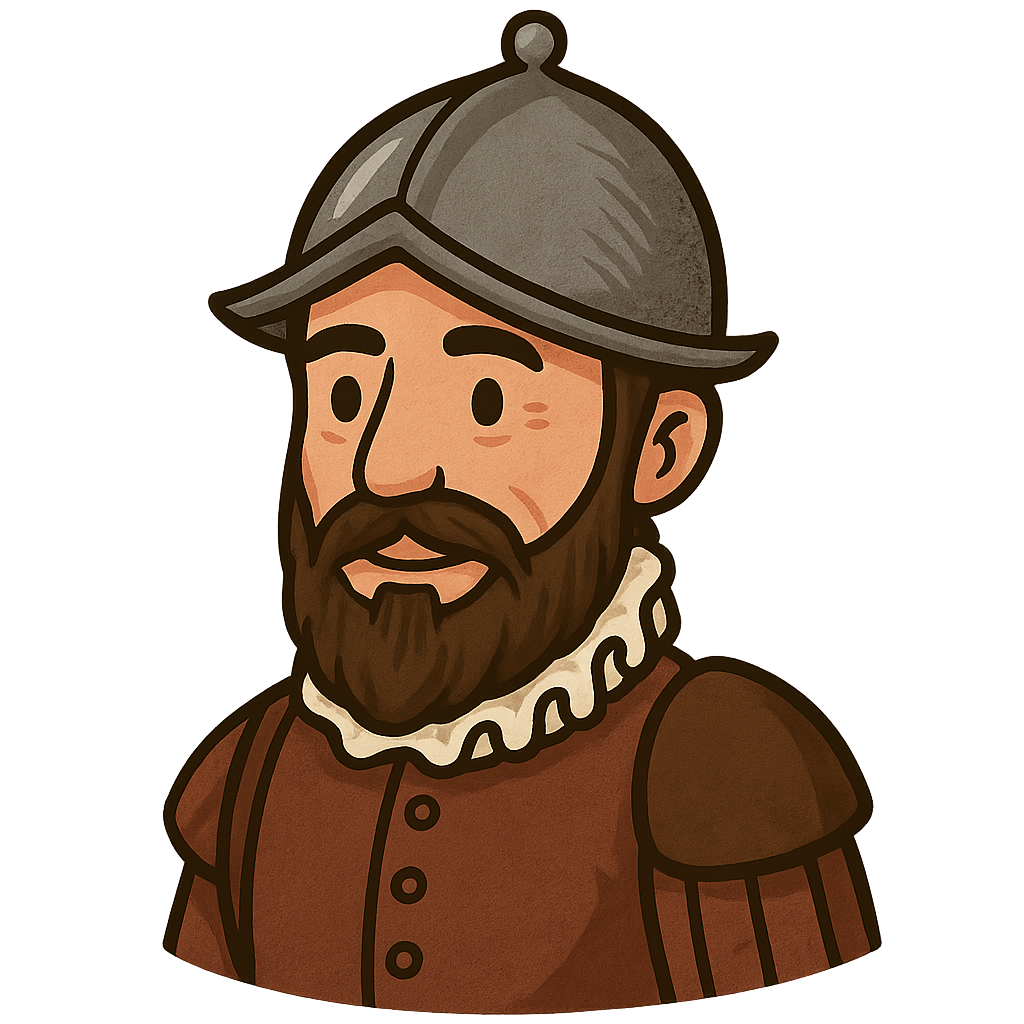
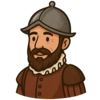
Francisco Pizarro
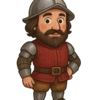
Hello, my name is Francisco Pizarro, and I want to tell you the story of my life, a journey from a poor boy in Spain to the conqueror of a mighty empire. I was born around the year 1478 in a small, dusty town in Spain called Trujillo. My family didn't have much money, so I never learned to read or write. But what I lacked in schooling, I made up for with a giant imagination. Every day, I heard amazing stories about brave explorers like Christopher Columbus. They told tales of sailing across the vast ocean to a “New World” filled with gold, strange animals, and unbelievable adventures. Listening to these stories, a powerful dream grew inside me. I didn't want to spend my life herding pigs in Trujillo; I wanted to find my own fortune and make a name for myself across the sea.
When I was a young man, my dream finally came true. In 1502, I boarded a ship and sailed to the Americas. The journey was long and difficult, with the wooden ship creaking and groaning as it was tossed by endless waves. But when we finally saw land, it was a world unlike anything I had ever imagined. The air was thick and warm, filled with the sounds of strange birds and the scent of unknown flowers. For years, I served as a soldier on different expeditions, learning how to survive in the jungle and how to be a leader. During my travels in Panama, I started hearing whispers from other explorers. They spoke of a legendary kingdom far to the south, a place of incredible wealth with temples and palaces decorated with gold. They called this mysterious land Peru, and the thought of it captured my imagination completely. I knew, deep in my heart, that I had to be the one to find it.
Finding this land of gold became my greatest obsession. But an expedition so grand and dangerous could not be done alone. I found two partners who shared my vision: a tough soldier named Diego de Almagro, who would handle supplies and gather men, and a priest named Hernando de Luque, who helped raise the money we needed. Our first two attempts to reach Peru were terrible failures. We sailed into vicious storms that nearly tore our ships apart, and when we landed, we faced thick, tangled jungles with little food and constant danger. Many of my men grew sick and hungry, losing hope. The turning point came in 1527 on a small island called the Isle of the Rooster. My men were exhausted and wanted to go home. To test their courage, I drew a line in the sand with my sword. On one side was safety and poverty in Panama. On the other was the unknown danger and possible glory of Peru. “Friends and comrades,” I declared, “on that side are toil, hunger, and death; on this side, ease. There lies Peru with its riches; here, Panama and its poverty. Choose, each man, what best becomes a brave Castilian.” One by one, most of the men walked back toward the ship. But thirteen brave men stepped across the line to join me. We would forever be known as the “Thirteen of the Fame,” and with their loyalty, my spirit was renewed.
After securing permission and more support from the King of Spain, I set off on my third and final expedition in 1530. This time, we were successful. We finally reached the shores of the Inca Empire, and what we saw was more amazing than any of the rumors. We saw incredible cities built from massive stones, perfectly fitted together high in the Andes Mountains. We traveled on wide, paved roads that connected the vast empire and saw terraced fields of crops carved into the hillsides. The Inca were brilliant engineers and builders. But we also discovered something very important: the empire was weakened. Two brothers, Atahualpa and Huáscar, had just finished fighting a terrible civil war over who should be the next emperor. Atahualpa had won, but the empire was divided and full of mistrust. This deep argument among the Inca people gave my small group of soldiers an unexpected advantage. We had arrived at a moment of great weakness in a powerful land.
With my small army, I marched inland to the city of Cajamarca. I sent a message inviting the new emperor, Atahualpa, to meet with me. He arrived on November 16th, 1532, carried on a magnificent golden litter and surrounded by thousands of his unarmed followers. It was a tense and frightening moment. We were just over 150 men against an emperor with a massive army nearby. I knew I had to do something bold. I gave a signal, and my men, with their steel swords, armor, and horses—which the Inca had never seen before—charged into the square. We captured Atahualpa, and his followers, shocked and confused, scattered. The emperor was now my prisoner. To buy his freedom, Atahualpa offered a truly incredible ransom: to fill a large room once with gold and twice with silver. The treasure poured in from all corners of the empire, but I did not set him free. After taking control, I marched to the Inca capital of Cuzco and later decided to build a new capital for the Spanish. On January 18th, 1535, I founded the city of Lima, which remains the capital of Peru to this day.
Even after conquering an empire, my life was not peaceful. Governing the new territory was very difficult, and soon, fighting broke out not with the Inca, but among my own men. My old partner, Diego de Almagro, felt that I had not given him his fair share of the treasure and power. Our friendship turned to hatred, and our arguments led to another terrible war, this time between the Spanish conquistadors. Although my side won, the bitterness remained. My life of adventure came to a violent end on June 26th, 1541. Assassins, who were supporters of Almagro’s son, stormed my palace in Lima and ended my life. Looking back, my story is a strange one. I was a poor boy who dreamed of riches and achieved more than anyone could have imagined. I added a vast new territory to Spain and changed the map of the world forever. But my story also serves as a lesson that great ambition and a thirst for gold can lead to conflict, betrayal, and great sorrow.
Activities
Take a Quiz
Test what you learned with a fun quiz!
Get creative with colors!
Print a coloring book page of this topic.








 Free for Educators