

 English

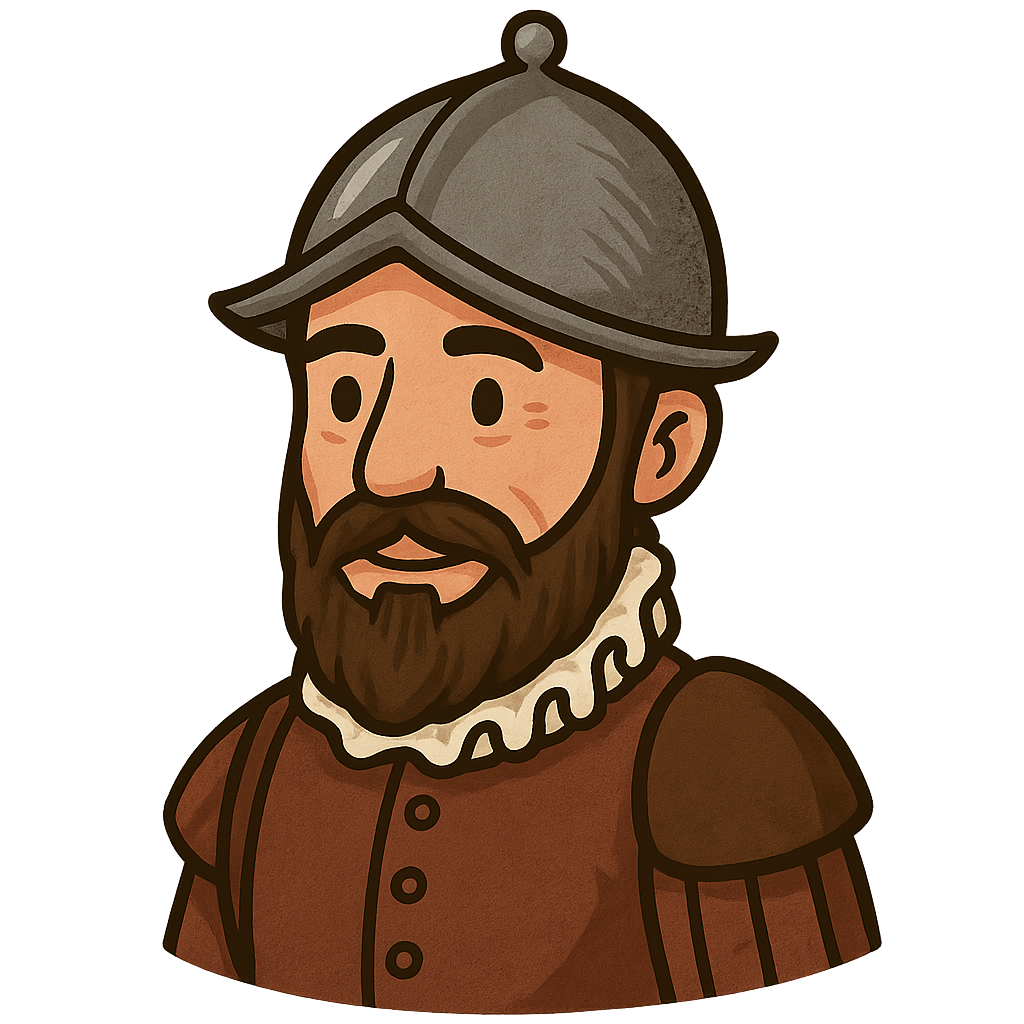
Francisco Pizarro
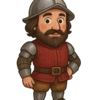
Hello, my name is Francisco Pizarro, and I am known as the Spanish conquistador who conquered the great Inca Empire. My story begins not in a grand palace, but in the dusty, humble town of Trujillo, Spain, where I was born around the year 1478. Life in Trujillo was hard. My family had very little money, and I spent my youth working, not in a schoolhouse. I never learned to read or write, but I was strong, and my ears were always open. I would listen, fascinated, to the incredible stories told by sailors and adventurers returning from across the Atlantic Ocean. They spoke of a “New World,” a land of unbelievable opportunity and strange wonders. These tales lit a fire in my imagination. I knew I was not meant to be a poor farmer for the rest of my life. I dreamed of sailing to this new land to find adventure, glory, and yes, the riches that would change my destiny forever.
In 1502, my dream finally took flight as I boarded a ship and sailed across the vast, blue expanse of the Atlantic Ocean. The journey itself was an adventure. The air was thick with a humid heat I had never felt before, and when we landed, the world was alive with strange plants, colorful birds, and animals I couldn't have imagined. Life as an explorer was demanding and often dangerous, but it was also thrilling. I learned to survive in the wilderness and how to lead men. A pivotal moment in my early years came in 1513 when I joined an expedition led by another explorer, Vasco Núñez de Balboa. We trekked through the dense, unforgiving jungles of what is now Panama. After weeks of struggle, we climbed a peak and looked out upon an endless body of water. We were the first Europeans to ever lay eyes on the mighty Pacific Ocean. That breathtaking sight confirmed what I already felt deep in my heart: there were still great, undiscovered lands out there, and I was determined that I would be the one to find them. Seeing that ocean didn't satisfy me; it only made me hungrier for my own great discovery.
It wasn't long before I started hearing whispers and rumors, stories of a land far to the south, nestled high in the Andes Mountains. This place, called Peru, was said to be the home of a powerful empire overflowing with gold and silver. This was the prize I had been searching for. But a mission so grand couldn't be done alone. I found two partners: a soldier named Diego de Almagro, who would help gather men and supplies, and a priest named Hernando de Luque, who helped finance our dream. Our quest for the golden kingdom began in 1524, but it was far from easy. Our first two expeditions were met with disaster. We battled terrible storms that nearly sank our ships, faced starvation when our food ran out, and fought off attacks from native peoples who did not welcome us. Many of my men lost hope. During our second attempt, we were stranded on the Isle of Gallo, ragged and starving. The governor of Panama sent ships to bring us back, but I refused to quit. I took my sword, drew a line in the sand, and gave my men a choice. “On that side,” I said, pointing toward Panama, “lies poverty. On this side,” I declared, pointing south toward Peru, “lies riches and glory. Choose.” Only thirteen men, who would become known as the “Famous Thirteen,” bravely stepped across the line to join me. My quest would continue.
After our failed attempts, I knew I needed more support. I traveled all the way back to Spain and, in 1529, convinced King Charles I to grant me permission to conquer Peru in the name of Spain. My third and final expedition set sail in 1530. When we finally arrived, we discovered that the mighty Inca Empire was in turmoil. A bitter civil war had just ended between two brothers, Huáscar and Atahualpa, who both wanted to be emperor. Atahualpa had won, but the empire was divided and weakened. This was a stroke of luck for me. With fewer than 200 soldiers, I marched deep into the Andes Mountains to the city of Cajamarca, where Atahualpa was waiting with his army of thousands. On November 16th, 1532, I invited him to a meeting. He arrived with his royal court, unarmed and not expecting an attack. It was a tense moment. We were so few, and they were so many. But I had a plan. Using the element of surprise, my men, with their steel armor, horses, and cannons—all things the Inca had never seen before—charged into the square and captured the emperor. His army was thrown into complete confusion and fled. To win his freedom, Atahualpa offered an incredible ransom: a room filled once with gold and twice with silver. The treasure was delivered, but I faced a terrible choice. I worried that if I released him, his armies would regroup and destroy us. In 1533, I made the difficult and ruthless decision to have him executed. I believed it was the only way to secure control of his vast empire.
With the Inca emperor gone, my men and I marched on to the capital city of Cuzco, conquering it and claiming the empire for Spain. The old capital was high in the mountains, so I decided to build a new one for the Spanish colony. On January 18th, 1535, I founded La Ciudad de los Reyes, the “City of Kings,” which you know today as Lima, the capital of Peru. I had achieved the glory and riches I had dreamed of as a boy in Trujillo. But success brought new conflicts. My old partner, Diego de Almagro, and I began to argue fiercely over how the lands and treasures should be divided. Our disagreement erupted into a civil war between our followers. Almagro was defeated and executed, but his supporters swore revenge against me. On June 26th, 1541, a group of them stormed my palace in Lima and assassinated me. My life, which had been dedicated to a quest for gold and power, ended violently. My journey connected two different worlds and helped create the new nation of Peru, but it came at a great cost to the Inca civilization and ultimately, to my own life. My story is a reminder that ambition can lead to great achievements but can also have devastating consequences.
Activities
Take a Quiz
Test what you learned with a fun quiz!
Get creative with colors!
Print a coloring book page of this topic.








 Free for Educators