

 English

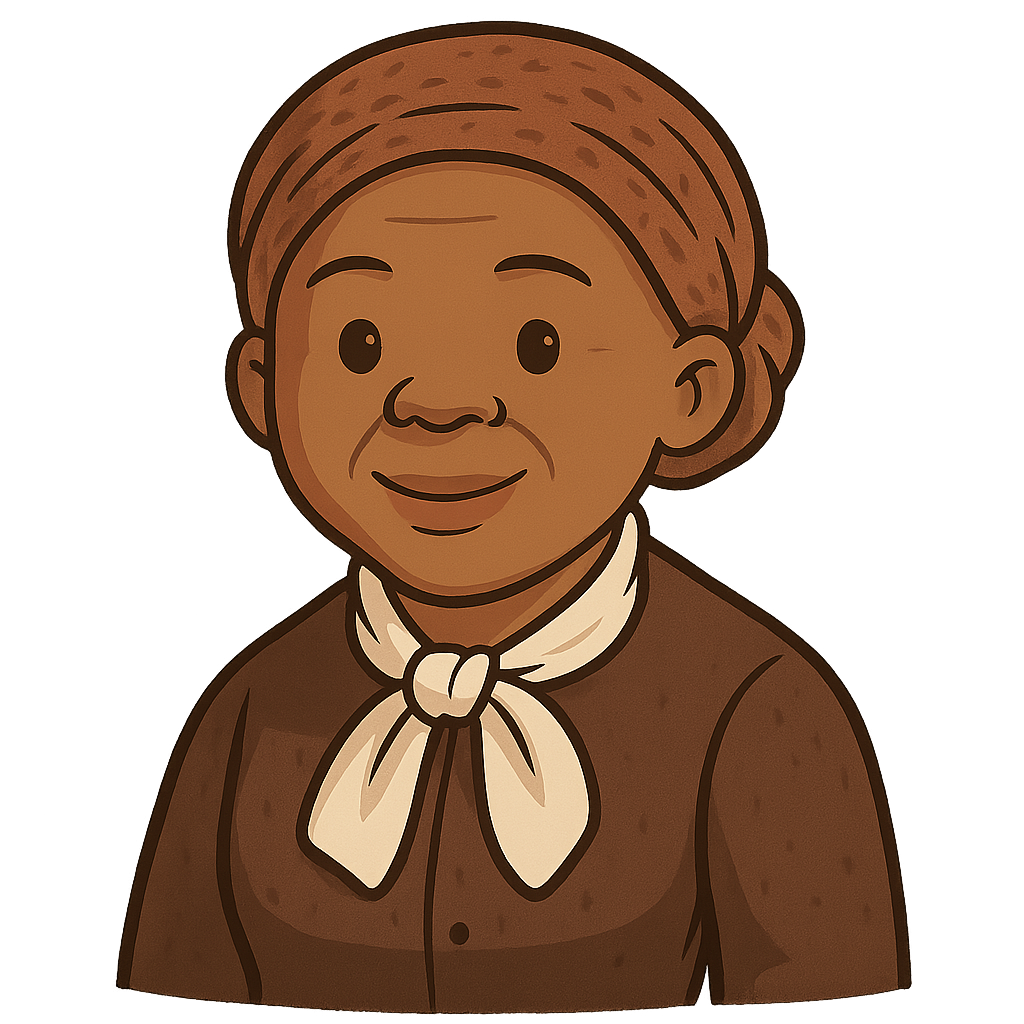
Harriet Tubman: A Journey to Freedom
Hello, my name is Harriet Tubman, and I want to tell you my story. But the name I was given when I was born was Araminta Ross, though everyone called me 'Minty.' I was born into a world that I wouldn't wish upon anyone, around the year 1822 in Dorchester County, Maryland. The world I knew was one of slavery, where my family and I were considered property, not people. We were not free to make our own choices, to live where we wanted, or even to stay together. My parents, Harriet Green, whom we called Rit, and Ben Ross, were the heart of my world. I had eight brothers and sisters, and the love we shared was the only light in some very dark days. But that light was always threatened by the shadow of the auction block. The most terrible fear was being sold away, torn from the only family you had ever known. We lived with that fear every single day. When I was a teenager, something happened that changed my life forever. I was at a dry-goods store when an overseer tried to capture a man who had left the fields without permission. The overseer demanded I help him, but I refused. I stood in a doorway to block his path, and in his anger, he threw a heavy two-pound weight, not at the man, but at me. It struck me hard in the head. The injury was so severe that for the rest of my life, I suffered from terrible headaches and sudden sleeping spells. But something else began to happen, too. I started having powerful visions and vivid dreams, which I believed were messages sent directly from God. These visions, combined with my deep faith and the burning, unshakeable desire to be free, gave me a new kind of strength. I knew I could not stay where I was. In the fall of 1849, I made the terrifying decision to run. I would find freedom, or I would die trying.
My first journey to freedom was a frightening one, nearly 100 miles on foot from Maryland to Philadelphia, Pennsylvania. I traveled mostly at night, with only the North Star as my constant guide. The way was dangerous, filled with slave catchers and dogs, but I was not entirely alone. I was helped by a secret network of brave people, both Black and white, who called their system the Underground Railroad. They were the station masters and conductors who provided safe houses, food, and guidance along the secret routes north. When I finally crossed the line into the free state of Pennsylvania, I remember looking at my hands to see if I was the same person. The sun came like gold through the trees, and over the fields, and I felt like I was in Heaven. But my joy was incomplete. I was a stranger in a strange land, and my family—my parents, my brothers and sisters—were all still in bondage. I could not be truly free while they were not. So, I made a promise to myself and to God. I would go back. I became a 'conductor' on that same Underground Railroad that had saved me. I learned the secret paths, the hidden creeks, and the silent signals. Over the next decade, I made the dangerous journey back into the South again and again. People began to call me 'Moses,' after the biblical prophet who led his people out of slavery to the promised land. I took that name as a sacred trust. I used disguises, sometimes dressing as an old woman, and I sang songs with coded messages to signal when it was safe to move. 'Go Down, Moses' was a favorite, its lyrics a secret map to freedom. I had one firm rule for my passengers: we keep going or we die. There was no turning back, because a captured runaway could betray the entire network. I am proud to say that in all my journeys, I never ran my train off the track and I never lost a passenger. I returned about thirteen times and guided around seventy people, including my dear elderly parents, to their freedom in the North.
For years, our fight for freedom was fought in whispers and shadows, along the dark paths of the Underground Railroad. But in 1861, the nation went to war with itself. The Civil War began, and the fight for liberty moved from the woods to the battlefields. I knew I had to be a part of it. I traveled to a Union Army camp in South Carolina and offered my services. At first, I worked as a cook and a nurse. Having spent my life learning about the healing power of plants and roots, I was able to use my knowledge of herbal remedies to help soldiers suffering from diseases like dysentery. I saved many lives that way, but I knew my unique skills could be used for more dangerous work. Because I knew the Southern landscape so well and could move without attracting suspicion, the army asked me to become a scout and a spy. I organized a group of scouts who would travel through Confederate territory, mapping the land and gathering intelligence about where the enemy had placed troops, weapons, and supply lines. My most important mission came on the night of June 2nd, 1863. I was asked to help lead a raid up the Combahee River. I guided three Union gunboats through the dark, winding waters, which the Confederates had filled with underwater mines. My knowledge of the riverways allowed us to navigate safely. As we pushed deeper into enemy land, we burned plantations and destroyed supply lines. But the most powerful part of that night was when enslaved people from the surrounding plantations saw our ships. They ran from the fields and into the river, hundreds of them, praying and shouting with joy. By the end of the raid, we had liberated more than 750 people. It was a victory for the Union, but for me, it was the fulfillment of a promise. I was no longer just Moses leading a few at a time; I was a soldier in an army of freedom.
When the Civil War ended in 1865 and slavery was finally abolished, a great wave of hope swept across the land. But I knew that the end of the war did not mean the end of the struggle. Freedom was more than just a word on a piece of paper; it meant having a safe home, a voice in your government, and the dignity of caring for yourself and your family. I made my home in Auburn, New York, on a piece of land I had bought before the war. But I did not rest. I saw that there were still many injustices in the world, and I turned my energy to fighting them. I joined the women's suffrage movement, fighting for a woman's right to vote. I stood on stages with incredible women like Susan B. Anthony and argued that I had earned my right to a voice in this country just as much as any man. My greatest passion, however, was caring for my community. I saw so many formerly enslaved people who were now elderly, sick, and had nowhere to go. My dream was to create a place for them to live in peace and with dignity. After years of hard work and fundraising, I opened the Harriet Tubman Home for the Aged on my own property. It was a place of refuge for those who had nowhere else to turn. My long life came to an end on March 10th, 1913, surrounded by friends and loved ones. I lived a full life, and I never stopped fighting. I want you to remember that it doesn't matter how small or powerless you might feel. Every single person has the strength within them to stand up for what is right, to help those in need, and to make a change in the world. You just have to find your own North Star and follow it.
Activities
Take a Quiz
Test what you learned with a fun quiz!
Get creative with colors!
Print a coloring book page of this topic.





 Free for Educators