English

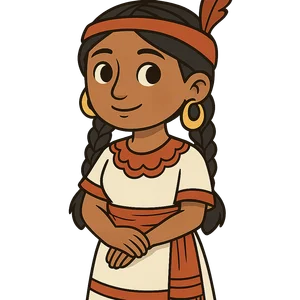
La Malinche
An Indigenous woman of uncertain ethnic affiliation, possibly Nahua or Chontal Maya…
Reads at Grades 3–5 Listens at Grades 1–5
Print & create
Answer keys·No prep·Free with an account
28 worksheets · answer keys · full story · quiz · Ages 8-10 · CEFR B1
Plus adds 279,000+ more stories in 27 languages, audio for every one, and printables for all of them.
Just want La Malinche?
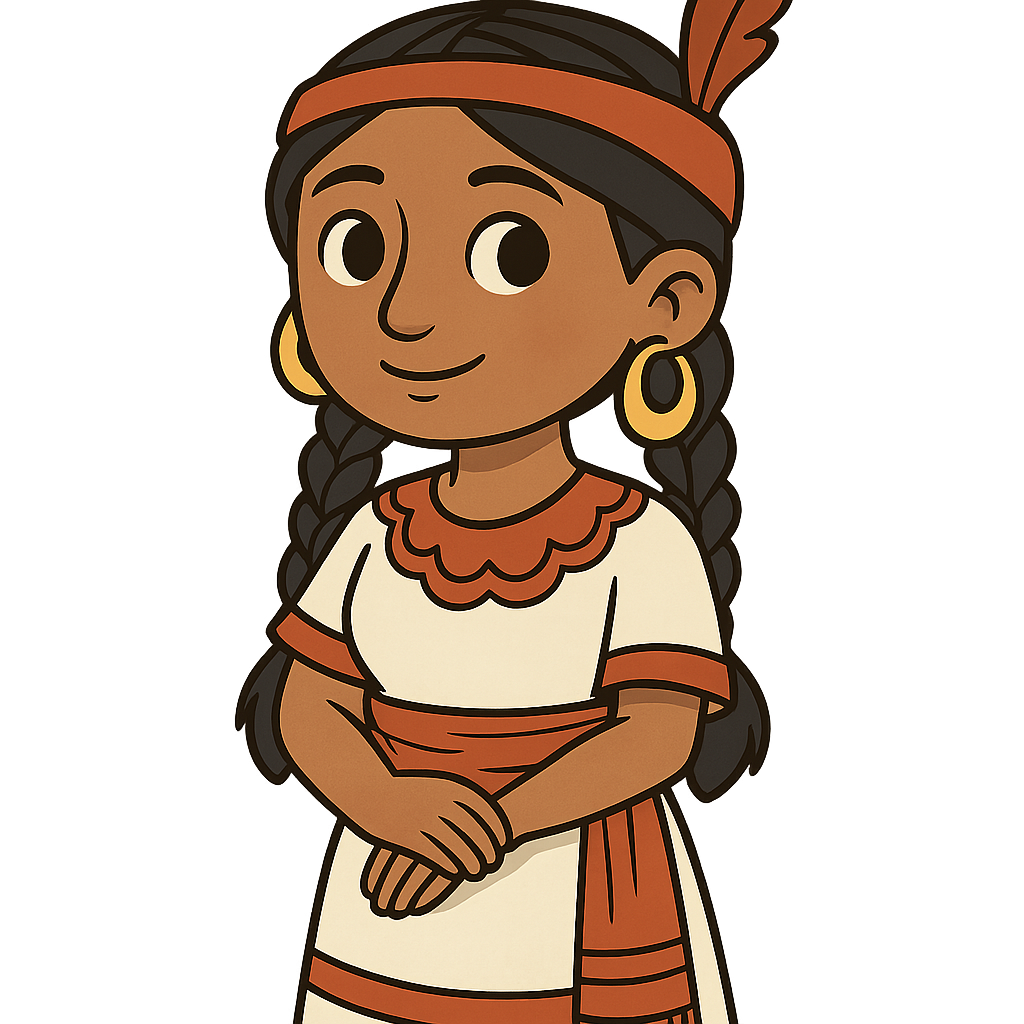
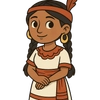
Hello, my name is Malintzin, though you may have heard of me as La Malinche or Doña Marina. My story begins around the year 1500 in a part of the world we now call Mexico. I was born into a noble family of the Nahua people, and the language of my home was Nahuatl. Life was peaceful until my father passed away. After he was gone, my world turned upside down, and I was sold to traders. They took me far from my home to a region where people spoke a completely different language, Mayan. It was a sad and confusing time for me, but I have always been a quick learner. I listened carefully to the new sounds and words around me. Soon, I could speak both Nahuatl and Mayan perfectly. I had no idea then, but knowing these two languages would change my life, and the course of history, forever.
In the year 1519, everything changed again. Tall ships, bigger than any canoe I had ever seen, arrived on the coast. They carried strange men with pale skin and beards. These were the Spanish conquistadors, led by a man named Hernán Cortés. I was one of twenty young women given to the Spanish as a gift. At first, they did not realize I had a special skill. They had a Spanish priest who could speak Mayan, but he couldn't speak Nahuatl, which was the language of the powerful Aztec Empire they wanted to meet. When they discovered I could speak both Mayan and Nahuatl, I suddenly became very important. At first, it was like a game of telephone. Cortés would speak in Spanish to the priest, the priest would translate it into Mayan for me, and I would then speak in Nahuatl to the messengers of the Aztec emperor, Moctezuma II. It was complicated, but I knew I had to translate every word perfectly.
La Malinche
Hello, my name is Malintzin, though you may have heard of me as La Malinche or Doña Marina. My story begins around the year 1500 in a part of the world we now call Mexico. I was born into a noble family of the Nahua people, and the language of my home was Nahuatl. Life was peaceful until my father passed away. After he was gone, my world turned upside down, and I was sold to traders. They took me far from my home to a region where people spoke a completely different language, Mayan. It was a sad and confusing time for me, but I have always been a quick learner. I listened carefully to the new sounds and words around me. Soon, I could speak both Nahuatl and Mayan perfectly. I had no idea then, but knowing these two languages would change my life, and the course of history, forever.
In the year 1519, everything changed again. Tall ships, bigger than any canoe I had ever seen, arrived on the coast. They carried strange men with pale skin and beards. These were the Spanish conquistadors, led by a man named Hernán Cortés. I was one of twenty young women given to the Spanish as a gift. At first, they did not realize I had a special skill. They had a Spanish priest who could speak Mayan, but he couldn't speak Nahuatl, which was the language of the powerful Aztec Empire they wanted to meet. When they discovered I could speak both Mayan and Nahuatl, I suddenly became very important. At first, it was like a game of telephone. Cortés would speak in Spanish to the priest, the priest would translate it into Mayan for me, and I would then speak in Nahuatl to the messengers of the Aztec emperor, Moctezuma II. It was complicated, but I knew I had to translate every word perfectly.
I decided I needed to learn a third language: Spanish. I listened to every word the soldiers said and practiced every day. Soon, I could speak Spanish, too. This was a huge change because it meant I could translate directly for Hernán Cortés without needing the priest to help. I was no longer just a translator; I became his advisor and diplomat. My job was more than just changing words from one language to another. I had to explain beliefs, traditions, and strategies. I helped Cortés understand the world of my people, and I helped my people understand the goals of the Spanish. I also helped form alliances with other Indigenous groups who were not happy with the Aztec rulers. It was a very powerful, but also very difficult, position to be in. During this time, I also had a son with Cortés. We named him Martín, and he was born in 1522. He was one of the very first children with both Indigenous and European parents, marking the beginning of a new people called the Mestizos.
After the fighting ended, I continued to work as an interpreter. Around the year 1524, I married a Spanish gentleman named Juan Jaramillo and we had a daughter named María. My life was full of incredible changes, and my story is remembered in many different ways. Some people have called me a traitor for helping the Spanish. Others see me as a clever survivor who did her best in a very difficult situation. They see me as a skilled diplomat who saved many lives by helping people communicate, and as the mother of a new culture in Mexico. I lived through a time of great conflict and change, and my life ended around the year 1529. Today, I am remembered as a bridge between two worlds, a woman whose voice shaped the history of a nation.
Wow facts
About
An Indigenous woman of uncertain ethnic affiliation, possibly Nahua or Chontal Maya, from the early 16th century who was an interpreter, advisor, and intermediary for the Spanish conquistador Hernán Cortés during the conquest of the Aztec Empire.
Take a Quiz
Question 1 of 5
What two languages did Malintzin know that first made her important to the Spanish in 1519?
Explore next




Want to do even more?
Go beyond exploring. Unlock tools that turn every story into real learning.

Storypie Plus for families
Full stories, quizzes, and printables. Nights and car rides, sorted.
- Unlimited audio stories
- Create Mode: your child stars in the story
- Offline downloads
- Printable worksheets & coloring pages

Why Storypie for Schools
Students engaged. Prep in seconds. Evenings back to you.
- Worksheets & Quizzes
- Classroom Management
- Formative Assessment
- Custom Curriculum & Lesson Plans
- 27 Languages

Why Storypie for Homeschool
Curriculum done. They'll ask for more. Hours back in your day.
- Worksheet Generator
- First-Person Audio Stories
- Built-in Comprehension Quizzes
- Custom Curriculum & Lesson Plans
- Print & Go Activities