
 English

Srinivasa Ramanujan: A Journey with Numbers
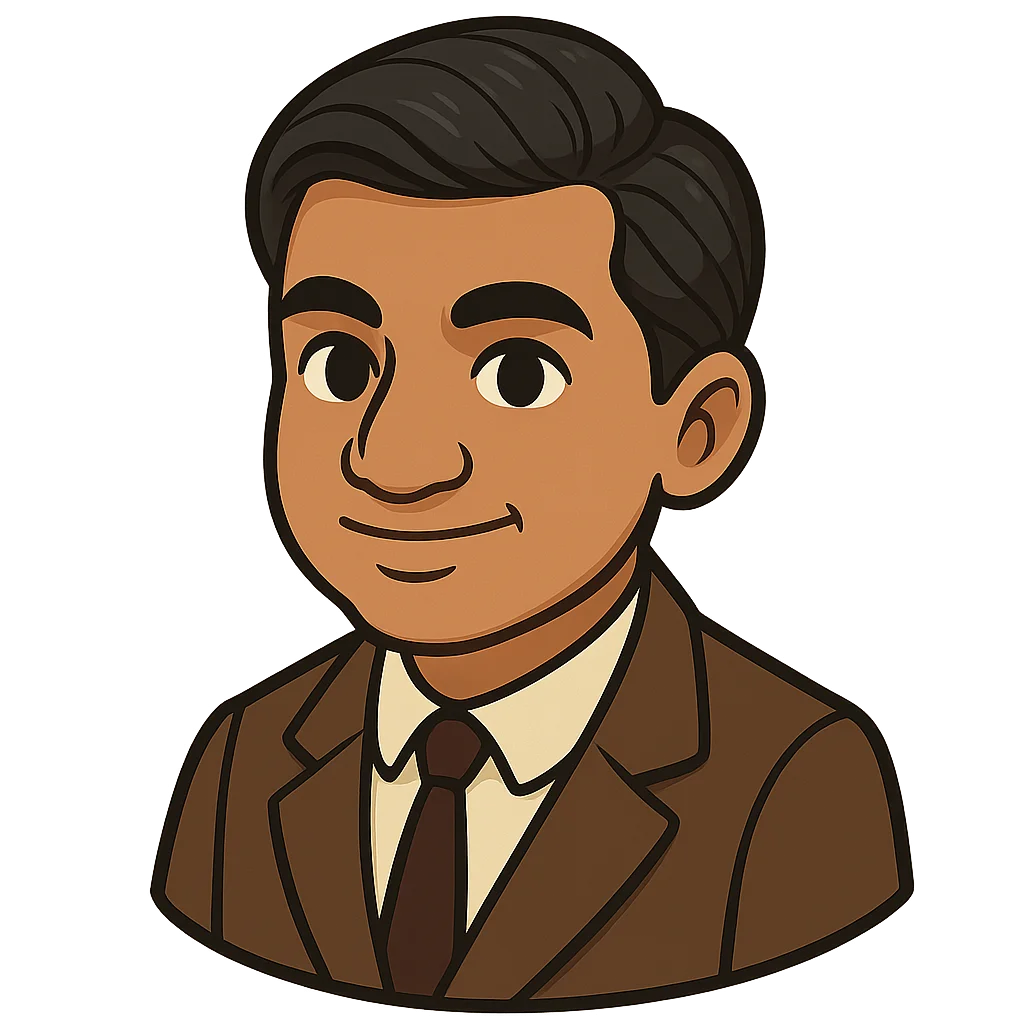
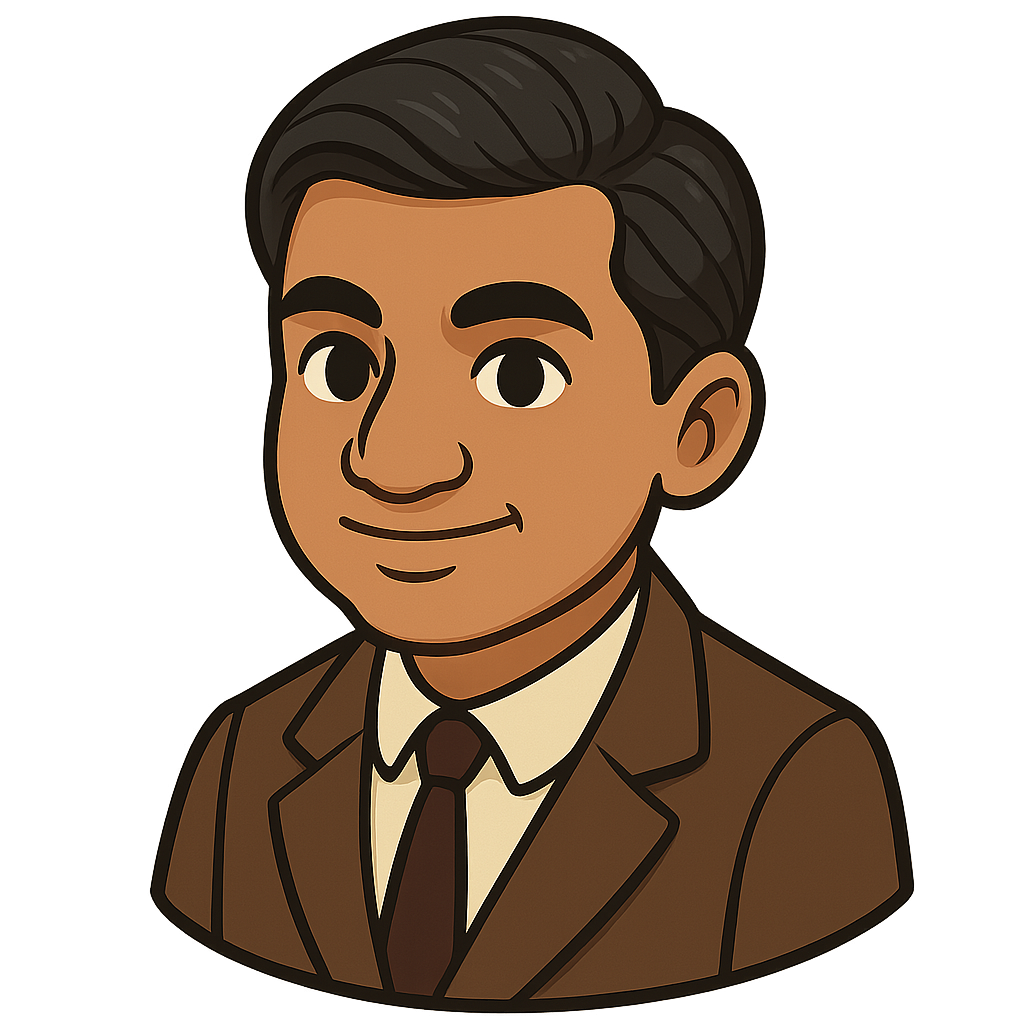
Hello! My name is Srinivasa Ramanujan. My story begins in a small town in India called Erode, where I was born on December 22nd, 1887. From a very young age, I didn't see the world in the same way as my friends. While they played games, I saw patterns and puzzles everywhere. Numbers weren't just for counting; they were my friends. They told me secrets and sang songs that only I could hear. I was mostly self-taught, borrowing math books from older students and devouring them. By the time I was a teenager, I was already exploring mathematical ideas that even university professors didn't know about. I felt a deep connection to numbers that guided my entire life.
When I was 15, in 1903, I found a very important book: 'A Synopsis of Elementary Results in Pure and Applied Mathematics' by G. S. Carr. It wasn't a book of explanations, but a giant list of thousands of theorems. For me, it was a treasure map. It sparked my imagination, and I set out to prove each theorem and then invent my own. Life wasn't easy, though. My family didn't have much money, and because I focused so much on math, I struggled with other subjects and failed to get a university degree. To support my family, I took a job as a clerk at the Madras Port Trust in 1912. But even while I was working, I never stopped thinking about numbers. I filled notebooks with my ideas, dreaming that one day, the world would see the magic I saw.
I knew my ideas were special, but I needed someone to understand them. So, in 1913, I gathered my courage and some of my best formulas and wrote letters to famous mathematicians in England. The first few letters I sent were ignored or returned. They probably thought I was just some random person with crazy ideas. But I didn't give up. I sent one more letter, this time to a brilliant mathematician at the University of Cambridge named G. H. Hardy. When he read my letter, full of theorems he had never seen before, he was stunned. He knew he had found something—and someone—truly extraordinary. Professor Hardy saw past my lack of formal education and recognized the raw genius in my work.
Professor Hardy invited me to come to England to work with him. It was a difficult choice. I had never left India, and I was a devout Hindu with a strict vegetarian diet. But the chance to work with one of the world's greatest mathematicians was too important to pass up. So, in 1914, I sailed across the ocean to a new, cold country. At Trinity College, Cambridge, Professor Hardy and I became great partners. He taught me the formal methods of mathematical proof, which helped me structure my ideas so others could understand them. In return, I showed him worlds of mathematics he had never imagined. Together, we worked on amazing problems, like the partition of numbers, and published many papers that changed the field of mathematics.
My time in England brought great success, and my work was finally being recognized by the wider world. In 1918, I was elected a Fellow of the Royal Society, one of the highest honors a scientist can receive. I was one of the youngest people ever to be given this honor. Later that year, I also became the first Indian to be elected a Fellow of Trinity College, Cambridge. But my time there was also very hard. The cold weather and the difficulty of finding the right food during World War I took a toll on my health. I became very sick, and though my mind was still full of numbers, my body grew weak. Professor Hardy would visit me in the hospital, and we would still talk about math—it was the one thing that always made me feel better.
Missing the warmth of my home, I returned to India in 1919, but I never fully recovered my health. I lived to be 32 years old, passing away in 1920. Even in my final year, I never stopped my work, writing down new ideas in what is now called my 'lost notebook.' This notebook was found many years later and showed that I was still making incredible discoveries right up to the very end. Today, mathematicians are still studying my work. My formulas have been used in everything from computer science to understanding the mysteries of black holes. I hope my story shows you that no matter where you come from, if you have a passion and a dream, your ideas can change the world.