English

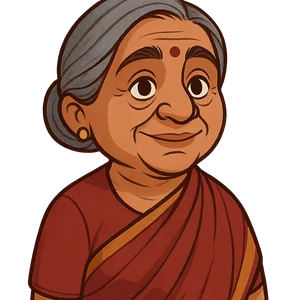
Sarojini Naidu
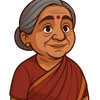
Sarojini Naidu was a celebrated Indian poet and a pivotal figure in India's struggle for independence.
Reads at Grades 3–5 Listens at Grades 1–5
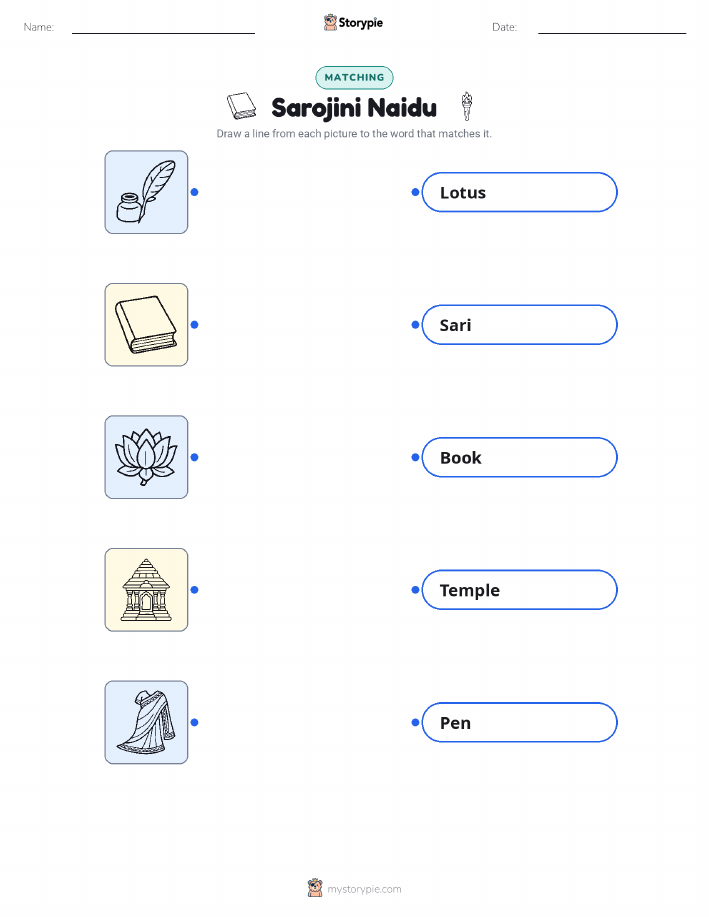
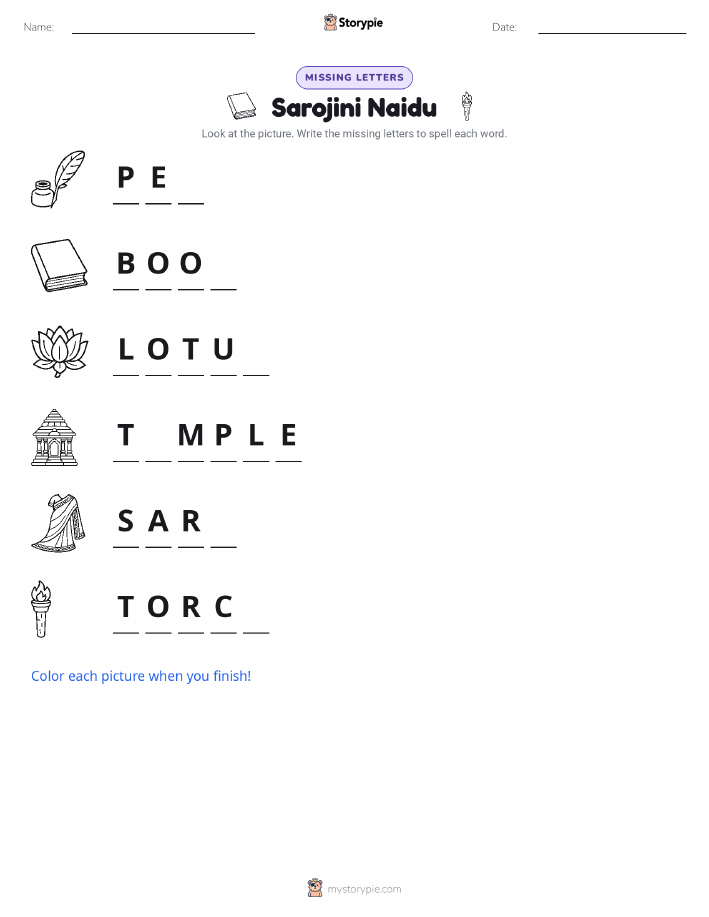
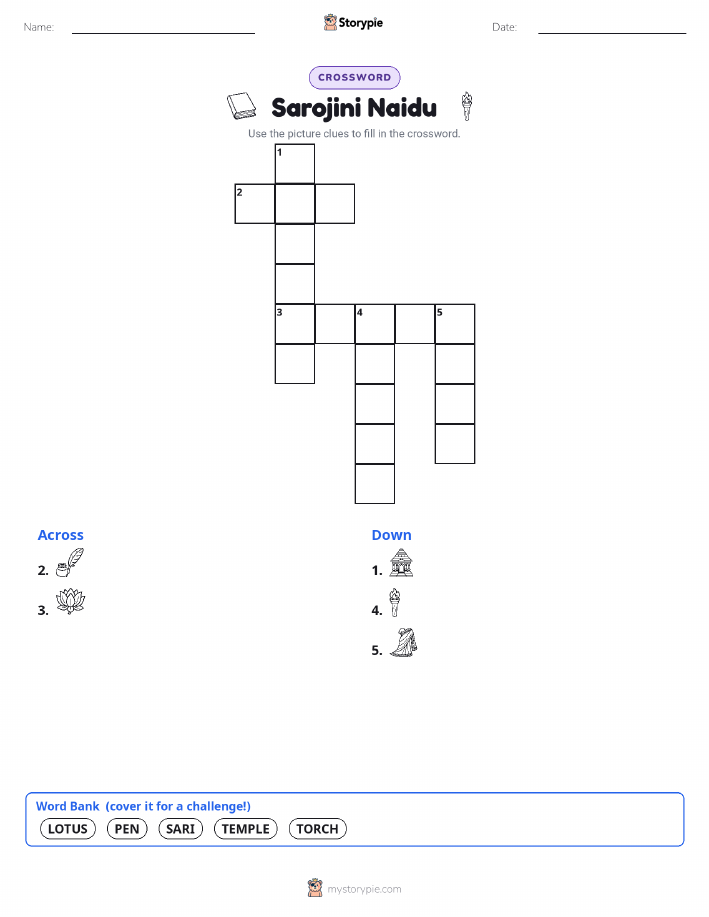
Print & create
Answer keys·No prep·Free with an account
28 worksheets · answer keys · full story · quiz · Ages 8-10 · CEFR B1
Plus adds 279,000+ more stories in 27 languages, audio for every one, and printables for all of them.
Just want Sarojini Naidu?
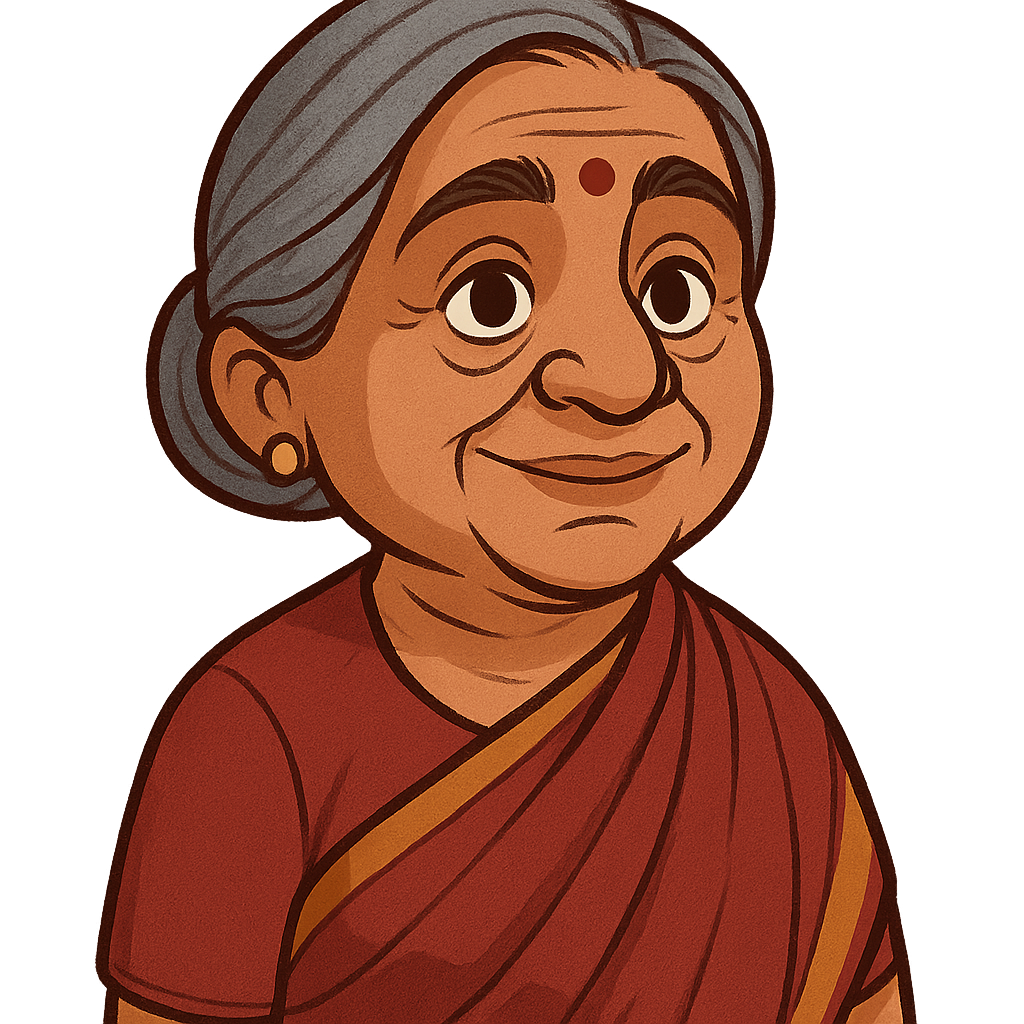
Hello! My name is Sarojini Naidu, and I want to tell you my story. I was born in a city called Hyderabad, in India, on February 13th, 1879. My father, Aghorenath Chattopadhyay, was a scientist and philosopher, and my mother, Varada Sundari Devi, was a wonderful poet. Our home was filled with books, art, and interesting people, and from a very young age, I fell in love with writing poems and expressing my thoughts through verse. It was a wonderful way to grow up, surrounded by so much creativity.
I loved learning so much that I passed a big university exam when I was only twelve years old! Because I did so well, I was given the chance to travel all the way to England to continue my studies. In 1895, I went to study at King's College in London and then Girton College in Cambridge. It was an exciting adventure for a young girl from India. While I was there, I met a kind doctor named Govindarajulu Naidu. We fell in love, and I would later marry him in 1898 after returning to my home country.
Even though I was far from home, I never stopped thinking about India. I wrote poems about its colorful bazaars, beautiful temples, and amazing people. These poems were my way of sharing the soul of my country with the world. In 1905, my first book of poems, called 'The Golden Threshold,' was published. People loved my poetry so much that they gave me a special nickname: 'Bharatiya Kokila,' which means 'The Nightingale of India.' My words were like songs that celebrated my country, and this name made me very proud.
Sarojini Naidu: The Nightingale of India
Hello! My name is Sarojini Naidu, and I want to tell you my story. I was born in a city called Hyderabad, in India, on February 13th, 1879. My father, Aghorenath Chattopadhyay, was a scientist and philosopher, and my mother, Varada Sundari Devi, was a wonderful poet. Our home was filled with books, art, and interesting people, and from a very young age, I fell in love with writing poems and expressing my thoughts through verse. It was a wonderful way to grow up, surrounded by so much creativity.
I loved learning so much that I passed a big university exam when I was only twelve years old! Because I did so well, I was given the chance to travel all the way to England to continue my studies. In 1895, I went to study at King's College in London and then Girton College in Cambridge. It was an exciting adventure for a young girl from India. While I was there, I met a kind doctor named Govindarajulu Naidu. We fell in love, and I would later marry him in 1898 after returning to my home country.
Even though I was far from home, I never stopped thinking about India. I wrote poems about its colorful bazaars, beautiful temples, and amazing people. These poems were my way of sharing the soul of my country with the world. In 1905, my first book of poems, called 'The Golden Threshold,' was published. People loved my poetry so much that they gave me a special nickname: 'Bharatiya Kokila,' which means 'The Nightingale of India.' My words were like songs that celebrated my country, and this name made me very proud.
As I grew older, I realized that my words could do more than just make beautiful poems; they could inspire action. At that time, India was ruled by the British, and many of us believed it was time for India to be free and independent. I decided to use my voice to speak up for my country's freedom. I joined other leaders like Mahatma Gandhi and Jawaharlal Nehru in this important cause. In 1925, I was chosen to be the president of a very important group called the Indian National Congress—I was the first Indian woman to have that job! In 1930, I even helped lead a famous protest called the Salt March to show that we wanted to make our own decisions for our country.
After many years of hard work, India finally became an independent country on August 15th, 1947. It was a dream come true for me and millions of others! After independence, I was given a new and important job: to be the governor of a large state called the United Provinces. This made me the very first woman governor of a state in India. I was so proud to help build our new, free nation and serve its people in this important role.
I lived to be 70 years old, and my life was full of poetry and purpose. Today, people in India remember me as both a poet and a freedom fighter. They remember how I used the power of words to fight for what I believed in. In fact, to honor the contributions of all women to our country, my birthday, February 13th, is now celebrated in India as National Women's Day. It is a wonderful reminder that a single voice, filled with passion, can help change the world.
Wow facts
About
Sarojini Naidu was a celebrated Indian poet and a pivotal figure in India's struggle for independence. Known as 'The Nightingale of India,' she was also the first Indian woman to serve as the president of the Indian National Congress and the first woman to be appointed governor of an Indian state.
Take a Quiz
Question 1 of 5
What does the nickname 'The Nightingale of India' suggest about Sarojini Naidu's poetry?
Explore next



Want to do even more?
Go beyond exploring. Unlock tools that turn every story into real learning.

Storypie Plus for families
Full stories, quizzes, and printables. Nights and car rides, sorted.
- Unlimited audio stories
- Create Mode: your child stars in the story
- Offline downloads
- Printable worksheets & coloring pages

Why Storypie for Schools
Students engaged. Prep in seconds. Evenings back to you.
- Worksheets & Quizzes
- Classroom Management
- Formative Assessment
- Custom Curriculum & Lesson Plans
- 27 Languages

Why Storypie for Homeschool
Curriculum done. They'll ask for more. Hours back in your day.
- Worksheet Generator
- First-Person Audio Stories
- Built-in Comprehension Quizzes
- Custom Curriculum & Lesson Plans
- Print & Go Activities