English


René Descartes: The Boy Who Questioned Everything
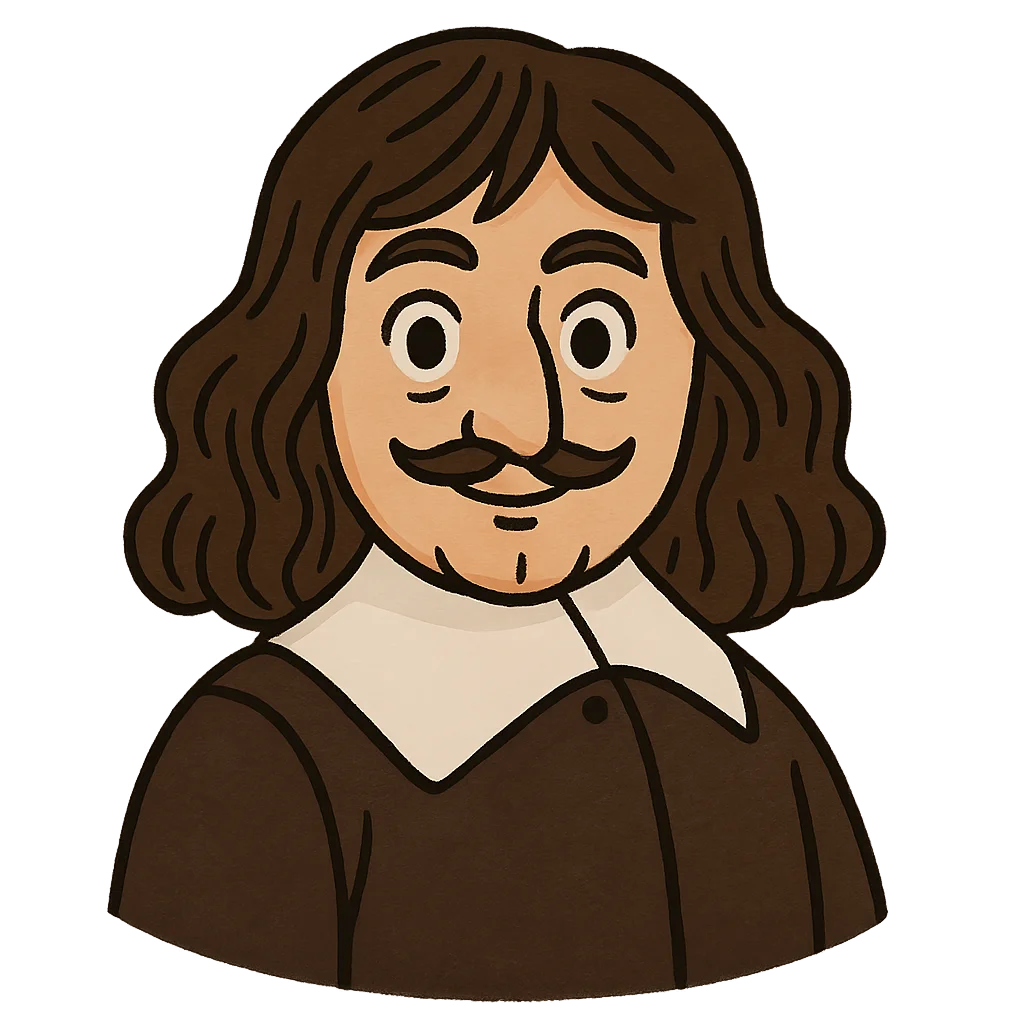
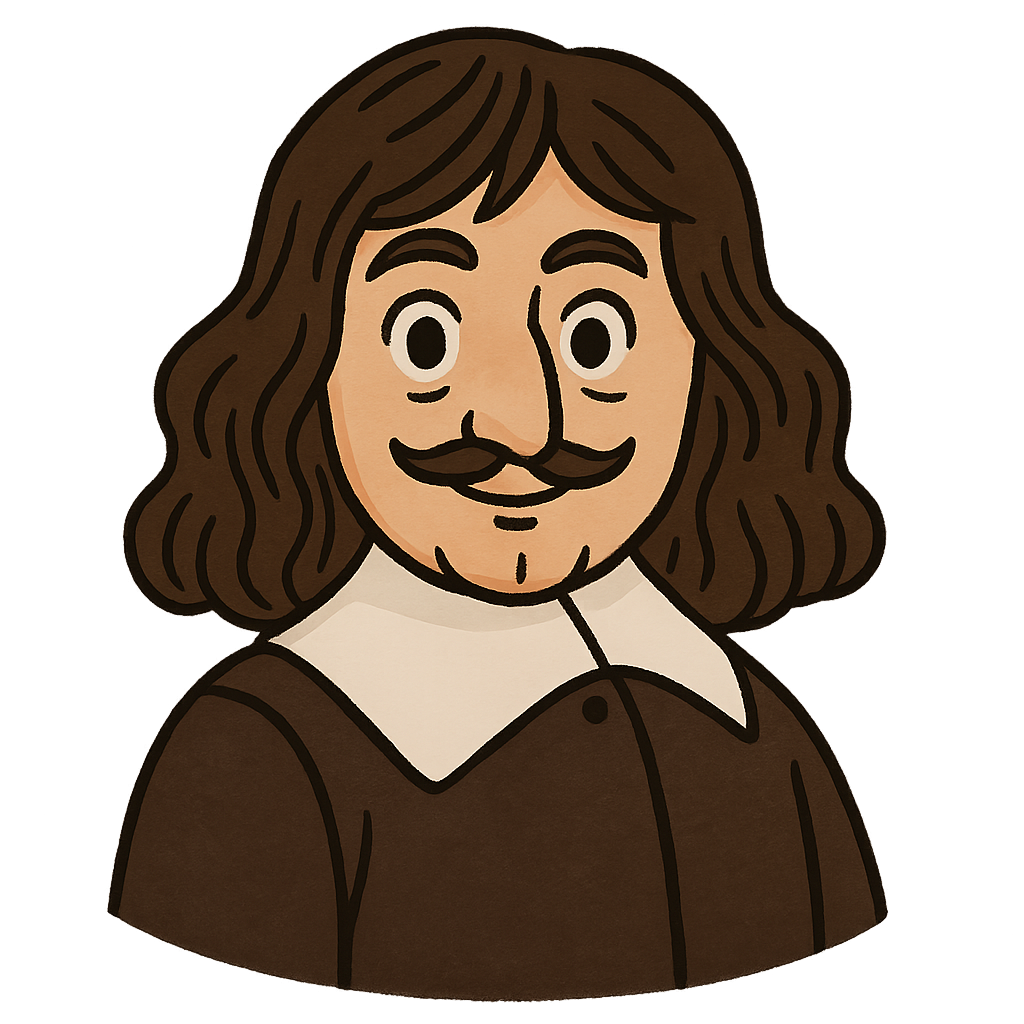
Hello! My name is René Descartes. I was born a very long time ago, on March 31st, 1596, in a small town in France called La Haye en Touraine. As a boy, I was often sick, so I spent a lot of my time resting in bed. But I didn't mind all the quiet time! It gave me a chance to think and wonder about everything in the world around me. When I was old enough, around the year 1607, my parents sent me to a wonderful school called the Collège Royal Henry-Le-Grand. I learned about many different subjects, but my favorite was mathematics. I loved how math had clear, logical answers that you could prove were true. It made me wonder if I could find the same kind of certainty about other things in life, not just numbers.
After I finished my schooling, I felt a strong desire to see the world. So, in 1618, I decided to become a soldier. It might seem like a strange choice for someone who loved quiet thinking, but it wasn't because I liked fighting. I joined the army because it allowed me to travel to different countries and meet all kinds of people. I believed that I could learn just as much from the 'great book of the world' as I could from the books in a library. One chilly night, on November 10th, 1619, while I was staying in Germany, I had a series of very powerful dreams. These dreams gave me a brilliant idea: I would spend the rest of my life searching for truth using reason, the same kind of clear thinking I loved in math. That night was a turning point that set me on a new path of discovery.
I began my new journey by deciding to question everything I had ever been taught. I asked myself, what if everything I see and hear is just part of a long dream? How can I be absolutely sure that anything is real? As I thought about this, I had a breakthrough. I realized that even if I was doubting everything, there was one thing I could not possibly doubt: the fact that I was the one doing the doubting! In order to doubt, I had to be thinking. And if I was thinking, then I must exist. This led me to my most famous idea, which I wrote down in my book 'Discourse on the Method' in 1637. In the Latin language, the phrase is 'Cogito, ergo sum,' which means, 'I think, therefore I am.' This simple but powerful thought became the foundation for all of my other ideas about the world.
Besides my work with big questions, I never lost my love for math. I had another important idea that changed mathematics forever. I discovered a way to describe shapes and positions on a surface using numbers. Imagine drawing two lines on a piece of paper—one line going across, called the x-axis, and another going up and down, called the y-axis. By using a pair of numbers, which we now call coordinates, you can describe the exact location of any point. This invention is called the Cartesian coordinate system, named after me! It was exciting because it connected two different areas of math, algebra and geometry, in a completely new way. Today, this system is used for all sorts of things, from creating maps and GPS directions to designing the graphics in video games.
Later in my life, in 1649, I received an invitation from Queen Christina of Sweden to come to her country and be her personal teacher. I accepted, but the cold northern winters were very harsh for me. My time there was short. I lived to be 53 years old. Even though my life ended, my ideas lived on! People today often call me the 'Father of Modern Philosophy' because I encouraged everyone to use their own reason and to ask important questions instead of just accepting what they were told. My work in mathematics also helped build the foundation for many scientific discoveries that came long after me. So, the next time you look at a map or ask a big question about the world, remember me, and never stop thinking for yourself.