English

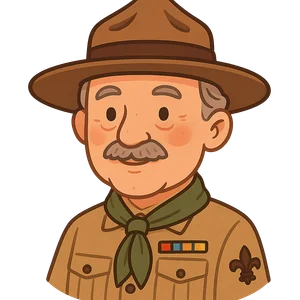
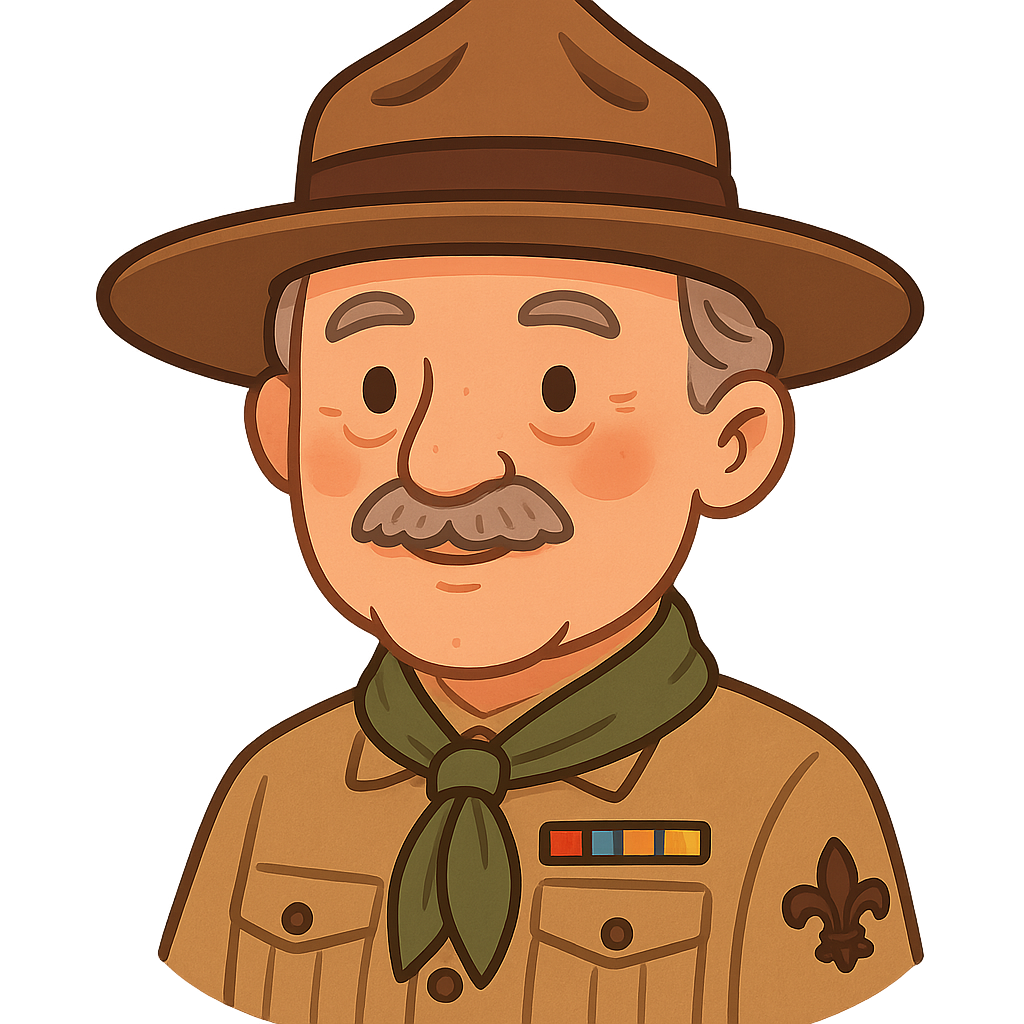
Robert Baden-Powell
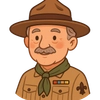
Robert Baden-Powell was a British Army officer and the founder of the worldwide Scout Movement…
Reads at Grades 6–8 Listens at Grades 4–8
Print & create
Answer keys·No prep·Free with an account
28 worksheets · answer keys · full story · quiz · Ages 10-12 · CEFR B2
Plus adds 280,000+ more stories in 27 languages, audio for every one, and printables for all of them.
Just want Robert Baden-Powell?
Hello there. My name is Robert Baden-Powell, and I would like to tell you my story. I was born in London, England, on February 22nd, 1857. Growing up with my brothers was a grand adventure. We did not have much money, but we had the great outdoors. We spent our holidays exploring, boating, and camping, which is where my love for nature and self-reliance began. When I attended a school called Charterhouse, I was not what you would call a star student inside the classroom. My real education took place in the woods nearby. While other boys were studying their books, I was practicing what I called 'scouting' skills. I learned how to track animals, how to move silently without being seen, and how to live off the land. I would even catch and cook rabbits over a small fire designed not to produce smoke. These early experiences taught me the importance of observation, resourcefulness, and being prepared, lessons that would shape the entire course of my life.
When I grew older, I joined the British Army in 1876. My career took me to far-flung places like India and Africa, where my childhood skills proved incredibly useful. I served as a reconnaissance officer, which meant my job was to gather information about the enemy's position and movements without being detected. It was exciting and dangerous work that required keen observation and the ability to think on my feet. To help other soldiers learn these valuable skills, I wrote a small handbook in 1899 called *Aids to Scouting*. I filled it with tips on tracking, map-making, and survival. I never imagined it would be read by anyone outside the military. My most famous military experience came during the Siege of Mafeking, which lasted from 1899 to 1900 in South Africa. Our town was surrounded, and we were cut off from the outside world. To help defend the town, I organized the local boys into a group called the Mafeking Cadet Corps. They were not soldiers, but they performed vital tasks like carrying messages, delivering mail, and acting as lookouts. I was so impressed by their courage, discipline, and enthusiasm. Watching them serve their community with such pride gave me a brilliant idea. I realized that if boys were given real responsibility, they would rise to the challenge.
Robert Baden-Powell: The Founder of the Scouts
Hello there. My name is Robert Baden-Powell, and I would like to tell you my story. I was born in London, England, on February 22nd, 1857. Growing up with my brothers was a grand adventure. We did not have much money, but we had the great outdoors. We spent our holidays exploring, boating, and camping, which is where my love for nature and self-reliance began. When I attended a school called Charterhouse, I was not what you would call a star student inside the classroom. My real education took place in the woods nearby. While other boys were studying their books, I was practicing what I called 'scouting' skills. I learned how to track animals, how to move silently without being seen, and how to live off the land. I would even catch and cook rabbits over a small fire designed not to produce smoke. These early experiences taught me the importance of observation, resourcefulness, and being prepared, lessons that would shape the entire course of my life.
When I grew older, I joined the British Army in 1876. My career took me to far-flung places like India and Africa, where my childhood skills proved incredibly useful. I served as a reconnaissance officer, which meant my job was to gather information about the enemy's position and movements without being detected. It was exciting and dangerous work that required keen observation and the ability to think on my feet. To help other soldiers learn these valuable skills, I wrote a small handbook in 1899 called Aids to Scouting. I filled it with tips on tracking, map-making, and survival. I never imagined it would be read by anyone outside the military. My most famous military experience came during the Siege of Mafeking, which lasted from 1899 to 1900 in South Africa. Our town was surrounded, and we were cut off from the outside world. To help defend the town, I organized the local boys into a group called the Mafeking Cadet Corps. They were not soldiers, but they performed vital tasks like carrying messages, delivering mail, and acting as lookouts. I was so impressed by their courage, discipline, and enthusiasm. Watching them serve their community with such pride gave me a brilliant idea. I realized that if boys were given real responsibility, they would rise to the challenge.
When I returned to England after the siege, I was surprised to find that I had become something of a national hero. To my even greater surprise, I discovered that my military book, Aids to Scouting, was being used by teachers and youth leaders to teach boys about the outdoors. This was the spark that ignited my big idea. I saw that the lessons of responsibility, self-reliance, and resourcefulness I had taught soldiers could be adapted for a younger audience, not for war, but for peace. I wanted to create a program that would help boys become well-rounded, capable, and good citizens. To test my ideas, I organized an experimental camp on Brownsea Island, off the southern coast of England. From August 1st to August 8th in 1907, I gathered about twenty boys from different social backgrounds. We divided them into patrols, and they spent the week learning camping, woodcraft, lifesaving, and patriotism. The camp was a tremendous success. The boys loved the games, the challenges, and the sense of camaraderie. Encouraged by this, I sat down and rewrote my army manual. In 1908, I published Scouting for Boys. It was an immediate hit, and boys all over the country began forming their own Scout patrols. The Scout movement was officially born.
I had no idea how quickly my small idea would grow. The principles of Scouting—being trustworthy, loyal, helpful, and kind—resonated with young people everywhere. By 1909, the movement had become so popular that we held the first national Scout rally at the Crystal Palace in London. Thousands of Scouts showed up, and to my surprise, a group of girls appeared, declaring themselves 'Girl Scouts.' This unexpected arrival made it clear that girls wanted their own adventures, too. So, in 1910, I asked my sister, Agnes, to help me create a similar program for them, which became the Girl Guides. Later, my wife, Olave, took a leading role and helped the movement expand across the world. The idea of Scouting soon spread far beyond the shores of Great Britain. By 1920, it was time for the first-ever World Scout Jamboree, held in London. It was an incredible gathering of Scouts from dozens of countries, all sharing a common bond of friendship and adventure. It was at this event that I was honored with the title of Chief Scout of the World, a moment that filled me with immense pride for what we had all created together.
I spent my later years traveling the globe, promoting the Scout and Guide movements and encouraging peace and understanding between nations. When it was time to retire, I moved to the warm and beautiful country of Kenya. I lived to be 83 years old, and my life came to an end on January 8th, 1941. In my final message, I encouraged all Scouts to 'leave this world a little better than you found it.' That small idea from a camp on Brownsea Island has grown into a worldwide family of millions of young people. I hope my story inspires you to be prepared, to do your best, and to make a positive difference in your own community.
Wow facts
About
Robert Baden-Powell was a British Army officer and the founder of the worldwide Scout Movement, which encourages outdoor education and good citizenship for young people.
Take a Quiz
Question 1 of 5
In your own words, describe Robert Baden-Powell's childhood and how it prepared him for his later life.
Explore next




Want to do even more?
Go beyond exploring. Unlock tools that turn every story into real learning.

Storypie Plus for families
Full stories, quizzes, and printables. Nights and car rides, sorted.
- Unlimited audio stories
- Create Mode: your child stars in the story
- Offline downloads
- Printable worksheets & coloring pages

Why Storypie for Schools
Students engaged. Prep in seconds. Evenings back to you.
- Worksheets & Quizzes
- Classroom Management
- Formative Assessment
- Custom Curriculum & Lesson Plans
- 27 Languages

Why Storypie for Homeschool
Curriculum done. They'll ask for more. Hours back in your day.
- Worksheet Generator
- First-Person Audio Stories
- Built-in Comprehension Quizzes
- Custom Curriculum & Lesson Plans
- Print & Go Activities