

 English

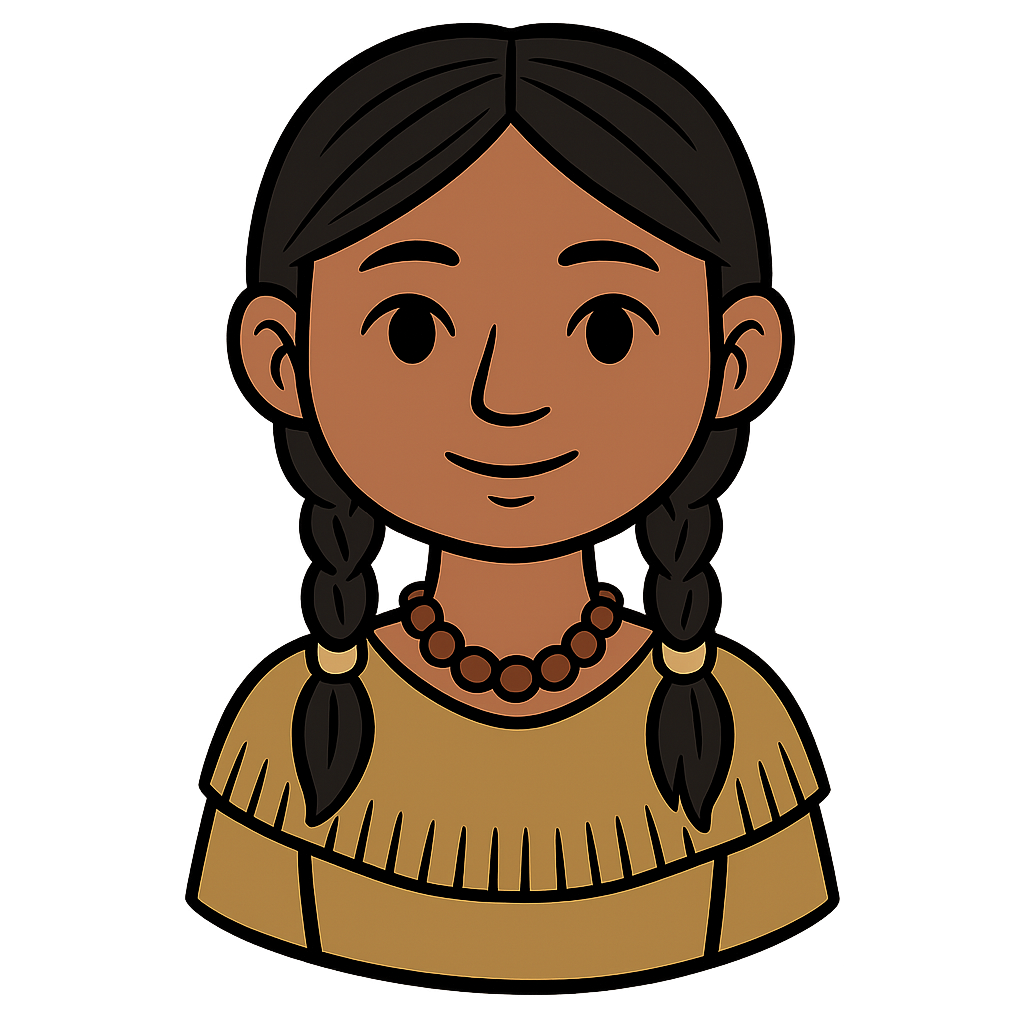
Sacagawea: A Voice for the Westward Journey
My name is Sacagawea, and my story is one that is carried on the wind across the great mountains and plains of America. I was born into the Agaidika Shoshone tribe, known as the Lemhi Shoshone, around the year 1788. My childhood was spent in the beautiful Rocky Mountains of what is now Idaho, a land of soaring peaks, clear rivers, and vast, open skies. I learned the ways of my people, how to read the secrets of the land like an open book. I could find sweet berries hidden in the brush, dig for nutritious roots, and understand which plants could heal and which could harm. My days were filled with the rhythms of the seasons and the stories of my elders. But this life, the only one I had ever known, was stolen from me when I was about twelve years old. A Hidatsa raiding party swept through our lands, and in the chaos, I was captured. They took me far from my home, across the plains to their villages along the Missouri River in modern-day North Dakota. It was a terrifying journey that changed my life forever.
Life among the Hidatsa was a world away from my mountain home. I had to learn new customs and a new language, always carrying the memory of my family deep in my heart. After some time, I was sold to a French-Canadian fur trader named Toussaint Charbonneau, who made me his wife. I adapted, as I always had, finding strength in survival. Then, in the cold winter of 1804, our world changed again. Two American captains, Meriwether Lewis and William Clark, arrived at our village. They were leaders of an expedition called the Corps of Discovery, sent by President Thomas Jefferson to explore the uncharted lands of the American West, all the way to the Pacific Ocean. They needed a guide and an interpreter who could speak Shoshone, as they knew they would have to trade with my people for horses to cross the formidable Rocky Mountains. They hired my husband, and since I was the one who spoke the language, I was hired too. My journey was about to take another unexpected turn. Just as the ice began to melt and the expedition prepared to leave in the spring of 1805, I gave birth to my son on February 11th. I named him Jean Baptiste, but I called him Pomp, which in my language means ‘First-Born Son.’ He was my little chief.
With my precious Pomp nestled safely in a cradleboard on my back, I set out with the Corps of Discovery in the spring of 1805. The journey was more challenging than I could have imagined. We rowed against the powerful current of the Missouri River, faced swarms of mosquitoes, and sometimes, the men grew hungry when game was scarce. It was then that my childhood knowledge became a lifeline for the group. I would find edible roots and plants that the men had never seen, providing much-needed food. My greatest test of courage came on May 14th, 1805, when a sudden squall struck our boat. My husband, who was steering, panicked, and the boat nearly capsized. As the men shouted in fear, I calmly reached into the churning water, again and again, to rescue the captains’ priceless journals, scientific instruments, and vital medicines that had washed overboard. Captain Lewis later wrote that my composure in that moment was a great service to the expedition. My presence also served another purpose. As we traveled, we met many different Native American tribes. Seeing me, a woman, with my baby, they understood that the Corps of Discovery was not a war party. We were peaceful travelers, and my family was a symbol of that peace, opening doors that might have otherwise remained closed.
By the summer of 1805, we had reached the lands of my people, the Shoshone. This was the moment the captains had been waiting for. Without horses from the Shoshone, we could never cross the towering, snow-covered Rocky Mountains that stood before us like a great wall. As I began to translate during the negotiations, my heart pounded. I listened to the chief speak, and his voice stirred a memory deep within me. In a rush of emotion and disbelief, I realized I was speaking to my own brother, Cameahwait, whom I had not seen since the day I was taken from our home. We fell into each other’s arms, weeping with a joy I thought I would never feel again. My reunion with my long-lost brother created a powerful bond of trust between the Shoshone and the expedition, and they readily provided the horses and guides we desperately needed. After a grueling journey through the mountains, we finally reached our destination. In November of 1805, I stood on the sandy shore and stared out at the Pacific Ocean. I had traveled thousands of miles from my mountain home to see the great water, a sight more vast and powerful than anything I had ever dreamed.
We returned from our long journey in 1806, and I parted ways with the captains, who had become my friends. My life continued, and I had another child, a daughter named Lisette. I lived for several more years before my journey on this earth came to an end around 1812. Though my life was short and filled with hardship, it was also full of purpose. I was a survivor, a translator, a guide, and a symbol of peace on one of the most important expeditions in the history of a nation. My story is a reminder that courage and knowledge can come from anyone, no matter how young or how small they may seem. I was a bridge between two very different worlds, and my footprints helped mark a path for a new country, a legacy that can never be washed away.
Activities
Take a Quiz
Test what you learned with a fun quiz!
Get creative with colors!
Print a coloring book page of this topic.










 Free for Educators