English

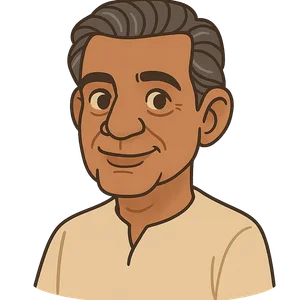
Satyajit Ray
Satyajit Ray was an Indian filmmaker, writer, and artist…
Reads at Grades 6–8 Listens at Grades 4–8
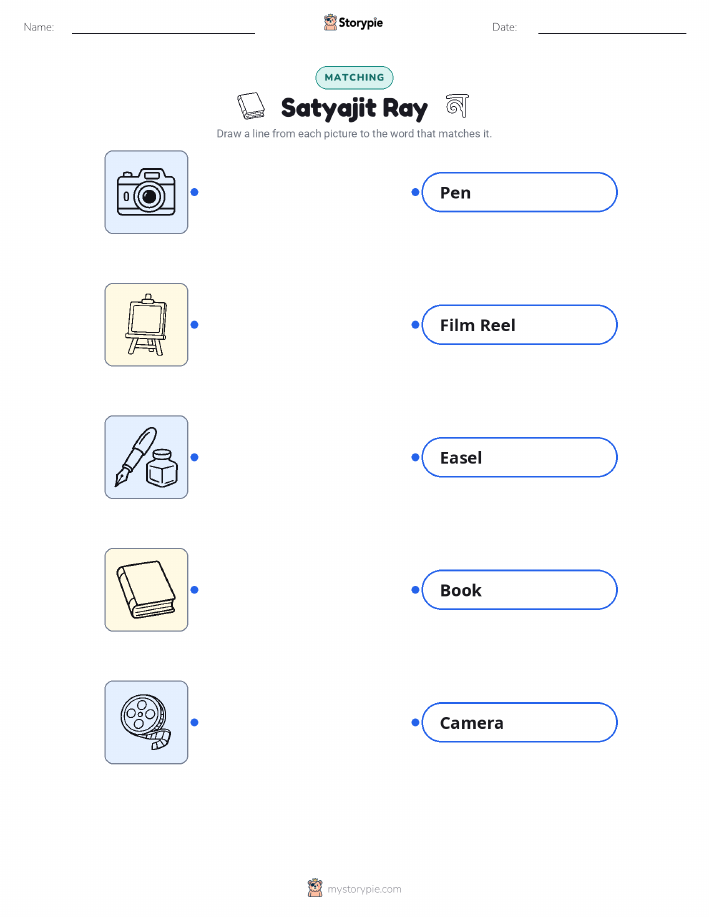
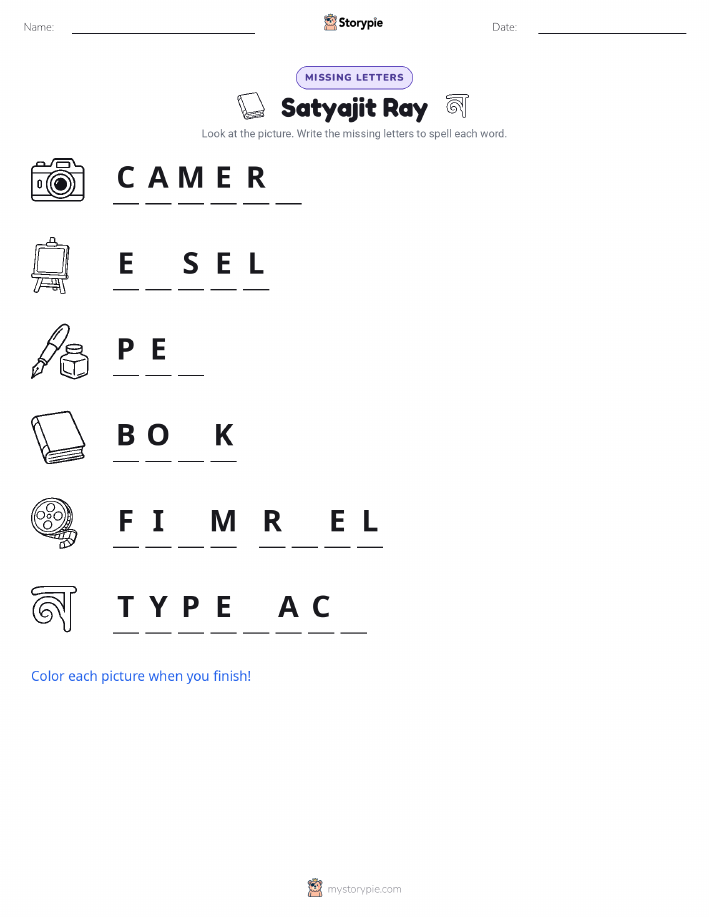
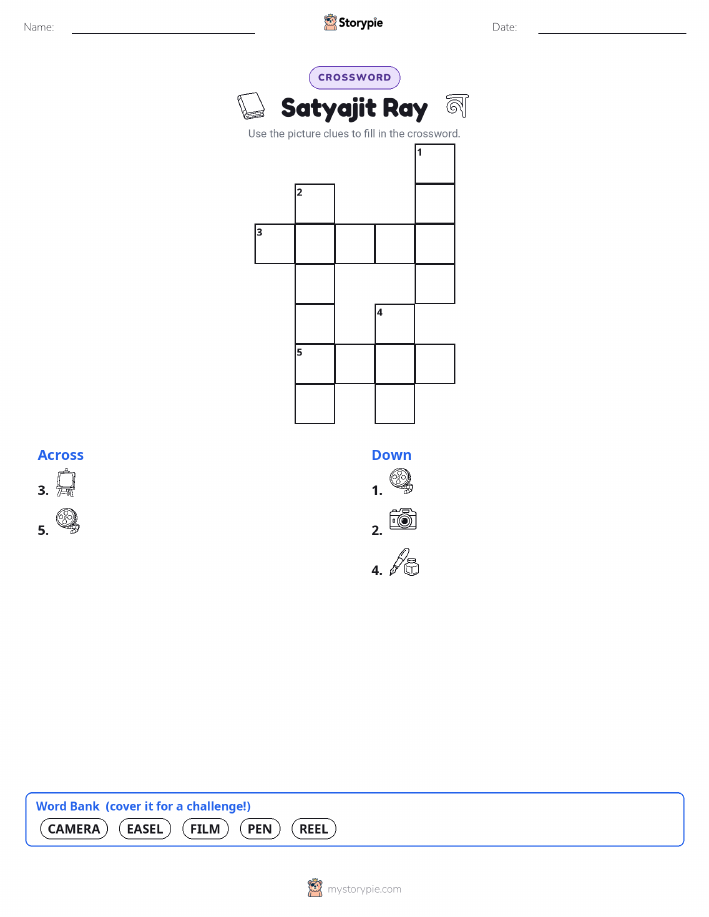
Print & create
Answer keys·No prep·Free with an account
28 worksheets · answer keys · full story · quiz · Ages 10-12 · CEFR B2
Plus adds 280,000+ more stories in 27 languages, audio for every one, and printables for all of them.
Just want Satyajit Ray?
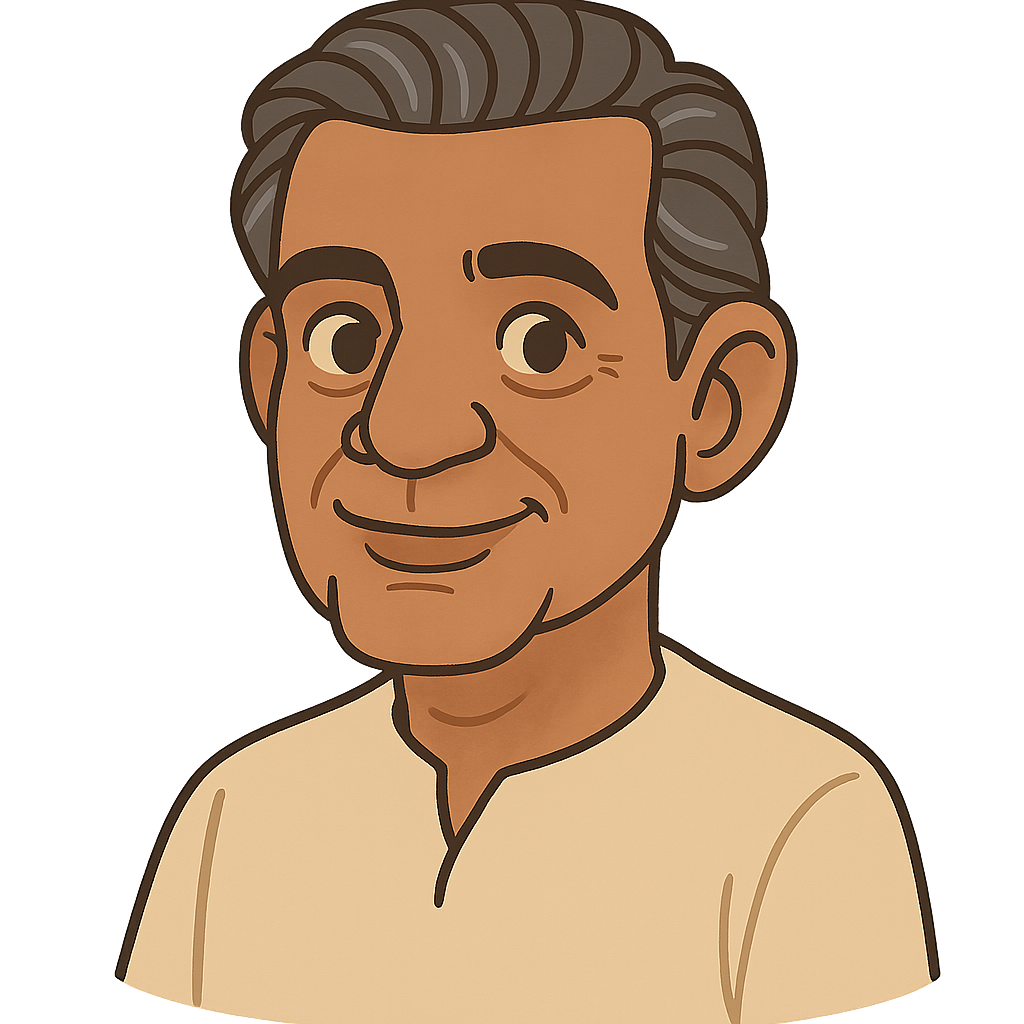
Hello, my name is Satyajit Ray, and I am a storyteller who used a camera to share the lives of the Indian people with the world. My own story begins in Calcutta, India, where I was born on May 2nd, 1921. I grew up surrounded by creativity, in a world filled with art, books, and music. My grandfather, Upendrakishore Ray Chowdhury, was a celebrated writer and painter, and my father, Sukumar Ray, was one of India’s most famous writers of humorous poems and stories. Their work filled our home with imagination. Sadly, my father passed away when I was very young, leaving my mother, Suprabha, to raise me. She was a strong and wonderful woman who made sure I had every opportunity to learn and grow. I eventually attended Visva-Bharati University, a special place founded by the great poet Rabindranath Tagore. It was there, around the year 1940, that my education deepened my understanding and love for the rich traditions of Indian art, setting a foundation for the stories I would one day tell.
After finishing my studies, I began my career as a graphic designer in 1943. My job was to create art for advertisements and design the covers for books. I loved this work because it allowed me to connect with stories visually. One of the books I designed a cover for was a novel called 'Pather Panchali,' which means 'Song of the Little Road.' The story of the boy, Apu, and his family in their small village stayed with me. During this time, two experiences completely changed the direction of my life. The first happened in 1949 when I had the chance to meet Jean Renoir, a famous film director from France who was in India to make a movie. Watching him work sparked my interest in filmmaking. Then, in 1950, I traveled to London for my job. While there, I saw an Italian film called 'Bicycle Thieves.' It was unlike anything I had ever seen. It told a simple, powerful story about a poor man and his son, using real locations and non-professional actors. The film showed me that movies could be about real life and real emotions. In that moment, I knew I had found my true calling: I had to become a filmmaker.
Satyajit Ray: A Storyteller for the World
Hello, my name is Satyajit Ray, and I am a storyteller who used a camera to share the lives of the Indian people with the world. My own story begins in Calcutta, India, where I was born on May 2nd, 1921. I grew up surrounded by creativity, in a world filled with art, books, and music. My grandfather, Upendrakishore Ray Chowdhury, was a celebrated writer and painter, and my father, Sukumar Ray, was one of India’s most famous writers of humorous poems and stories. Their work filled our home with imagination. Sadly, my father passed away when I was very young, leaving my mother, Suprabha, to raise me. She was a strong and wonderful woman who made sure I had every opportunity to learn and grow. I eventually attended Visva-Bharati University, a special place founded by the great poet Rabindranath Tagore. It was there, around the year 1940, that my education deepened my understanding and love for the rich traditions of Indian art, setting a foundation for the stories I would one day tell.
After finishing my studies, I began my career as a graphic designer in 1943. My job was to create art for advertisements and design the covers for books. I loved this work because it allowed me to connect with stories visually. One of the books I designed a cover for was a novel called 'Pather Panchali,' which means 'Song of the Little Road.' The story of the boy, Apu, and his family in their small village stayed with me. During this time, two experiences completely changed the direction of my life. The first happened in 1949 when I had the chance to meet Jean Renoir, a famous film director from France who was in India to make a movie. Watching him work sparked my interest in filmmaking. Then, in 1950, I traveled to London for my job. While there, I saw an Italian film called 'Bicycle Thieves.' It was unlike anything I had ever seen. It told a simple, powerful story about a poor man and his son, using real locations and non-professional actors. The film showed me that movies could be about real life and real emotions. In that moment, I knew I had found my true calling: I had to become a filmmaker.
My heart was set on bringing the story of 'Pather Panchali' to the screen. My journey as a director began in 1952, but it was far from easy. I had very little money, so I used my own savings to start the project. My film crew was made up of amateurs who, like me, were passionate but inexperienced. We filmed on weekends when we were not at our regular jobs. We faced many challenges and eventually ran out of money, forcing us to stop filming for a long time. I was determined not to give up on the story of Apu. Finally, the Government of West Bengal offered to provide the funds I needed to finish the movie. In 1955, 'Pather Panchali' was released in India. To my great joy, people loved it. The following year, in 1956, it was shown at the Cannes Film Festival in France, where it won a special award for its humanism. This was a tremendous honor that introduced audiences all over the world to Indian cinema. 'Pather Panchali' was the beginning of a larger story, which became known as The Apu Trilogy. I continued Apu’s journey in two more films, released in 1956 and 1959, following him as he grew from a boy into a man.
Though I am best known as a filmmaker, my creative world was much larger. I was a storyteller in many forms. I loved to write, and I created two famous characters who are still beloved in India. One was a sharp and brilliant detective named Feluda, and the other was a quirky scientist named Professor Shonku, who went on fantastic science fiction adventures. My artistic involvement didn't stop there. For most of my films, I composed the musical scores myself, creating the mood and emotion for each scene through sound. I was also a graphic artist my whole life, so I designed the posters and advertising materials for my movies. I even created new typefaces, which are styles of letters, for the Bengali language, blending beauty with function. I believed in being a complete artist, shaping every detail of my work to ensure the story was told exactly as I envisioned it.
Legacy & Remembering
Near the end of my journey, I received two of the greatest honors of my career. In 1992, I was awarded an Academy Honorary Award, also known as an Oscar, for my lifetime of achievement in film. That same year, I was given the Bharat Ratna, which is India's highest civilian award. I lived to be 70 years old. I am remembered for bringing the quiet, beautiful, and often difficult stories of ordinary people in India to the rest of the world. My films showed that a story from a small village could touch the hearts of people everywhere. I hope my work continues to encourage you to look closely at the world around you and find the extraordinary magic hidden in everyday life.
Wow facts
About
Satyajit Ray was an Indian filmmaker, writer, and artist, widely regarded as one of the greatest directors in the history of cinema. He is celebrated for his humanistic films, such as the Apu Trilogy, which brought international recognition to Indian cinema.
Take a Quiz
Question 1 of 5
What was the main problem Satyajit Ray faced when trying to make his first film, 'Pather Panchali,' and how was it resolved?
Explore next





Want to do even more?
Go beyond exploring. Unlock tools that turn every story into real learning.

Storypie Plus for families
Full stories, quizzes, and printables. Nights and car rides, sorted.
- Unlimited audio stories
- Create Mode: your child stars in the story
- Offline downloads
- Printable worksheets & coloring pages

Why Storypie for Schools
Students engaged. Prep in seconds. Evenings back to you.
- Worksheets & Quizzes
- Classroom Management
- Formative Assessment
- Custom Curriculum & Lesson Plans
- 27 Languages

Why Storypie for Homeschool
Curriculum done. They'll ask for more. Hours back in your day.
- Worksheet Generator
- First-Person Audio Stories
- Built-in Comprehension Quizzes
- Custom Curriculum & Lesson Plans
- Print & Go Activities