English

Subhas Chandra Bose
Subhas Chandra Bose was an Indian nationalist whose defiant patriotism made him a hero in India…
Reads at Grades 6–8 Listens at Grades 4–8
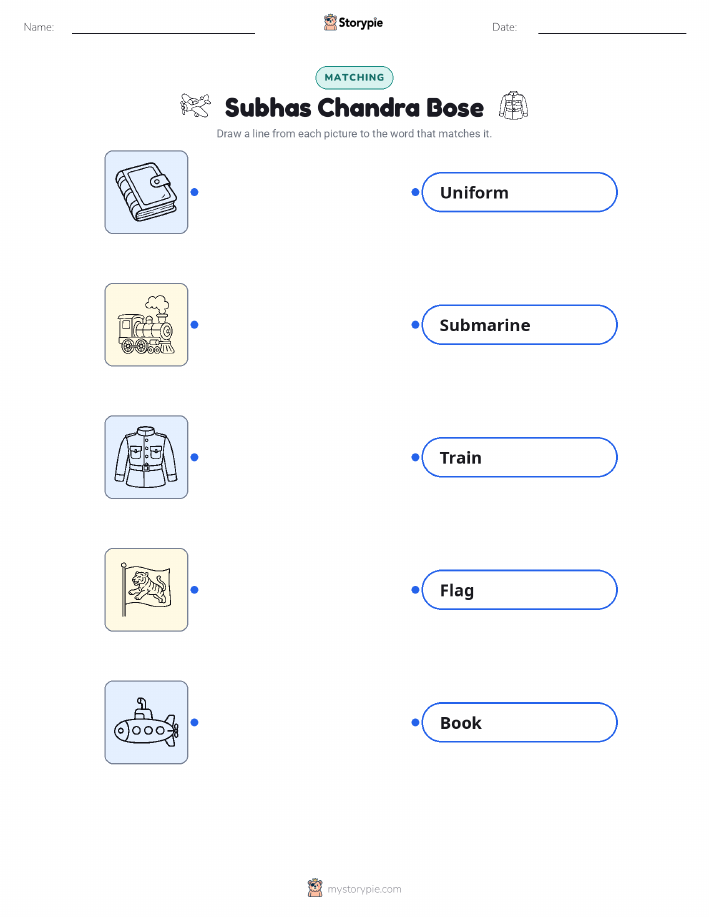
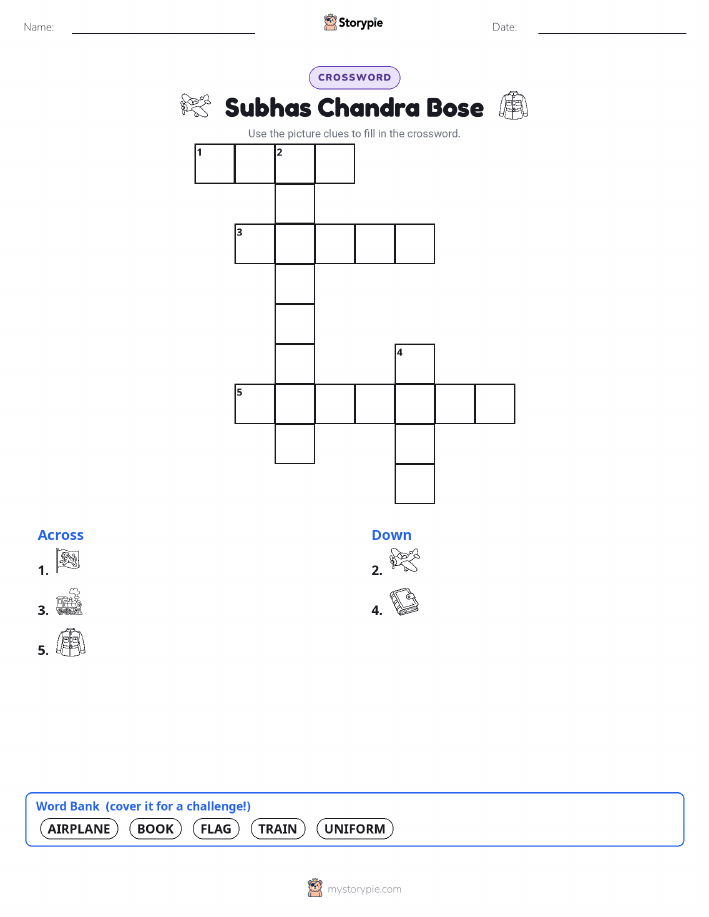
Print & create
Answer keys·No prep·Free with an account
28 worksheets · answer keys · full story · quiz · Ages 10-12 · CEFR B2
Plus adds 280,000+ more stories in 27 languages, audio for every one, and printables for all of them.
Just want Subhas Chandra Bose?
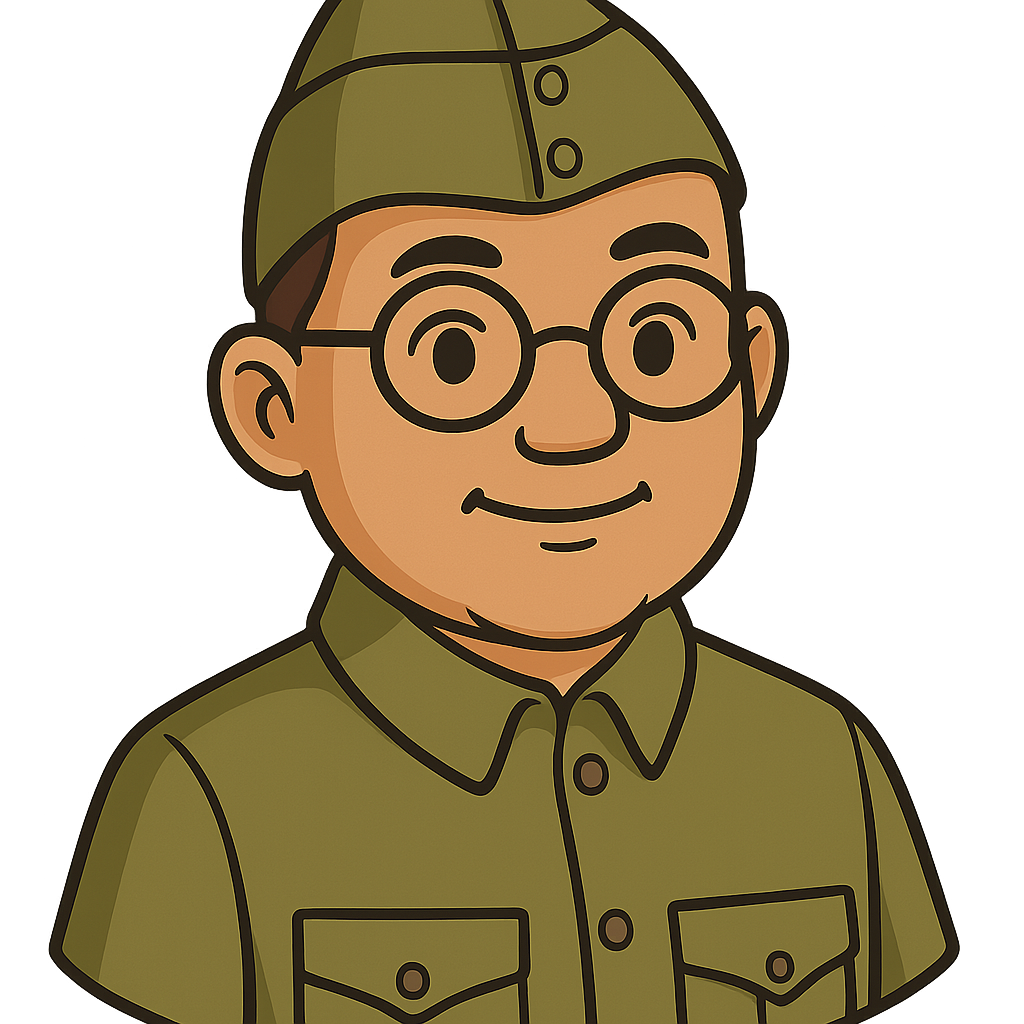
Hello! My name is Subhas Chandra Bose, but many people throughout my life called me Netaji, which means 'Respected Leader.' I was born on January 23rd, 1897, in a town called Cuttack in India, which was then part of the British Empire. Growing up in a large family, I was a serious student who loved to read and learn. From a very young age, I saw that my country was not free, and it filled my heart with a desire to see India stand on its own feet. I believed deeply that every nation had the right to govern itself. This belief shaped my entire life. After completing my studies in India, I traveled all the way to England in 1919 to continue my education at the famous University of Cambridge. Even though I was far from home, my thoughts were always with my people and the struggle for independence that was growing stronger every day.
In England, I decided to take a very important and difficult exam to join the Indian Civil Service, or ICS. This was the highest-ranking job anyone in India could have at the time, but it meant working for the British government. In 1920, I accomplished a great feat and passed the exam with high marks. For many, this would have been a dream come true, but I felt a deep conflict inside me. How could I serve the very government that was ruling over my own people? It felt like a betrayal of my principles and my love for India. So, in 1921, I made a choice that shocked everyone: I resigned from the service. I wrote a letter explaining that I could not be loyal to the British administration. I decided then and there that I would dedicate my life to one thing only: India's freedom. I returned home and joined the Indian National Congress, the main group fighting for independence, where I was inspired by leaders like Mahatma Gandhi.
Subhas Chandra Bose: A Leader's Journey
Hello! My name is Subhas Chandra Bose, but many people throughout my life called me Netaji, which means 'Respected Leader.' I was born on January 23rd, 1897, in a town called Cuttack in India, which was then part of the British Empire. Growing up in a large family, I was a serious student who loved to read and learn. From a very young age, I saw that my country was not free, and it filled my heart with a desire to see India stand on its own feet. I believed deeply that every nation had the right to govern itself. This belief shaped my entire life. After completing my studies in India, I traveled all the way to England in 1919 to continue my education at the famous University of Cambridge. Even though I was far from home, my thoughts were always with my people and the struggle for independence that was growing stronger every day.
In England, I decided to take a very important and difficult exam to join the Indian Civil Service, or ICS. This was the highest-ranking job anyone in India could have at the time, but it meant working for the British government. In 1920, I accomplished a great feat and passed the exam with high marks. For many, this would have been a dream come true, but I felt a deep conflict inside me. How could I serve the very government that was ruling over my own people? It felt like a betrayal of my principles and my love for India. So, in 1921, I made a choice that shocked everyone: I resigned from the service. I wrote a letter explaining that I could not be loyal to the British administration. I decided then and there that I would dedicate my life to one thing only: India's freedom. I returned home and joined the Indian National Congress, the main group fighting for independence, where I was inspired by leaders like Mahatma Gandhi.
I worked tirelessly within the independence movement and soon became a well-known leader, especially among the youth who were drawn to my passionate speeches and bold ideas. My dedication and hard work did not go unnoticed, and my influence grew. In 1938, I was given a great honor when I was elected President of the Indian National Congress. However, as time went on, I started to have different ideas from other leaders like Mahatma Gandhi. He strongly believed in achieving freedom through non-violent protest, a path of peaceful resistance. I respected him greatly, but I believed we needed to use any means necessary to gain our independence as quickly as possible. These differences in our approaches became more pronounced, and because of this, I resigned from the Congress party after being re-elected in 1939. That same year, I formed my own group, the Forward Bloc, to continue the fight for freedom in my own way.
When World War II began in 1939, the British government saw me as a threat to their rule because of my radical ideas and growing popularity. To silence me, they placed me under house arrest in my home in Calcutta in 1940. But they couldn't hold me for long. In January 1941, I disguised myself and made a daring escape that would become legendary. I traveled secretly across India, through the rugged mountains of Afghanistan, across Russia, and all the way to Germany. I believed in the idea that 'the enemy of my enemy is my friend,' so I sought help from countries that were fighting against Britain, like Germany and Japan. My only goal was to find a way to free India. In 1943, I made a long and dangerous journey by submarine to Southeast Asia, where I took command of the Indian National Army, or INA. It was made up of Indian soldiers who were ready to fight for their homeland. I gave them a powerful call to action that still echoes today: 'Give me blood, and I shall give you freedom!'
My soldiers in the INA and I fought bravely for India's freedom, raising our own flag and creating our own government in exile. We faced many hardships, but our spirits were high. However, the end of World War II in 1945 brought our military campaign to a halt. My own journey came to an end on August 18th, 1945, when the airplane I was on reportedly crashed in Taiwan. I lived to be 48 years old. Though my path was different from other leaders and my story ended suddenly, my love for my country never wavered for a single moment. Today, I am remembered as Netaji, a leader who dedicated his entire life to the dream of a free India and inspired millions to believe in the power of courage and sacrifice.
Wow facts
About
Subhas Chandra Bose was an Indian nationalist whose defiant patriotism made him a hero in India, but whose attempts during World War II to rid India of British rule with the help of Nazi Germany and Imperial Japan left a troubled legacy.
Take a Quiz
Question 1 of 5
Why did Subhas Chandra Bose resign from the Indian Civil Service (ICS) in 1921?
Explore next




Want to do even more?
Go beyond exploring. Unlock tools that turn every story into real learning.

Storypie Plus for families
Full stories, quizzes, and printables. Nights and car rides, sorted.
- Unlimited audio stories
- Create Mode: your child stars in the story
- Offline downloads
- Printable worksheets & coloring pages

Why Storypie for Schools
Students engaged. Prep in seconds. Evenings back to you.
- Worksheets & Quizzes
- Classroom Management
- Formative Assessment
- Custom Curriculum & Lesson Plans
- 27 Languages

Why Storypie for Homeschool
Curriculum done. They'll ask for more. Hours back in your day.
- Worksheet Generator
- First-Person Audio Stories
- Built-in Comprehension Quizzes
- Custom Curriculum & Lesson Plans
- Print & Go Activities