

 English

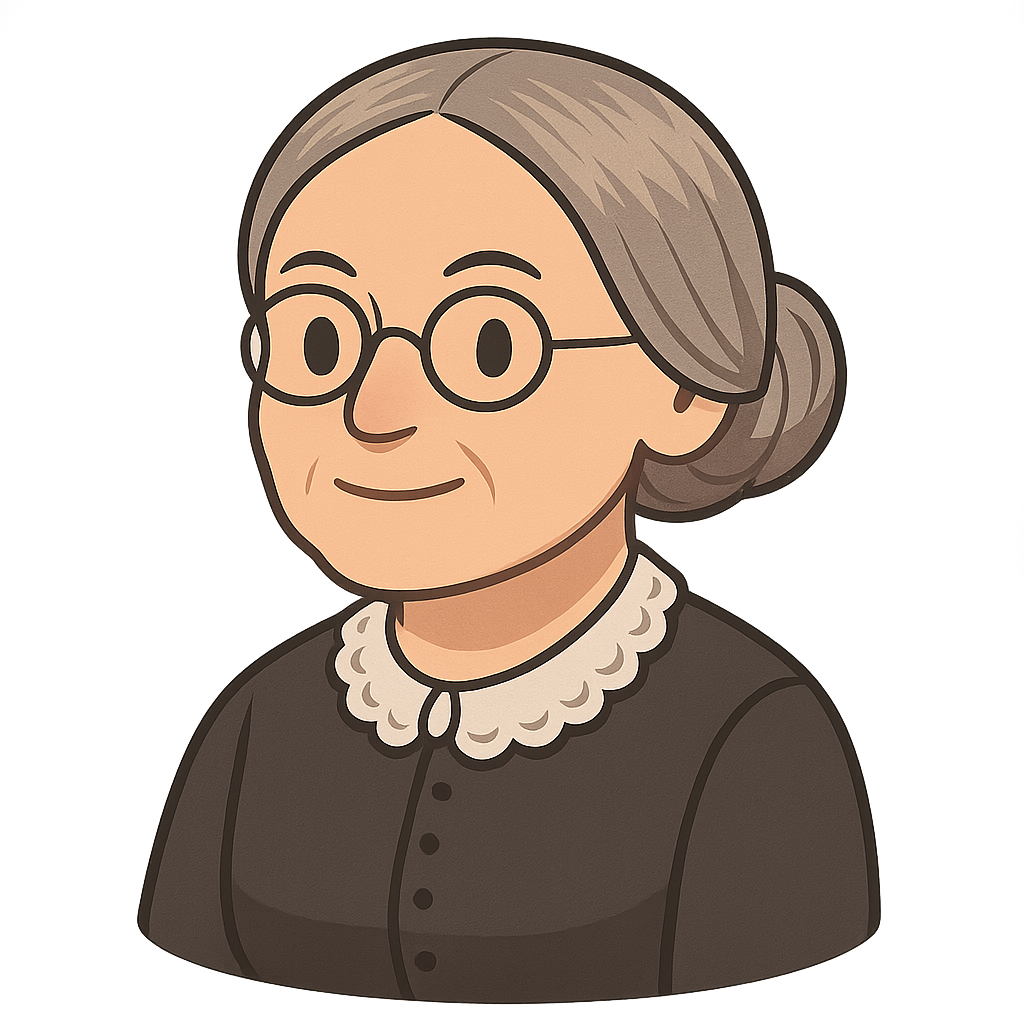
Susan B. Anthony
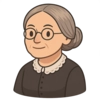
Hello! My name is Susan B. Anthony, and I want to tell you a story about how a single idea—that everyone deserves to be treated equally—can change the world. I was born a long time ago, on February 15th, 1820, in a small town in Massachusetts. My family were Quakers, which is a religion that teaches that every single person has a special light inside them and is equal in the eyes of God. This wasn't just something we talked about on Sundays; it was how we lived every day. I was taught to speak my mind and to stand up for what was right, even if it was difficult. This belief was the compass that guided my entire life.
When I grew up, I became a teacher. I loved the feeling of a classroom buzzing with curious minds, and I enjoyed helping children learn. But I soon noticed something that felt deeply unfair. The male teachers at my school were paid four times more money than I was, just for doing the very same job. When I asked for equal pay, the school leaders told me it was simply the way things were. It felt like a cold, sharp sting of injustice. I knew in my heart that this was wrong. That moment lit a fire inside me, a determination to not just complain about unfairness, but to work to change it for everyone.
That feeling of injustice grew stronger as I saw other wrongs in the world. The biggest one was slavery. My family and I were abolitionists, meaning we worked to end the horrible practice of owning people. I traveled and gave speeches against slavery, working alongside brave leaders like Frederick Douglass. But I noticed that because I was a woman, many people didn't take my words seriously. It became clear to me that two great fights for freedom—for enslaved people and for women—were connected. To truly make a difference, women needed a voice in making the laws of our country. We needed the right to vote.
In 1851, I met a woman who would become my dearest friend and partner in this fight: Elizabeth Cady Stanton. Elizabeth was a brilliant writer, filled with powerful ideas about equality, but she had a big family and couldn't travel. I, on the other hand, was not married and could go anywhere. We formed the perfect team. She would stay home and write the fiery speeches and articles, which she called our 'thunderbolts,' and I would travel across the country to deliver them. I was her voice, and she was my mind. Together, we started a newspaper called The Revolution. Its motto was 'Men, their rights, and nothing more; women, their rights, and nothing less.' We wanted to wake the country up and show them that a nation could not be truly free until everyone had the same rights.
After years of speaking and writing, I decided that talk was not enough. It was time for action. The year was 1872, and there was a presidential election. The law clearly stated that only men could vote, but I believed that law was unconstitutional and wrong. As a citizen of the United States, I believed I had the right to cast my ballot. So, on November 5th, 1872, I walked proudly with my sisters into a polling station in Rochester, New York, and I voted. It was a thrilling and defiant moment. I knew I was breaking an unjust law, but I was also standing up for what I knew was right.
A few weeks later, a police officer came to my home and arrested me. Can you imagine being arrested for voting? I was put on trial, and the judge would not even let me speak in my own defense. He found me guilty and ordered me to pay a fine of 100 dollars. I stood up in that courtroom and declared, 'I shall never pay a dollar of your unjust penalty.' And I never did. My arrest and trial caused a stir all across the country. People who had never thought about women's rights were suddenly talking about it. My act of defiance showed everyone just how much we were willing to risk for equality. I told my fellow workers in the cause, 'Failure is impossible.' I believed with all my heart that our fight for justice would one day succeed.
I spent the rest of my life working for women's suffrage. I traveled thousands of miles, gave countless speeches, and never, ever gave up. My life came to a peaceful end on March 13th, 1906, before I could see our final victory. I never got to legally cast a vote again. But my story didn't end there. The movement we started was stronger than ever. Younger women, inspired by our work, continued the fight with parades, protests, and powerful words.
Fourteen years after I passed away, in the year 1920, something incredible happened. The 19th Amendment to the Constitution was finally passed, giving all women in America the right to vote. Our dream, the one we had fought for our entire lives, had come true. Looking back, I hope my story shows you that one person's courage can make a huge difference. Even if you don't see the end of the journey, standing up for what is right can plant a seed that will one day grow into a beautiful and just world.
Activities
Take a Quiz
Test what you learned with a fun quiz!
Get creative with colors!
Print a coloring book page of this topic.









 Free for Educators