English

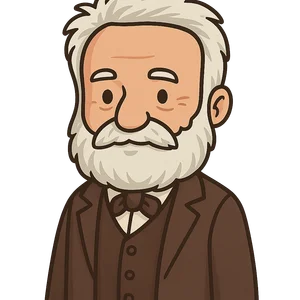
Victor Hugo
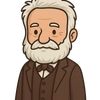
Victor Hugo was a celebrated French poet, novelist, and dramatist of the Romantic movement…
Reads at Grades 6–8 Listens at Grades 4–8
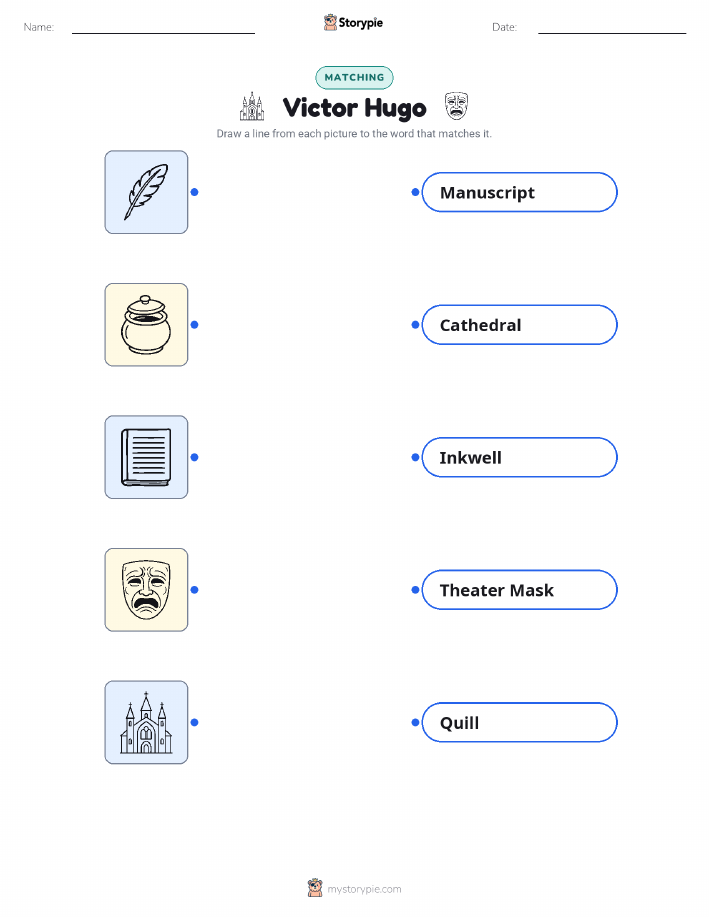
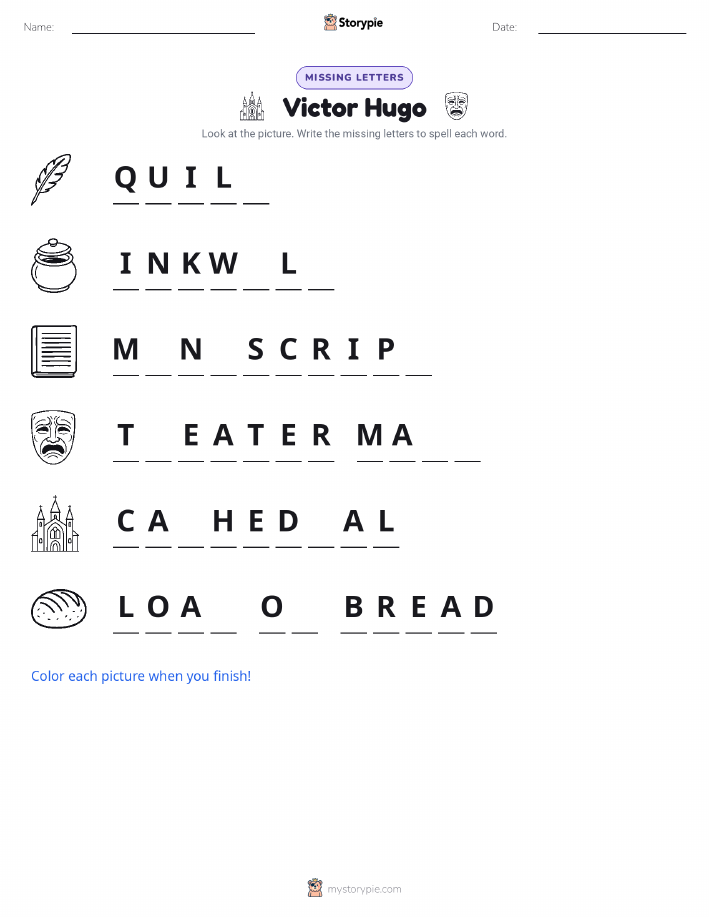
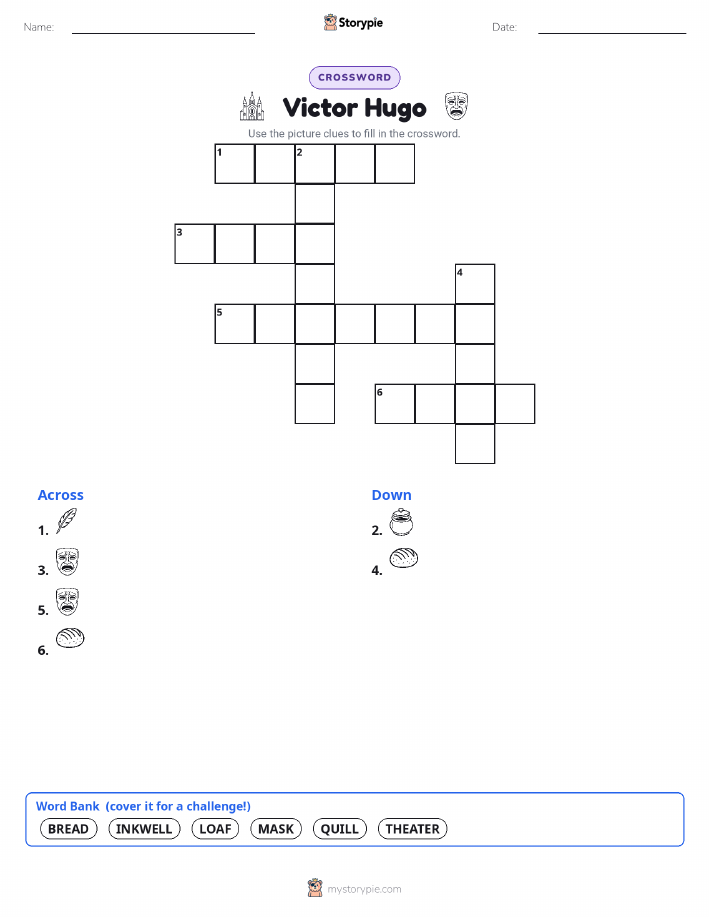
Print & create
Answer keys·No prep·Free with an account
28 worksheets · answer keys · full story · quiz · Ages 10-12 · CEFR B2
Plus adds 280,000+ more stories in 27 languages, audio for every one, and printables for all of them.
Just want Victor Hugo?
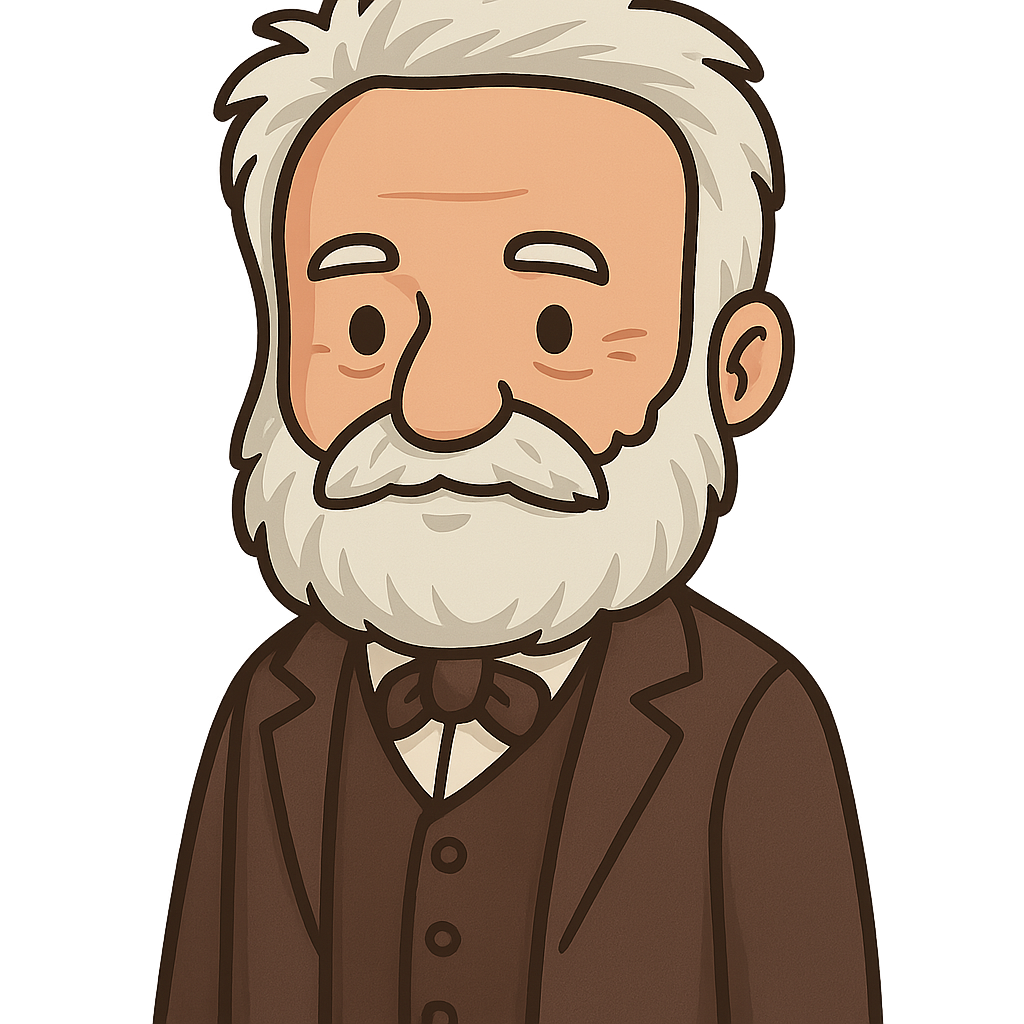
Hello! My name is Victor Hugo, and I want to tell you my story, which is a tale about the power of words. I was born on February 26th, 1802, in a town called Besançon, France. My father was a general in the army, which meant my family moved around a lot when I was a boy. Even with all the travel, I found my greatest adventure in books and poems. I loved the rhythm of words and the worlds they could create. By the time I was a teenager, I was already writing my own poems and plays, and I even won some awards! My mother encouraged my passion, and I knew, deep down, that I wanted to spend my life telling stories and sharing ideas.
As a young man in the 1820s, I moved to Paris, the heart of France, to make my name as a writer. It was an exciting time! I joined a group of artists and writers who wanted to create a new kind of art called Romanticism. We believed art should be full of passion, emotion, and imagination, not just old, strict rules. In 1830, my play *Hernani* caused a huge sensation in the theater, with people arguing for weeks about its bold new style. A year later, in 1831, I published a novel you might have heard of: *The Hunchback of Notre-Dame*. I wrote it because I wanted people to see the beauty of the magnificent old cathedral and to think about how we treat people who look different from us.
As I grew older, I couldn't ignore the suffering I saw on the streets of Paris. There was so much poverty and injustice. I believed my words could be used for more than just entertainment; they could be a tool to fight for a better, fairer world. I became involved in politics and was even elected to the government in 1848. I used my position to speak out for the poor, to argue against the death penalty, and to call for free education for all children. But this path was not easy. When a powerful man named Louis-Napoléon Bonaparte seized control of France in 1851 and declared himself emperor, I spoke out loudly against him. I believed in freedom and a government for the people, not a ruler with absolute power. Because of this, I was declared an enemy and had to flee my beloved country.
Victor Hugo
Hello! My name is Victor Hugo, and I want to tell you my story, which is a tale about the power of words. I was born on February 26th, 1802, in a town called Besançon, France. My father was a general in the army, which meant my family moved around a lot when I was a boy. Even with all the travel, I found my greatest adventure in books and poems. I loved the rhythm of words and the worlds they could create. By the time I was a teenager, I was already writing my own poems and plays, and I even won some awards! My mother encouraged my passion, and I knew, deep down, that I wanted to spend my life telling stories and sharing ideas.
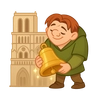
As a young man in the 1820s, I moved to Paris, the heart of France, to make my name as a writer. It was an exciting time! I joined a group of artists and writers who wanted to create a new kind of art called Romanticism. We believed art should be full of passion, emotion, and imagination, not just old, strict rules. In 1830, my play Hernani caused a huge sensation in the theater, with people arguing for weeks about its bold new style. A year later, in 1831, I published a novel you might have heard of: The Hunchback of Notre-Dame. I wrote it because I wanted people to see the beauty of the magnificent old cathedral and to think about how we treat people who look different from us.
As I grew older, I couldn't ignore the suffering I saw on the streets of Paris. There was so much poverty and injustice. I believed my words could be used for more than just entertainment; they could be a tool to fight for a better, fairer world. I became involved in politics and was even elected to the government in 1848. I used my position to speak out for the poor, to argue against the death penalty, and to call for free education for all children. But this path was not easy. When a powerful man named Louis-Napoléon Bonaparte seized control of France in 1851 and declared himself emperor, I spoke out loudly against him. I believed in freedom and a government for the people, not a ruler with absolute power. Because of this, I was declared an enemy and had to flee my beloved country.
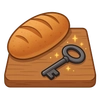
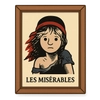
For nineteen long years, I lived in exile, away from France, mostly on the small Channel Islands of Jersey and Guernsey. It was a lonely time, but my pen never rested. From my island home, I wrote articles and poems against the emperor, making sure my voice was still heard in France. It was also during this time that I wrote my largest and most famous novel, Les Misérables, which was published in 1862. It tells the long and difficult story of a man named Jean Valjean, who is hunted for years for stealing a loaf of bread to feed his starving family. Through his story, I wanted to explore big questions about justice, forgiveness, and love. I wanted to show the world the struggles of the poor—'the miserable ones'—and argue that everyone deserves a second chance.
When the emperor's rule finally ended in 1870, I returned to France and was welcomed as a national hero. I continued to write and serve in the government for many years. I lived to be 83 years old, and when my life ended on May 22nd, 1885, millions of people came to my funeral to say goodbye. My life was a long journey, but I always held onto my belief in the power of words to inspire change. Today, my stories like Les Misérables and The Hunchback of Notre-Dame are still read, watched in movies, and sung in musicals all over the world. I hope that when people hear them, they remember the ideas I fought for: to be kind, to stand up for those who have no voice, and to always believe in a better world.
Wow facts
About
Victor Hugo was a celebrated French poet, novelist, and dramatist of the Romantic movement, best known for his epic novels 'Les Misérables' and 'The Hunchback of Notre-Dame.'
Take a Quiz
Question 1 of 5
What is the main message Victor Hugo hoped to convey through his life's work?
Explore next


Want to do even more?
Go beyond exploring. Unlock tools that turn every story into real learning.

Storypie Plus for families
Full stories, quizzes, and printables. Nights and car rides, sorted.
- Unlimited audio stories
- Create Mode: your child stars in the story
- Offline downloads
- Printable worksheets & coloring pages

Why Storypie for Schools
Students engaged. Prep in seconds. Evenings back to you.
- Worksheets & Quizzes
- Classroom Management
- Formative Assessment
- Custom Curriculum & Lesson Plans
- 27 Languages

Why Storypie for Homeschool
Curriculum done. They'll ask for more. Hours back in your day.
- Worksheet Generator
- First-Person Audio Stories
- Built-in Comprehension Quizzes
- Custom Curriculum & Lesson Plans
- Print & Go Activities