Wilma Rudolph

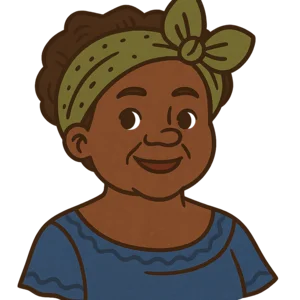
Hello there. My name is Wilma Rudolph, and people once called me the fastest woman in the world. But I want to tell you a secret. When I was a little girl, I couldn't even walk. It all started back on June 23rd, 1940, when I was born in Clarksville, Tennessee. I was the 20th of 22 children, so my house was always buzzing with noise, laughter, and love. We didn't have much money, but we had each other, and that was the most important thing. When I was just four years old, I got very sick. The illness was called polio, and it was very scary because it made my left leg weak and twisted. The doctors looked at my mother with sad eyes and told her that I would never walk again. Can you imagine hearing that. But my mother was a fighter, and she refused to believe them. She told me, 'Wilma, you will walk.' And I believed her. Every single week, she would take me on a long bus ride to a hospital far away for treatment. Back home, my brothers and sisters became my personal coaches. Four times a day, they would take turns rubbing and exercising my weak leg, just like the nurses showed them. I had to wear a heavy, uncomfortable metal brace on my leg, but I never felt alone because my family was always there, cheering me on.
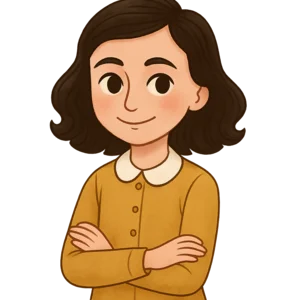

My family's love and support was the best medicine. I spent years doing my exercises, dreaming of the day I could run and play outside with my siblings without my clunky brace. Then, one Sunday when I was 12 years old, something amazing happened. I was at church, and I just felt this powerful urge. I took a deep breath, unstrapped my brace, and took a step. Then another, and another. I walked all by myself, right down the aisle. Everyone was so shocked and happy. After that day, there was no stopping me. I wanted to run everywhere. In high school, I discovered a love for sports, especially basketball. I was so fast on the court that my coach gave me the nickname 'Skeeter,' because I was quick and buzzed all over the place like a mosquito. My speed caught the eye of a college track coach named Ed Temple. He saw something special in me. On August 3rd, 1956, he invited me to a summer camp at Tennessee State University. I was only 16 when I went to my very first Olympic Games in Melbourne, Australia. I competed with my relay team, and we won a bronze medal. Holding that medal felt like pure magic, and it made me hungrier than ever to prove what I could do.

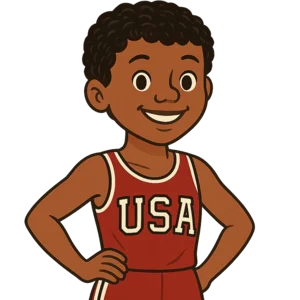
Four years later, on September 2nd, 1960, I was in Rome, Italy, for my second Olympics. The air was buzzing with excitement, and my heart was pounding. This was my moment. I ran faster than I ever had before. I won the 100-meter dash. Then I won the 200-meter dash. And finally, I anchored my team to victory in the 4x100-meter relay. I had won three gold medals, becoming the first American woman to ever do that in a single Olympics. They called me 'The Black Gazelle' because of the graceful way I ran. When I came home to Clarksville, the town wanted to throw a big parade for me. But back then, events were often segregated, meaning Black people and white people had to stay separate. I told them I would not attend any parade that wasn't for everyone. So, for the first time in my town's history, my homecoming parade was an integrated event where everyone celebrated together. After my running career, I became a teacher and a coach, helping other young people find their own strength. I passed away on November 12th, 1994, but I hope my story reminds you of something important. Never let anyone tell you what you can't do. The doctors said I would never walk, but I learned to run, and I flew.

Reading Comprehension Questions

Click to see answer

Answer: In this situation, 'integrated' means that the event was open for everyone, both Black people and white people, to attend and celebrate together instead of being kept separate.

Answer: She probably felt incredibly proud, excited, and maybe a little bit nervous. It was a huge moment that proved she could overcome what the doctors said was impossible.

Answer: The first challenge was overcoming her illness, polio, which made her unable to walk as a child. The second challenge was the hard work and training required to become a world-class athlete and compete at the Olympics.

Answer: Her family was important because they never gave up on her. Her mother refused to believe the doctors, and her siblings helped with her leg exercises every day. Their love and support gave her the strength and belief in herself to walk and eventually run.

Answer: He gave her the nickname 'Skeeter' because she was so fast and quick on the basketball court, moving around like a buzzing mosquito.