English
 Continue with Google
 Continue with Apple

Wilma Rudolph: The Girl Who Learned to Run
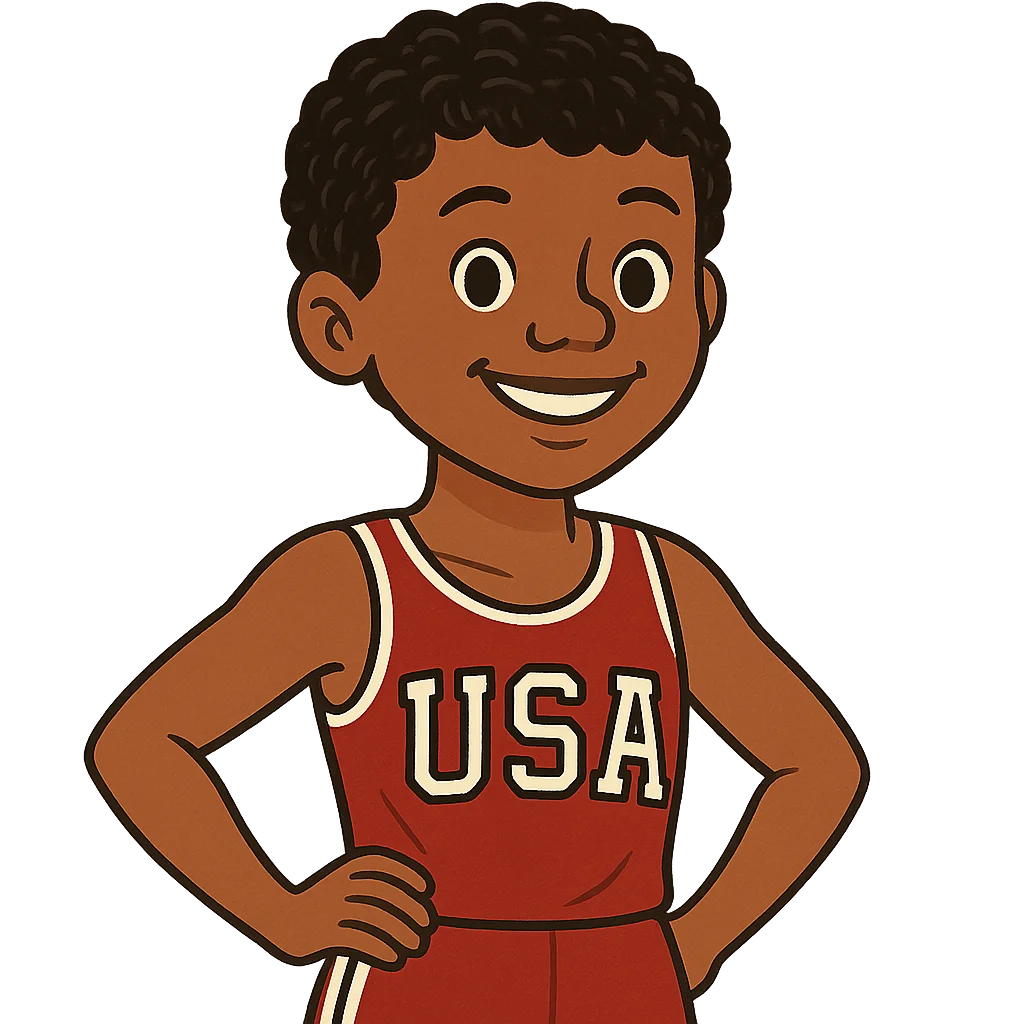
Hello! My name is Wilma Rudolph, and I want to tell you a story about a little girl who was told she would never walk, but grew up to become the fastest woman in the world. I was born a long time ago, on June 23rd, 1940, in a small town in Tennessee. I had a very big family. Can you believe I was the 20th of 22 children? We didn't have much money, but we had a lot of love. When I was just four years old, I got very sick with something called polio. It made my left leg very weak. The doctors looked at my mother and said, “I’m sorry, but your daughter will probably never walk again.” But my family and I believed in miracles, and we were not ready to give up. I said to myself, “I will walk again!”.
My journey to walk was not easy. Every single week, my mother would take me on a long bus ride, about 50 miles away, to a special hospital where doctors could help me. Back home, my family became my team. My wonderful brothers and sisters took turns every single day massaging my weak leg. They would rub it and help me do my exercises, over and over, to make it stronger. It was hard work, but their love felt like sunshine helping a little flower grow. Then, one amazing day when I was 12 years old, the doctor said I didn't need my heavy metal leg brace anymore. Taking it off felt like I had been given wings. I was so happy I could finally walk on my own. After that, I didn't just want to walk—I wanted to run. I joined my school’s basketball team and then the track team. My coach, a man named Ed Temple, saw something special in me. He saw that I was fast. Very, very fast.
All that running led me to the biggest race in the world: the 1960 Olympic Games in Rome, Italy. I was only 20 years old. Standing in that giant stadium with thousands of people cheering was like being in a dream. My heart was pounding like a drum as I got ready for my first race. Bang. The starter pistol went off, and I flew down the track. I won. I won a gold medal. But I wasn't done. I ran in another race, and another. By the end of the games, I had won not one, not two, but three gold medals. People all over the world started calling me “the fastest woman in the world.” The little girl who was told she would never walk had just shown everyone that anything is possible. It was the most wonderful feeling I could ever imagine.
After the Olympics, my life was about more than just running. I knew how much help I had received, so I wanted to help others. I became a teacher and a coach. I wanted to help young boys and girls believe in their own dreams, especially when things felt hard. My life’s race ended on November 12th, 1994, but I hope my story continues to inspire you. Always remember my story. Never, ever let anyone tell you what you can’t do. If you have a dream in your heart and you are willing to work hard for it, you can achieve amazing things. Believe in yourself, and you can be a champion, too.
Reading Comprehension Questions
Click to see answer