

 English

The Space Inside
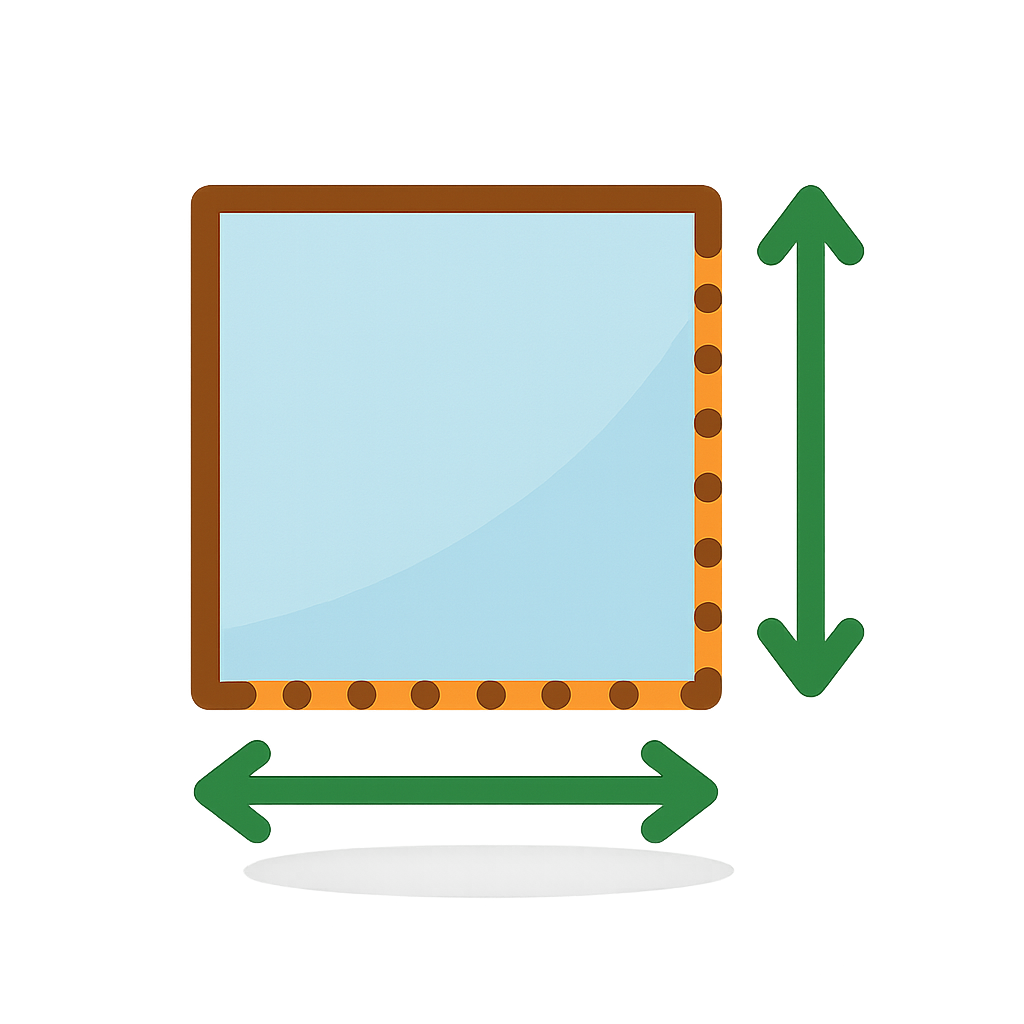
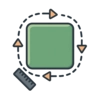
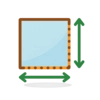
Have you ever run your hand across the smooth, cool surface of a lake just before skipping a stone? Or have you snuggled under a colorful quilt, tracing the different square patches with your finger, feeling the different textures? What about the floor of your bedroom? Is it covered in a soft carpet, cool tiles, or shiny wood? That’s me. I am the flat space inside things, the surface that covers the world. I am the part you can touch, feel, and measure. Can you imagine trying to paint a giant mural on a wall without knowing how much paint you’ll need? It would be a disaster. Or what about trying to bake a huge birthday cake for everyone in your class without knowing how much yummy frosting it will take to cover the top? That’s where I come in to help solve the puzzle. I am the space held inside the lines of a drawing, the part you get to color in with your favorite crayons. I am the green field where you play soccer, the empty page in your notebook waiting for a story, and the bright screen of your tablet where you build amazing worlds. For a long, long time, people saw me everywhere but didn't have a name for me or a way to understand my size. They needed a way to measure the ‘insideness’ of their farms, their homes, and their kingdoms. I was a mystery waiting to be solved. And when they finally figured me out, they gave me a special name. Hello! I am Area!
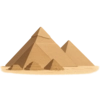
My story really begins thousands of years ago in a hot, sandy land called Ancient Egypt. The mighty Nile River was the heart of their world, but every single year, it would flood its banks. While the flood brought rich soil for farming, it also washed away all the markers that showed where one farmer’s land ended and another’s began. Can you imagine the arguments? "That was my cornfield!" "No, it was mine!". It was a huge problem, and they needed me to solve it. So, clever Egyptians, known as "rope-stretchers," came up with a brilliant idea. They took long ropes and tied knots in them at equal distances. They used these ropes to create perfect squares and rectangles on the ground, outlining the farms again. While doing this, they noticed something amazing. If a field was a rectangle, they could just count the number of squares that fit inside it. They soon realized they could get the same number by multiplying the number of knots along the long side by the number of knots along the short side. They had discovered how to measure me. They had found the formula: length times width.
A long time after that, my journey took me across the sea to Ancient Greece. There, thinkers and mathematicians became my biggest fans. Around the year 300 BCE, a brilliant man named Euclid decided I was so important that I needed my own rulebook. He wrote a famous book called 'Elements,' which was like a superhero guide for shapes. In it, he wrote down all the official rules for finding me, not just in simple squares and rectangles, but in tricky triangles, too. His book was so helpful that people used it for over two thousand years. But what about curvy shapes? A circle doesn't have straight sides you can multiply. That was a real head-scratcher until another super-smart Greek named Archimedes came along a little later. Archimedes was a genius. He figured out that he could find my size in a circle by filling it up with lots of tiny triangles. It was like solving a very complex jigsaw puzzle. He even found clever ways to measure me in a parabola, which is the U-shape a ball makes when you throw it. Thanks to him, even my curviest forms could be understood and measured.
From those ancient farmers and Greek thinkers, I have traveled all the way to your world today, and believe me, I’m busier than ever. I'm not just for measuring fields anymore. Think about the tallest skyscrapers in a city. Before a single brick is laid, architects use me to design the floor plans. They have to figure out my size in every single room to make sure there’s enough space for people to live and work comfortably. Scientists use me in incredible ways, too. They use powerful satellites way up in space to take pictures of the Earth. Then, they measure my size in rainforests and ice caps to see if they are shrinking or growing. This helps them understand and protect our beautiful planet. And here’s a fun one, I’m even inside your video games. When you explore a huge, open world in a game, designers have carefully calculated my size to create every part of that map, from the grassy plains to the spooky dungeons. I am the space for creativity and adventure. From the piece of paper you use for your drawings to the blacktop where you play hopscotch, I am the surface where your ideas can come to life. So the next time you see an empty space—a blank canvas, an open field, or a new page in a journal—remember me, Area, and think of all the amazing things you can fill it with.
Activities
Take a Quiz
Test what you learned with a fun quiz!
Get creative with colors!
Print a coloring book page of this topic.








 Free for Educators