
 English
 Continue with Google
 Continue with Apple

The Great Recycling Adventure
I am the fizz that tickles your nose when you sip a soda. I am the strong stuff that helps the tallest trees reach for the sky, and I am the warm puff of air you see on a chilly morning. You can find me in the yummy bread of your sandwich and even in the sparkly diamond on a fancy ring. I am a world traveler, tumbling through the air, diving deep into the oceans, and burrowing far beneath the ground on a never-ending adventure. I connect the tiniest bug to the biggest whale. Can you guess who I am. Hello. You can call me the Carbon Cycle. I’m the biggest and oldest recycling program in the world, and I connect every single living thing on this planet.
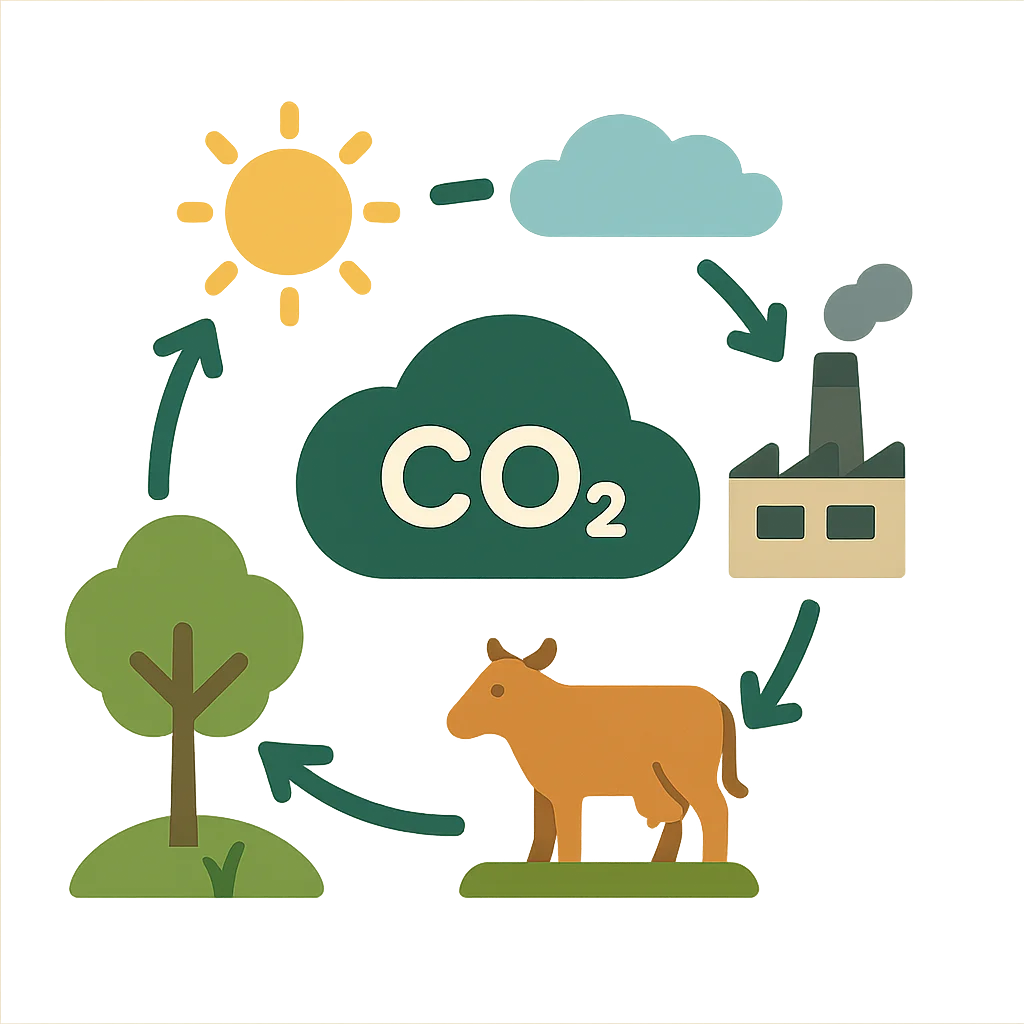
For a very long time, I was a complete mystery. People knew that plants grew and animals breathed, but they didn’t understand how it all connected. I was like an invisible secret that kept the world running. Then, some very curious people called scientists started to notice my patterns. In the 1770s, a thoughtful man in England named Joseph Priestley was doing experiments with jars. He noticed that if he lit a candle in a sealed jar, the flame would go out. The air became 'bad'. But when he put a little mint plant in that same jar and left it in the sunlight, the air somehow became fresh again. He discovered that plants did something amazing to the air. A little while later, on May 8th, 1789, a brilliant scientist in France named Antoine Lavoisier officially gave my main ingredient, carbon, its name. He helped prove that I was a real element. These scientists, and many others, slowly pieced together my story. They figured out that plants 'breathe in' a gas called carbon dioxide, which is just me hanging out with some oxygen friends. Using energy from the sun, a process called photosynthesis, they turn me into food to help them grow. Then, animals come along and eat the plants. And you. When you breathe out, you are sending me right back into the air. This is my 'fast' loop, a speedy dance from the air to plants, to animals, and back to the air again, over and over.
But my journey isn't always so fast. I have a slower, deeper side, too. I love to travel into the deep, cold oceans, where I can dissolve in the water. Tiny sea creatures use me to build their beautiful, hard shells. When they sink to the bottom of the sea, I go with them. I also have a really long-term travel plan. Millions of years ago, when giant ferns and ancient sea creatures died, I was part of them. They were buried deep under layers of mud and rock. Over all that time, the incredible heat and pressure from the Earth squished them, turning me into coal, oil, and natural gas. You might know these as fossil fuels. For ages and ages, I would just sleep down there, tucked away deep in the Earth. It’s my long, slow vacation from the busy world above.
I am the building block of all life, and keeping my journey in balance is super important for a healthy planet. My fast loop and my slow travels worked together perfectly for a very long time. But when people started to dig up those fossil fuels where I was sleeping and burn them for energy, it sent a lot of me back into the air very, very quickly. It’s like waking me up from my long nap and rushing me back to work. This can make the Earth’s blanket of air a little too thick and warm. But the wonderful news is that you are a part of my story, too. By planting trees that breathe me in, protecting our amazing oceans, and finding clever, clean ways to make energy from the sun and wind, you are helping to keep my cycle healthy and balanced for everyone. You are a caretaker of my amazing, world-connecting journey.
Reading Comprehension Questions
Click to see answer