

 English

The Pyramid of You
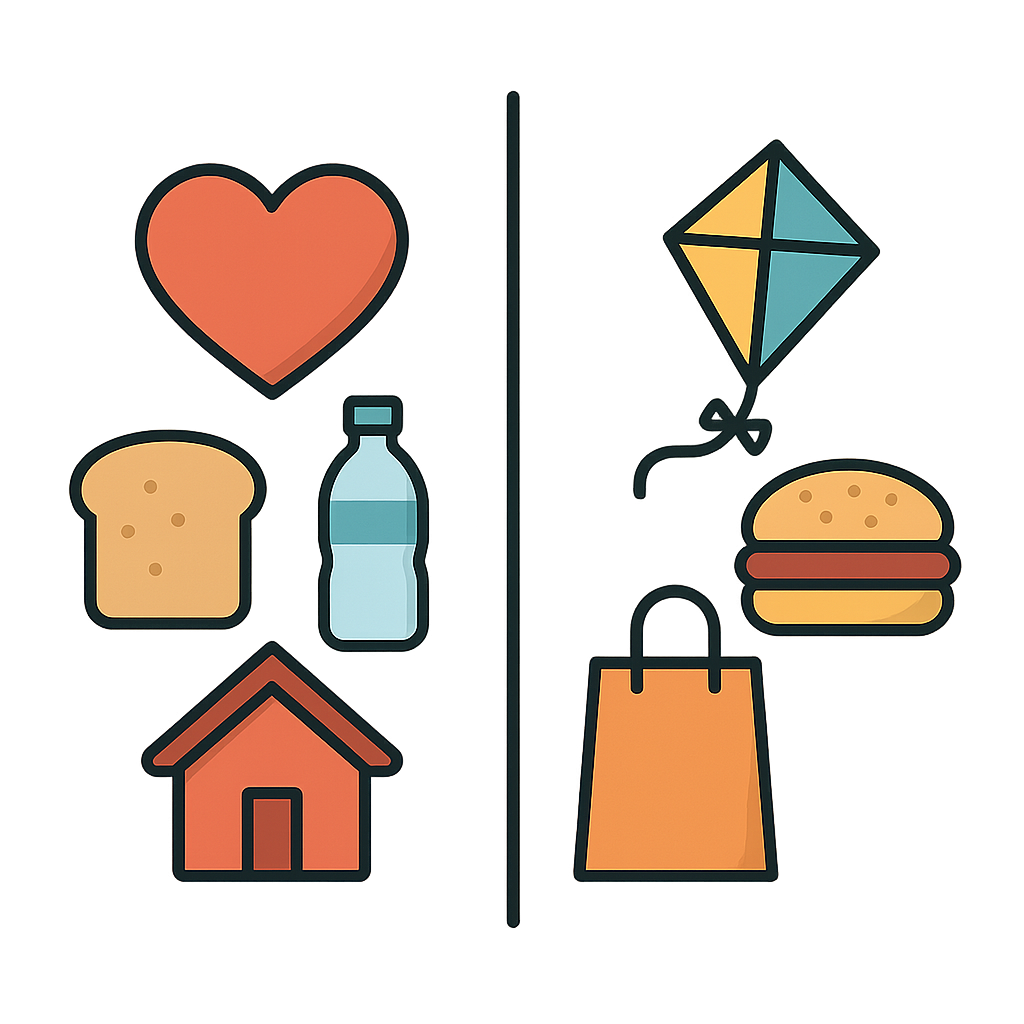
Have you ever felt it. That deep, rumbling signal from inside your body on a scorching summer day, when your throat is dry and all you can think about is a cool, clear glass of water. It’s a feeling that takes over everything, a powerful, urgent message that you can’t ignore. Now, compare that to a different feeling. Imagine walking past a store window and seeing the newest, most exciting video game, the one all your friends are talking about. Your heart might beat a little faster, and you can almost feel the controller in your hands. That feeling is bright and exciting, but it’s a spark, not a fire. It doesn't consume you in the same way. For all of human history, these two feelings have lived inside every person, a constant conversation between what is essential and what is desired. I am that conversation. I am the quiet whisper that helps you sort through your desires, the invisible compass that points you toward what truly matters. I am the idea of Needs and Wants.
For centuries, people felt my push and pull without a map to guide them. They understood the pang of hunger and the joy of friendship, but they struggled to see how all these feelings connected. It was like having all the pieces of a puzzle without the picture on the box. Then, a thoughtful and deeply curious man named Abraham Maslow came along. He was a psychologist, which means he dedicated his life to understanding the human mind. He spent years watching people, listening to their stories, and trying to figure out what truly motivates them to get out of bed each morning. He noticed that some of my whispers were consistently louder and more urgent than others. A person shivering in the cold wasn't dreaming of winning an award; they were dreaming of a warm coat. A person who felt lonely and isolated didn't care about having the fanciest car; they yearned for a friend. It was during the year 1943 that Abraham had his brilliant breakthrough. He realized my messages weren't a jumbled mess; they were organized in layers of importance. He called his idea the 'Hierarchy of Needs,' and he imagined it as a great pyramid. The base, the very foundation of everything, was built from the things your body cannot survive without: food, water, sleep, and a safe, warm home. Once that foundation was solid, you could start building the next level: the need to feel safe and secure, free from danger and worry. Above that came the level of love and belonging, the powerful need for friends, family, and connection. Next was the need for esteem, which is about feeling good about yourself, earning respect, and being proud of your accomplishments. Only when all those layers were built could you reach for the very top of the pyramid, a glowing point he called 'self-actualization'. This was the ultimate goal: becoming the very best version of yourself you could possibly be, full of creativity, purpose, and wisdom.
Today, I am your personal guide to building a happy and meaningful life. Understanding me helps you make smarter decisions every single day. When you get your allowance, you might feel the pull of a candy bar or a new toy, a fleeting want. But listening to me helps you see the bigger picture. Perhaps you remember that you need a new bicycle helmet to ride safely with your friends, or you're saving up for a bike you truly need to get to school. By choosing the need over the momentary want, you are strengthening the foundation of your own pyramid. My wisdom also helps you become a more empathetic person. When you see a friend who is quiet or upset, you can understand that they might be struggling with a lower level of their pyramid. Maybe they are worried about a problem at home, a need for safety, and they can't focus on playing a game, which belongs on a higher level. By listening to me, you learn to take care of your most important needs first, building a strong and stable base for your life. This solid foundation gives you the strength and confidence to chase your biggest dreams, to reach for that sparkling point at the top of your pyramid, and to help others build their own pyramids of happiness right alongside you.
Activities
Take a Quiz
Test what you learned with a fun quiz!
Get creative with colors!
Print a coloring book page of this topic.















 Free for Educators