

 English

I Am the Square
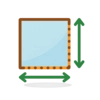
I want you to imagine something perfectly balanced. Think of four straight paths, each one exactly the same length. They meet at four corners, but not just any corners—each one is a perfect, sharp turn, like the corner of a book. I am stable. I am reliable. If you stand me up, I won't easily fall over. Long before people had fancy tools, they knew this about me. They saw me in the glimmering, tiny cubes of salt crystals and in the way some minerals broke along flat, even lines. When you share a chocolate bar or a brownie, you often ask someone to cut me into smaller versions of myself, because you know I am the shape of fairness. Each piece will be the same. I am the foundation for so many games, from the checkerboard where kings and pawns battle to the grid on a crossword puzzle that challenges your mind. I am the window that lets you see the world outside, and the tile that makes a floor strong and steady. I am simple, but I am everywhere, bringing order and predictability. You have known me your whole life. I am the Square.
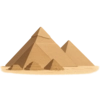
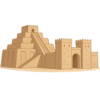
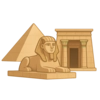
For thousands of years, people used me without truly understanding me. In the fertile lands of Mesopotamia and along the Nile River in Ancient Egypt, farmers needed to divide their land fairly. After the great river flooded each year, washing away the boundaries, they would use ropes with knots at regular intervals to remake their fields. They stretched these ropes tight to create my straight sides and perfect corners, ensuring each family got their rightful plot of land. They also used me as the base for their mighty buildings, like ziggurats and pyramids, because they knew my stability would make their structures last for ages. But it was the ancient Greeks who became my biggest fans. They weren't just content to use me; they wanted to know my secrets. Around the 6th century BCE, thinkers like Thales of Miletus started asking 'why?'. Why were my sides equal? Why were my corners always the same? A bit later, a famous mathematician named Pythagoras discovered a magical relationship in the triangles that live inside of me. He found that if you draw a line connecting my opposite corners, you create two right-angled triangles, and he came up with a famous theorem that explained the relationship between their sides. Then, around 300 BCE, a brilliant man named Euclid of Alexandria essentially wrote my biography. His book, 'Elements,' was one of the most important ever written. In it, he used pure logic to define me and all my shape-friends. He proved, with no doubt, that my four angles must be right angles and my four sides must be equal. It was like he wrote down my DNA. Thanks to Euclid, I wasn't just a useful tool anymore; I was a perfect, proven idea. This understanding gave people the confidence to build even more complex things, from the organized street grids of Roman cities to the magnificent arches of their aqueducts, all starting with the simple certainty that I provide.
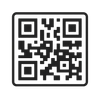
My journey didn't stop with the ancient world. As time marched on, I found new ways to help people express themselves and explore new ideas. Artists began to see the beauty in my simplicity. In the early 20th century, a Dutch painter named Piet Mondrian created famous artworks using just me, my cousin the rectangle, and a few bold colors. He showed the world that my straight lines and perfect corners could create feelings of balance and harmony. But my biggest role was yet to come, in a world you know very well: the world of technology. Look closely at the screen you are using right now. It's made of millions of tiny lights called pixels. And what shape are those pixels? Most of them are me. Millions of tiny squares, each glowing with a different color, work together to create every image, video, and game you see. The digital world is literally built on a foundation of squares. Think of the game Minecraft, where you can build entire universes out of square blocks. That’s me, giving you the power to create anything you can imagine. From the QR codes you scan with a phone to the microchips that power our computers, my orderly grid-like nature makes me essential. I am more than just four equal sides and four right angles. I am a symbol of fairness, stability, and human ingenuity. I represent the moment humans moved from guessing to knowing, from building a simple hut to designing a complex city. I am a bridge between the natural world of crystals and the digital world of pixels. So the next time you see a chessboard, a windowpane, or a block in a video game, remember the incredible journey we've been on together. Remember the ancient farmers, the Greek thinkers, and the modern inventors. I am a simple shape, but with me, you can build, create, and understand the world in countless ways.
Activities
Take a Quiz
Test what you learned with a fun quiz!
Get creative with colors!
Print a coloring book page of this topic.








 Free for Educators