English

Wind
Wind is the natural movement of air across the Earth's surface…
Reads at Grades 3–5 Listens at Grades 1–5
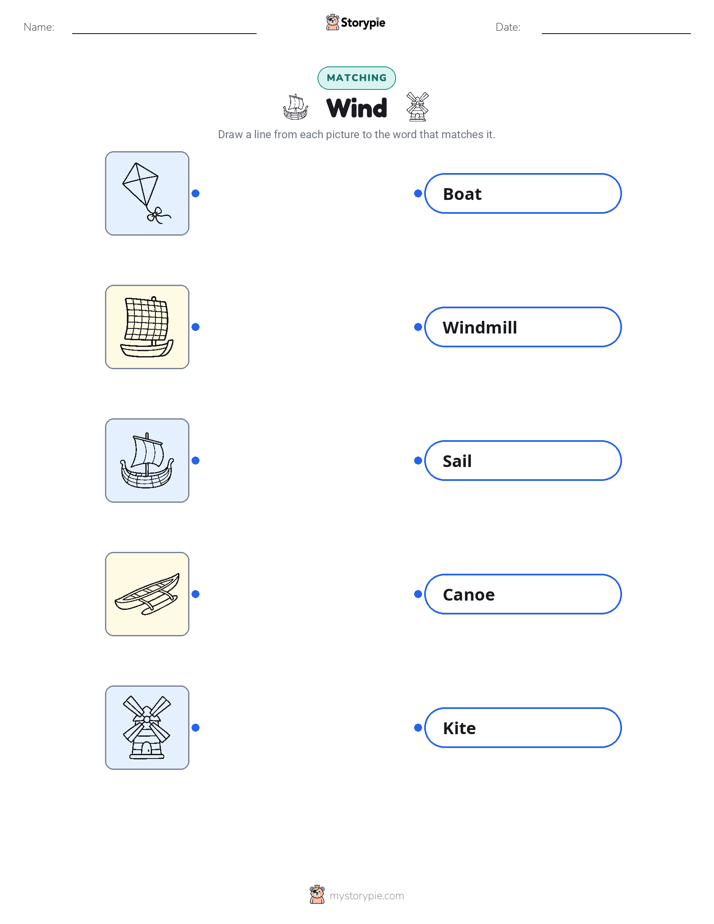
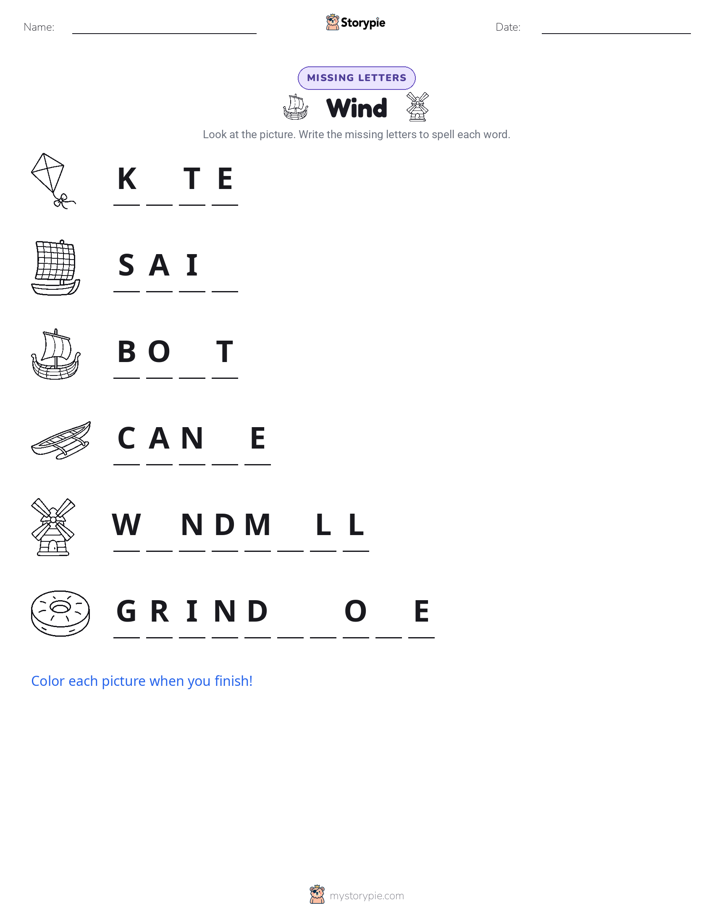
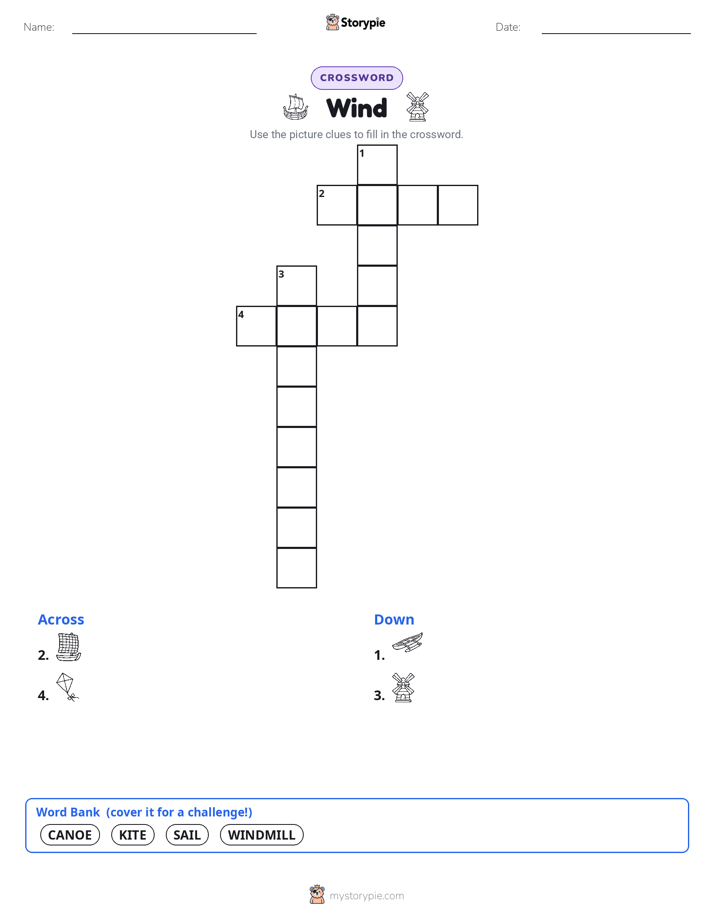
Print & create
Answer keys·No prep·Free with an account
28 worksheets · answer keys · full story · quiz · Ages 8-10 · CEFR B1
Plus adds 244,000+ more stories in 27 languages, audio for every one, and printables for all of them.
Just want Wind?
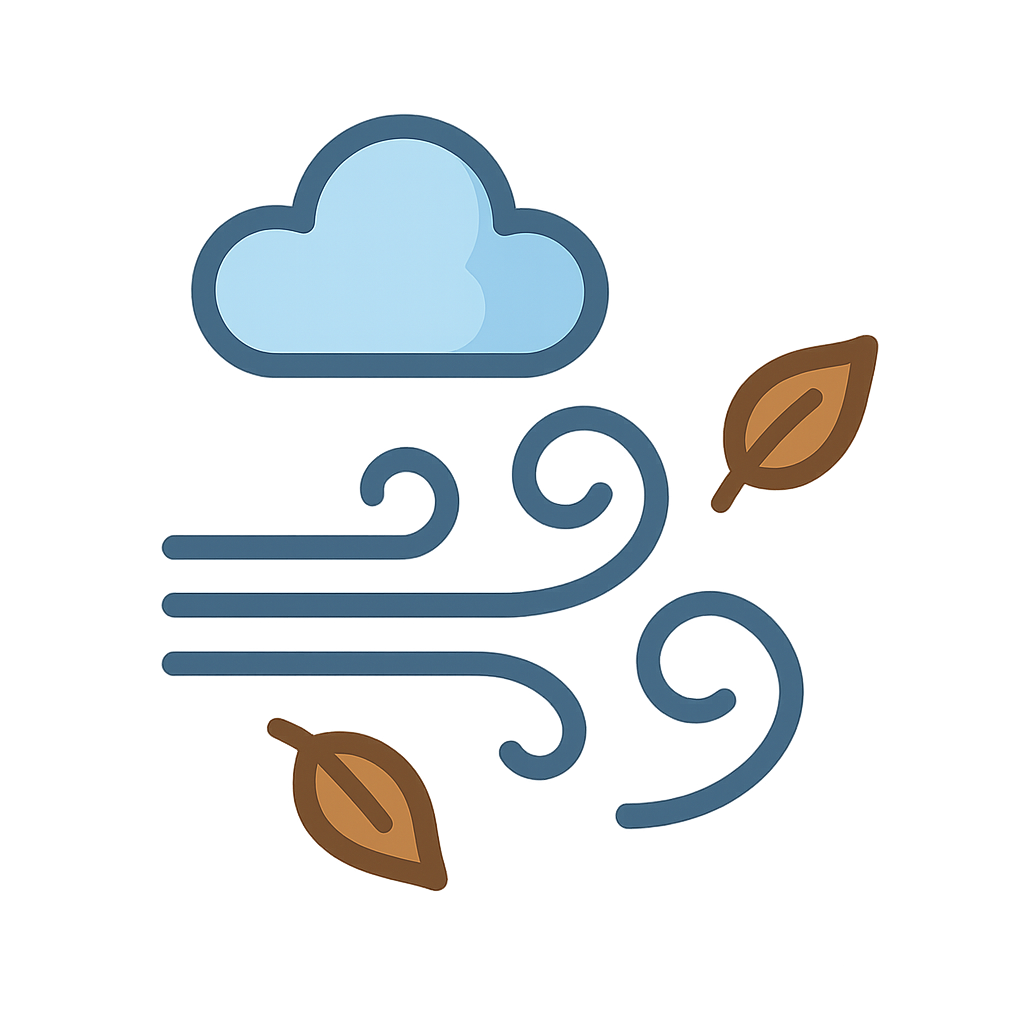
Have you ever felt a gentle tickle on your cheek when there was nothing there? That was me, saying hello. Have you watched a kite dance and dive high in the sky, pulled by an invisible string that reaches all the way to the clouds? I am that string. I am the breath of the world, and I love to play. Sometimes I am a soft whisper, sneaking through the trees and making the leaves rustle like they are telling secrets. I carry the sweet smell of blooming flowers in the spring and the smoky scent of autumn bonfires. I can lift a bird's wings and help it soar without a single flap. But I have other moods, too. I can puff out my cheeks and become a mighty gust, pushing against doors and making flags snap smartly on their poles. I can be a powerful roar, churning the ocean into a foamy playground of waves and sending tumbleweeds bouncing across the desert. Can you imagine a world without my movement? It would be very still, very quiet, and the air would feel heavy and old. You might have guessed who I am by now. I am everywhere, all at once. I am the Wind.
For thousands of years, people only felt me. They couldn't see me, but they saw what I could do. It took a very long time for them to realize they could work with me. Imagine you are on a boat on the big, wide Nile River in ancient Egypt. Rowing is hard, tiring work. Your arms ache and the sun is hot. Then, someone has a brilliant idea. What if they could catch my breath? Around 5000 BCE, they did just that. They held up big, strong pieces of cloth on tall sticks, and I happily pushed against them. I filled these first sails and sent their boats gliding down the river like swans. Suddenly, travel and trade became so much easier. They didn't have to work so hard, because I was doing the work for them. Far away, across the enormous Pacific Ocean, the amazing Polynesian navigators became my best friends. For centuries, they learned to read my patterns. They knew which way I was blowing and when I would change my mind. By understanding my whispers and sighs, they navigated their canoes from one tiny island to another, exploring and settling a vast blue world without any modern maps or compasses. They just listened to me.
I Am the Wind
Have you ever felt a gentle tickle on your cheek when there was nothing there? That was me, saying hello. Have you watched a kite dance and dive high in the sky, pulled by an invisible string that reaches all the way to the clouds? I am that string. I am the breath of the world, and I love to play. Sometimes I am a soft whisper, sneaking through the trees and making the leaves rustle like they are telling secrets. I carry the sweet smell of blooming flowers in the spring and the smoky scent of autumn bonfires. I can lift a bird's wings and help it soar without a single flap. But I have other moods, too. I can puff out my cheeks and become a mighty gust, pushing against doors and making flags snap smartly on their poles. I can be a powerful roar, churning the ocean into a foamy playground of waves and sending tumbleweeds bouncing across the desert. Can you imagine a world without my movement? It would be very still, very quiet, and the air would feel heavy and old. You might have guessed who I am by now. I am everywhere, all at once. I am the Wind.
For thousands of years, people only felt me. They couldn't see me, but they saw what I could do. It took a very long time for them to realize they could work with me. Imagine you are on a boat on the big, wide Nile River in ancient Egypt. Rowing is hard, tiring work. Your arms ache and the sun is hot. Then, someone has a brilliant idea. What if they could catch my breath? Around 5000 BCE, they did just that. They held up big, strong pieces of cloth on tall sticks, and I happily pushed against them. I filled these first sails and sent their boats gliding down the river like swans. Suddenly, travel and trade became so much easier. They didn't have to work so hard, because I was doing the work for them. Far away, across the enormous Pacific Ocean, the amazing Polynesian navigators became my best friends. For centuries, they learned to read my patterns. They knew which way I was blowing and when I would change my mind. By understanding my whispers and sighs, they navigated their canoes from one tiny island to another, exploring and settling a vast blue world without any modern maps or compasses. They just listened to me.
My adventures weren't just on the water. Eventually, clever people invited me to help them on land, too. Can you picture a dry, sunny land where people needed flour for bread and water for their crops? That was ancient Persia. Around the 9th century CE, inventors there built something amazing: the first practical windmills. They weren't like the ones you might see today. They stood straight up, like a spinning door, and I would push them around and around. As I spun their blades, they turned heavy stones that ground wheat into fine flour. Other windmills I turned helped lift water from deep wells to flow into thirsty fields, making gardens bloom in the desert. I loved that job. Centuries later, in a land much wetter and greener, people needed my help for the opposite reason. In the Netherlands, starting around the 12th century CE, much of the country was covered by shallow lakes. People wanted more land to build homes and farms. So, they built tall, beautiful windmills with four long arms. I would catch their sails and turn them with all my might. This power worked pumps that pushed the water out from behind walls called dikes, revealing rich, new soil. I helped them create new land from the water.
As time flew by, people dreamed of even bigger things, and I was there to help. On a chilly day, December 17th, 1903, two brothers named Wilbur and Orville Wright brought a strange machine made of wood and cloth to a sandy hill. They wanted to fly like the birds I loved to lift. When their little engine started, I rushed under the wings of their airplane. I was the invisible ramp that gave them the lift they needed to soar into the air for the very first time. It was only for a few seconds, but it changed the world. Even before that, an inventor named Charles F. Brush had a different kind of dream in 1888. He built a truly giant windmill, much bigger than any before it, and used my power to spin a machine that made something new and exciting: electricity. It was the world's first automatic wind turbine. Today, you can see my modern children all over the world. They are tall, sleek, white towers that spin gracefully in fields and on hills. These wind turbines are my new job. I turn their blades to create clean energy that can power homes, schools, and cities without making the air dirty. I am still here, always moving, always ready to help power the next great dream for a cleaner, brighter future.
Wow facts
About
Wind is the natural movement of air across the Earth's surface, a phenomenon that happens because the sun heats the Earth's surface unevenly. This creates differences in air pressure, which humans have used for thousands of years for travel, agriculture, and now, renewable energy.
Take a Quiz
Question 1 of 5
According to the story, who were the first people to use sails to catch the Wind's breath around 5000 BCE?
Explore next



Want to do even more?
Go beyond exploring. Unlock tools that turn every story into real learning.

Storypie Plus for families
Full stories, quizzes, and printables. Nights and car rides, sorted.
- Unlimited audio stories
- Create Mode: your child stars in the story
- Offline downloads
- Printable worksheets & coloring pages

Why Storypie for Schools
Students engaged. Prep in seconds. Evenings back to you.
- Worksheets & Quizzes
- Classroom Management
- Formative Assessment
- Custom Curriculum & Lesson Plans
- 27 Languages

Why Storypie for Homeschool
Curriculum done. They'll ask for more. Hours back in your day.
- Worksheet Generator
- First-Person Audio Stories
- Built-in Comprehension Quizzes
- Custom Curriculum & Lesson Plans
- Print & Go Activities