English

Las Meninas
A famous 1656 oil painting by Spanish artist Diego Velázquez…
Reads at Grades 3–5 Listens at Grades 1–5
Print & create
Answer keys·No prep·Free with an account
28 worksheets · answer keys · full story · quiz · Ages 8-10 · CEFR B1
Plus adds 164,000+ more stories in 27 languages, audio for every one, and printables for all of them.
Just want Las Meninas?
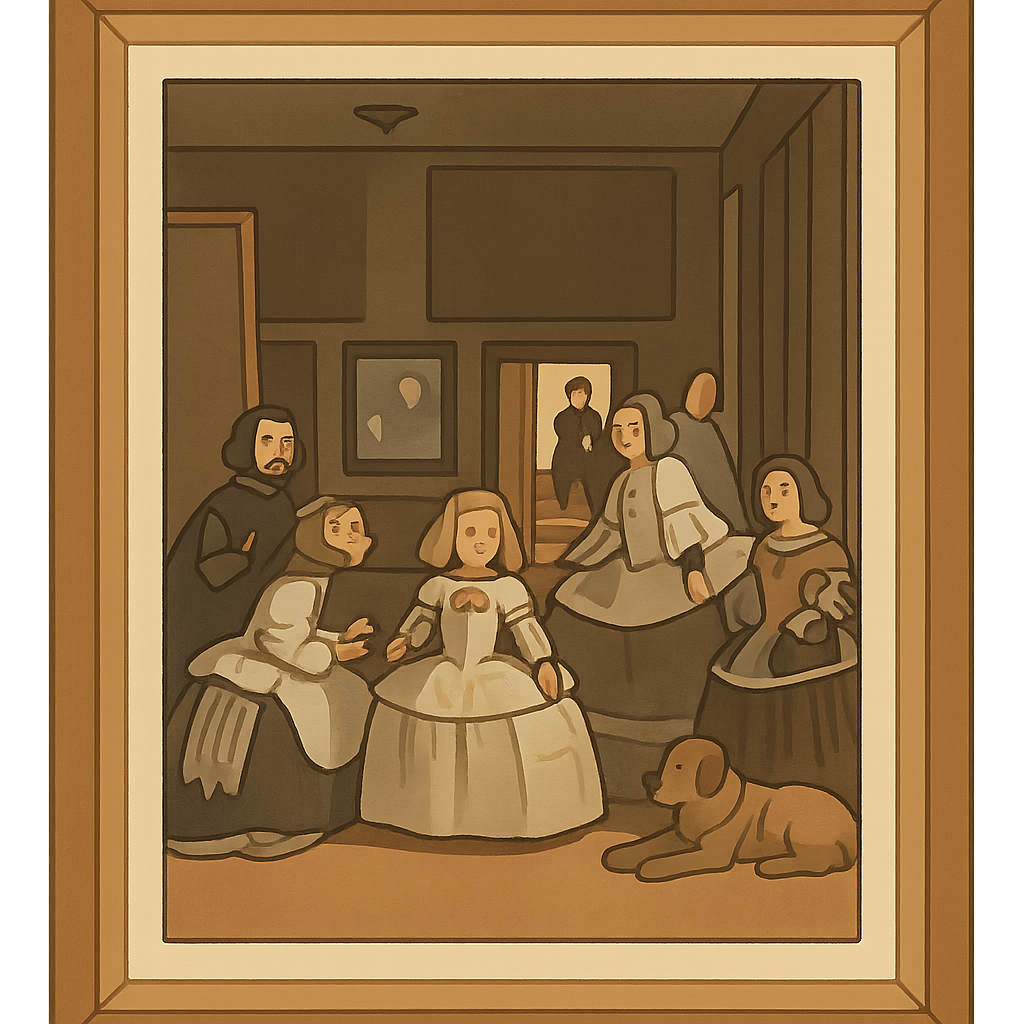
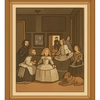
Imagine a huge, quiet room in a Spanish palace, so tall that voices would echo. Golden light streams in from a side window, illuminating a little princess in the center of it all. Her dress is wide and shimmering, and she is surrounded by her friends, her maids of honor, a chaperone, and even a big, sleepy dog resting on the floor. To the left, a man with a mustache stands before a giant canvas, brush in hand, looking out as if you just walked into the room. There’s a secret here, a puzzle for your eyes. If you look past the princess into the shadows on the back wall, you’ll spot a mirror. And in that mirror, you can see the faint reflection of a man and a woman. Who are they? It feels like you’ve stumbled upon a moment frozen in time, a busy, royal afternoon filled with secret glances and unspoken stories. I am not just a picture made of paint. I am a window, a mystery, and a masterpiece. I am the painting called Las Meninas.
My story began in a grand building called the Royal Alcázar of Madrid in Spain, all the way back in the year 1656. My creator was the brilliant and respected painter for the king, a man named Diego Velázquez. He was the official court painter for King Philip IV, which was a very important job. One afternoon, the king’s five-year-old daughter, Infanta Margarita Teresa, visited his studio. She didn’t come alone, of course. She brought her maids of honor—her 'meninas' in Spanish—along with her court companions, María Bárbola and Nicolás Pertusato, and her favorite sleepy mastiff dog. Can you imagine having a whole group of people follow you around just to play? Velázquez saw this busy, happy, and slightly chaotic scene and had an amazing idea. Instead of painting another stiff and formal royal portrait, he decided to capture a real moment of life inside the palace. He picked up his brushes and began to paint everyone just as they were. And he did something very unusual for the time. That man on the left, looking right at you with his palette and brush? That’s him. That’s Diego Velázquez. It was a very bold thing for a painter to include himself in a portrait with the royal family. It was his way of saying, 'I am part of this world, too.'
The Story of Las Meninas
Imagine a huge, quiet room in a Spanish palace, so tall that voices would echo. Golden light streams in from a side window, illuminating a little princess in the center of it all. Her dress is wide and shimmering, and she is surrounded by her friends, her maids of honor, a chaperone, and even a big, sleepy dog resting on the floor. To the left, a man with a mustache stands before a giant canvas, brush in hand, looking out as if you just walked into the room. There’s a secret here, a puzzle for your eyes. If you look past the princess into the shadows on the back wall, you’ll spot a mirror. And in that mirror, you can see the faint reflection of a man and a woman. Who are they? It feels like you’ve stumbled upon a moment frozen in time, a busy, royal afternoon filled with secret glances and unspoken stories. I am not just a picture made of paint. I am a window, a mystery, and a masterpiece. I am the painting called Las Meninas.
My story began in a grand building called the Royal Alcázar of Madrid in Spain, all the way back in the year 1656. My creator was the brilliant and respected painter for the king, a man named Diego Velázquez. He was the official court painter for King Philip IV, which was a very important job. One afternoon, the king’s five-year-old daughter, Infanta Margarita Teresa, visited his studio. She didn’t come alone, of course. She brought her maids of honor—her 'meninas' in Spanish—along with her court companions, María Bárbola and Nicolás Pertusato, and her favorite sleepy mastiff dog. Can you imagine having a whole group of people follow you around just to play? Velázquez saw this busy, happy, and slightly chaotic scene and had an amazing idea. Instead of painting another stiff and formal royal portrait, he decided to capture a real moment of life inside the palace. He picked up his brushes and began to paint everyone just as they were. And he did something very unusual for the time. That man on the left, looking right at you with his palette and brush? That’s him. That’s Diego Velázquez. It was a very bold thing for a painter to include himself in a portrait with the royal family. It was his way of saying, 'I am part of this world, too.'
For many years, I hung in the private office of the king, a personal treasure for the royal family to enjoy. I was a reminder of a happy day and a peek into the life of their beloved daughter. But my story didn't end there. The palace where I was born had a terrible fire in 1734, but thankfully, I was rescued. Much later, in the year 1819, a decision was made to share me with the world. I was moved to a special new home, the magnificent Museo del Prado in Madrid, where everyone could come and see me. People would stand before me for hours, trying to solve my riddles. Who is Velázquez looking at? Is he painting the princess, or is he painting the King and Queen, whose reflections we see in the mirror? Are the King and Queen standing right where you are, watching the scene unfold? My secrets have fascinated people for centuries. In 1957, another famous Spanish artist, Pablo Picasso, became so obsessed with me that he painted 58 different versions of me in his own unique style. I am more than just oil on canvas; I am a conversation across time. I invite you to step inside my world, to look closely, and to wonder, proving that a single moment, captured with genius, can spark imagination forever.
Wow facts
About
A famous 1656 oil painting by Spanish artist Diego Velázquez, renowned for its complex and enigmatic composition depicting a scene from the Spanish court.
Take a Quiz
Question 1 of 5
Why do you think the painter, Diego Velázquez, included himself in the painting?
Explore next





Want to do even more?
Go beyond exploring. Unlock tools that turn every story into real learning.

Storypie Plus for families
Full stories, quizzes, and printables. Nights and car rides, sorted.
- Unlimited audio stories
- Create Mode: your child stars in the story
- Offline downloads
- Printable worksheets & coloring pages

Why Storypie for Schools
Students engaged. Prep in seconds. Evenings back to you.
- Worksheets & Quizzes
- Classroom Management
- Formative Assessment
- Custom Curriculum & Lesson Plans
- 27 Languages

Why Storypie for Homeschool
Curriculum done. They'll ask for more. Hours back in your day.
- Worksheet Generator
- First-Person Audio Stories
- Built-in Comprehension Quizzes
- Custom Curriculum & Lesson Plans
- Print & Go Activities