English

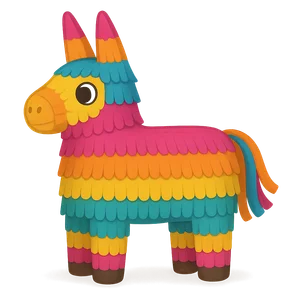
Piñata
A decorated container, often made of papier-mâché or clay, filled with treats and broken during a celebration.
Reads at Grades K-2 Listens at K–3
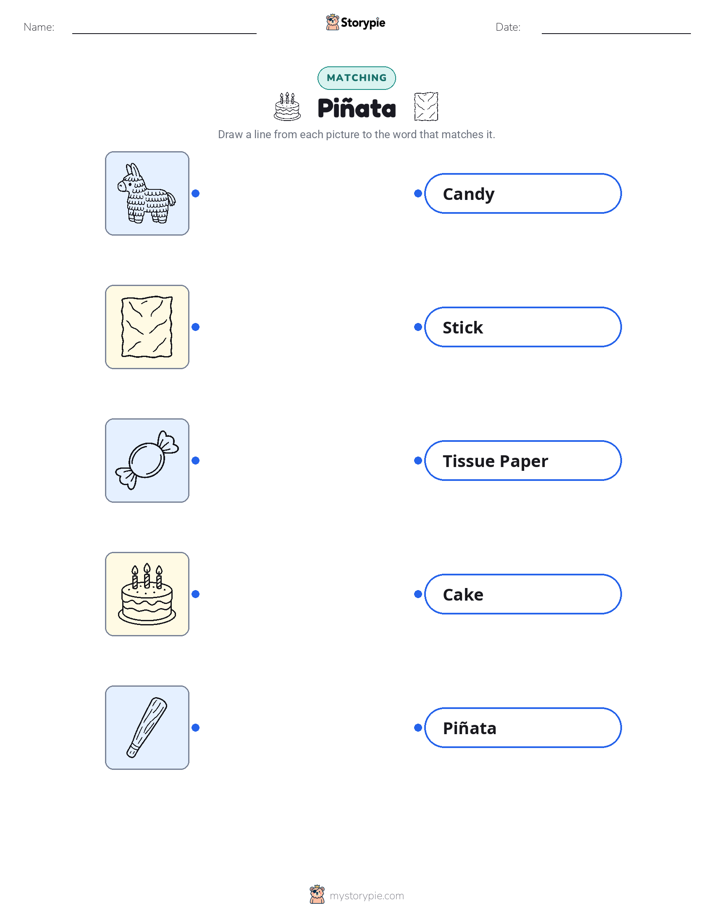
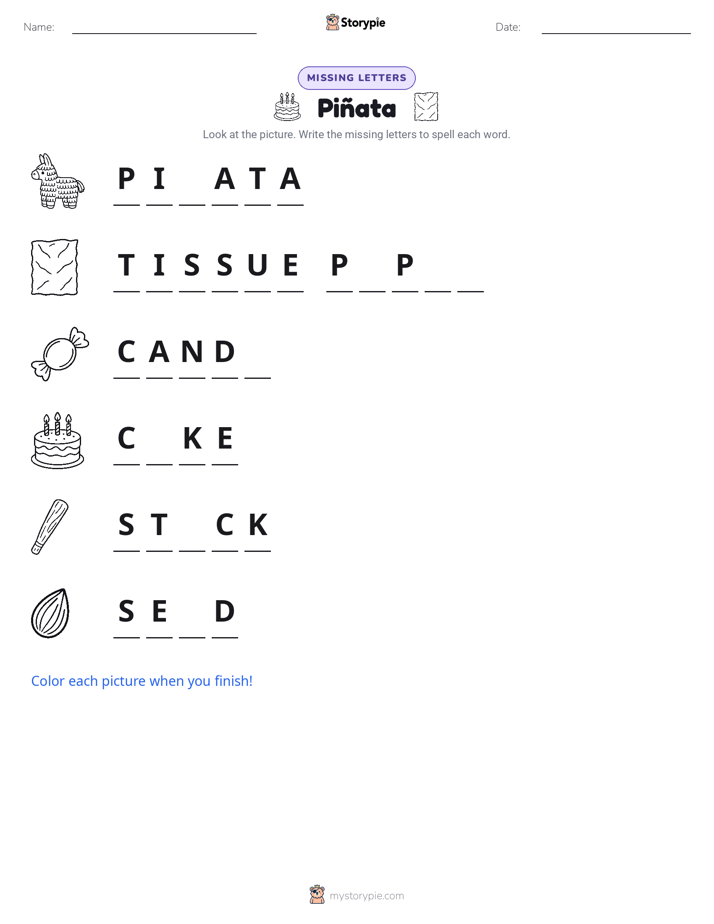
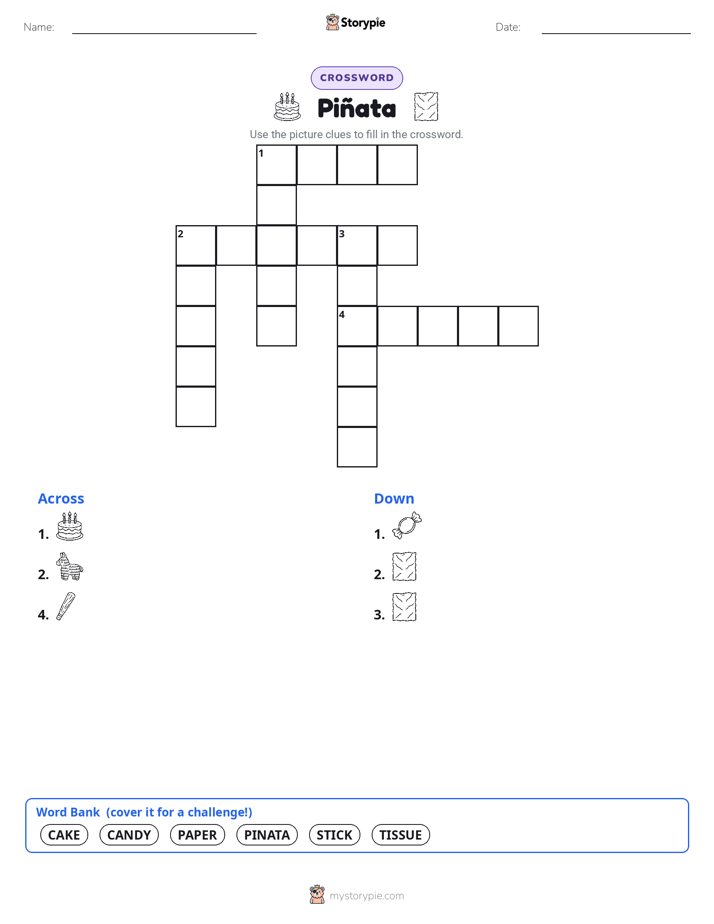
Print & create
Answer keys·No prep·Free with an account
28 worksheets · answer keys · full story · quiz · Ages 6-8 · CEFR A2
Plus adds 164,000+ more stories in 27 languages, audio for every one, and printables for all of them.
Just want Piñata?
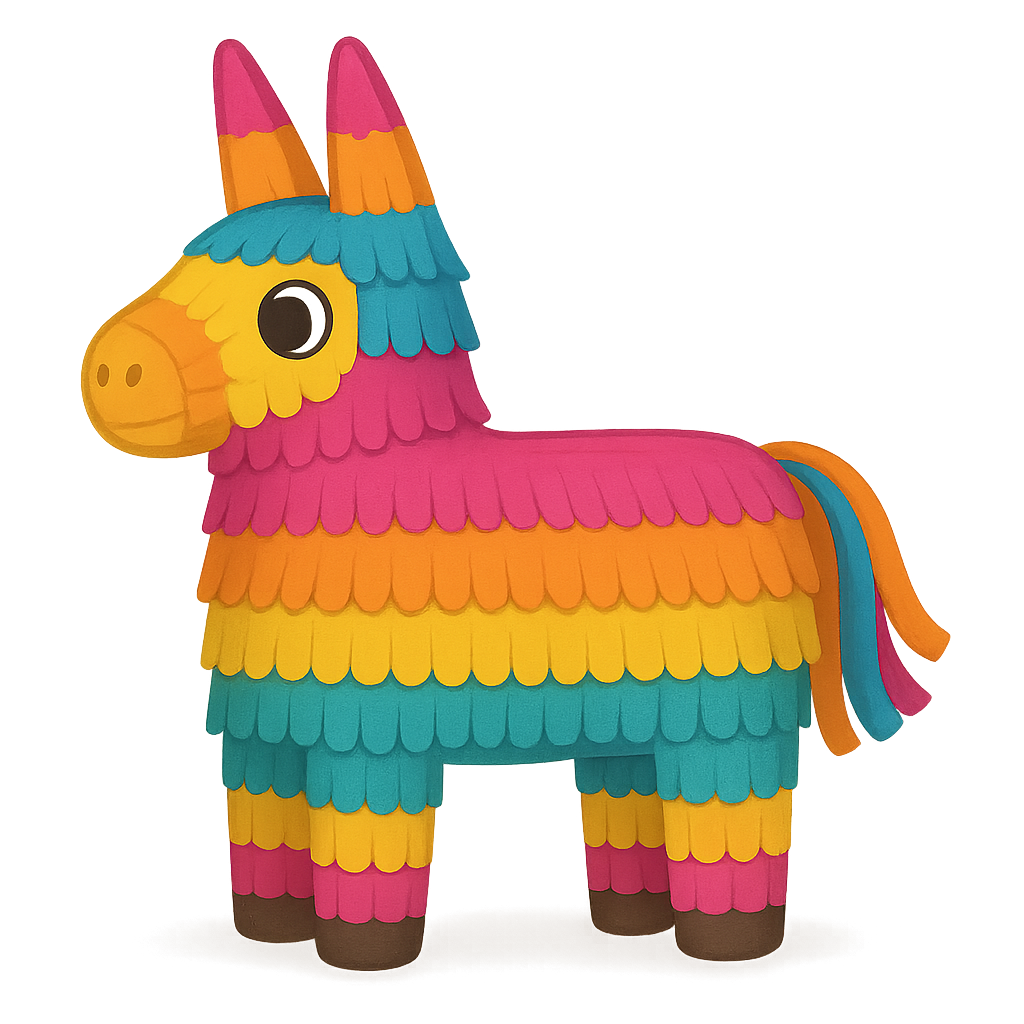
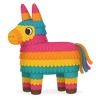
I float in the air, a burst of color with paper strips that flutter like fringe. I might look like a star with seven points, a funny donkey, or a magical unicorn. Inside, I hold a sweet secret: a treasure of candies, toys, and fruits just waiting to tumble out. Children gather below with excited smiles, ready for the fun to begin. Blindfolded and giggling, they take turns swinging a stick, trying to find me. With a gentle tap or a big thwack, they hope to be the one to break me open. What am I. I am a Piñata.
My story is a long journey that started way back in the 13th century, in a faraway land called China. A famous traveler named Marco Polo saw my ancestors there. They weren't filled with candy, but with seeds for good luck, and they were often shaped like animals like cows or oxen. He thought this was a wonderful idea and brought it with him to Europe. In the 14th century, my cousins in Italy and Spain were born. They were clay pots called 'pignattas,' which means 'fragile pot.' People would fill them with treats and break them during celebrations. Later, in the 16th century, Spanish missionaries carried the tradition across the big ocean to Mexico. They wanted to teach children stories from their religion. They made me into a star with seven shiny points. Each point stood for one of the seven deadly sins. The stick used to break me was a symbol of faith to fight off evil, and the treats that rained down were the sweet rewards of heaven.
But wait, the story has another twist. Even before the Spanish arrived, the Aztec people in Mexico had a very similar tradition. To honor their god of war, Huitzilopochtli, they would break a decorated clay pot that was filled with treasures and gifts. So when my Spanish cousins arrived, the two traditions mixed together like colors in a painting. Over many years, I changed. I stopped being a heavy, and sometimes dangerous, clay pot. Instead, artists began making my body out of papier-mâché, which is just paper and paste. This made me much safer and lighter. It also meant I could be shaped into all kinds of wonderful figures, from brave superheroes and silly monsters to beautiful flowers. I became the heart of the fiesta, a special part of birthdays and holiday celebrations like Las Posadas.
The Sweet Story of the Piñata
I float in the air, a burst of color with paper strips that flutter like fringe. I might look like a star with seven points, a funny donkey, or a magical unicorn. Inside, I hold a sweet secret: a treasure of candies, toys, and fruits just waiting to tumble out. Children gather below with excited smiles, ready for the fun to begin. Blindfolded and giggling, they take turns swinging a stick, trying to find me. With a gentle tap or a big thwack, they hope to be the one to break me open. What am I. I am a Piñata.
My story is a long journey that started way back in the 13th century, in a faraway land called China. A famous traveler named Marco Polo saw my ancestors there. They weren't filled with candy, but with seeds for good luck, and they were often shaped like animals like cows or oxen. He thought this was a wonderful idea and brought it with him to Europe. In the 14th century, my cousins in Italy and Spain were born. They were clay pots called 'pignattas,' which means 'fragile pot.' People would fill them with treats and break them during celebrations. Later, in the 16th century, Spanish missionaries carried the tradition across the big ocean to Mexico. They wanted to teach children stories from their religion. They made me into a star with seven shiny points. Each point stood for one of the seven deadly sins. The stick used to break me was a symbol of faith to fight off evil, and the treats that rained down were the sweet rewards of heaven.
But wait, the story has another twist. Even before the Spanish arrived, the Aztec people in Mexico had a very similar tradition. To honor their god of war, Huitzilopochtli, they would break a decorated clay pot that was filled with treasures and gifts. So when my Spanish cousins arrived, the two traditions mixed together like colors in a painting. Over many years, I changed. I stopped being a heavy, and sometimes dangerous, clay pot. Instead, artists began making my body out of papier-mâché, which is just paper and paste. This made me much safer and lighter. It also meant I could be shaped into all kinds of wonderful figures, from brave superheroes and silly monsters to beautiful flowers. I became the heart of the fiesta, a special part of birthdays and holiday celebrations like Las Posadas.
Today, you can find me at parties all over the world, not just in Mexico. When you see me swinging from a tree or a ceiling, remember my long journey from China, through Europe, and to the Americas. I am more than just paper and candy. I am a piece of history that connects people through joy and celebration. I am here to remind you that when we work together and break through challenges, sweet rewards are waiting to be shared by everyone.
Wow facts
About
A decorated container, often made of papier-mâché or clay, filled with treats and broken during a celebration. The piñata's exact origins are debated, with theories suggesting both Chinese and pre-Hispanic Mexican roots. It evolved through Europe and became a cultural icon in Mexico.
Take a Quiz
Question 1 of 4
Where did the idea for the piñata first come from?
Explore next



Want to do even more?
Go beyond exploring. Unlock tools that turn every story into real learning.

Storypie Plus for families
Full stories, quizzes, and printables. Nights and car rides, sorted.
- Unlimited audio stories
- Create Mode: your child stars in the story
- Offline downloads
- Printable worksheets & coloring pages

Why Storypie for Schools
Students engaged. Prep in seconds. Evenings back to you.
- Worksheets & Quizzes
- Classroom Management
- Formative Assessment
- Custom Curriculum & Lesson Plans
- 27 Languages

Why Storypie for Homeschool
Curriculum done. They'll ask for more. Hours back in your day.
- Worksheet Generator
- First-Person Audio Stories
- Built-in Comprehension Quizzes
- Custom Curriculum & Lesson Plans
- Print & Go Activities