

 English

A Whisper in Marble
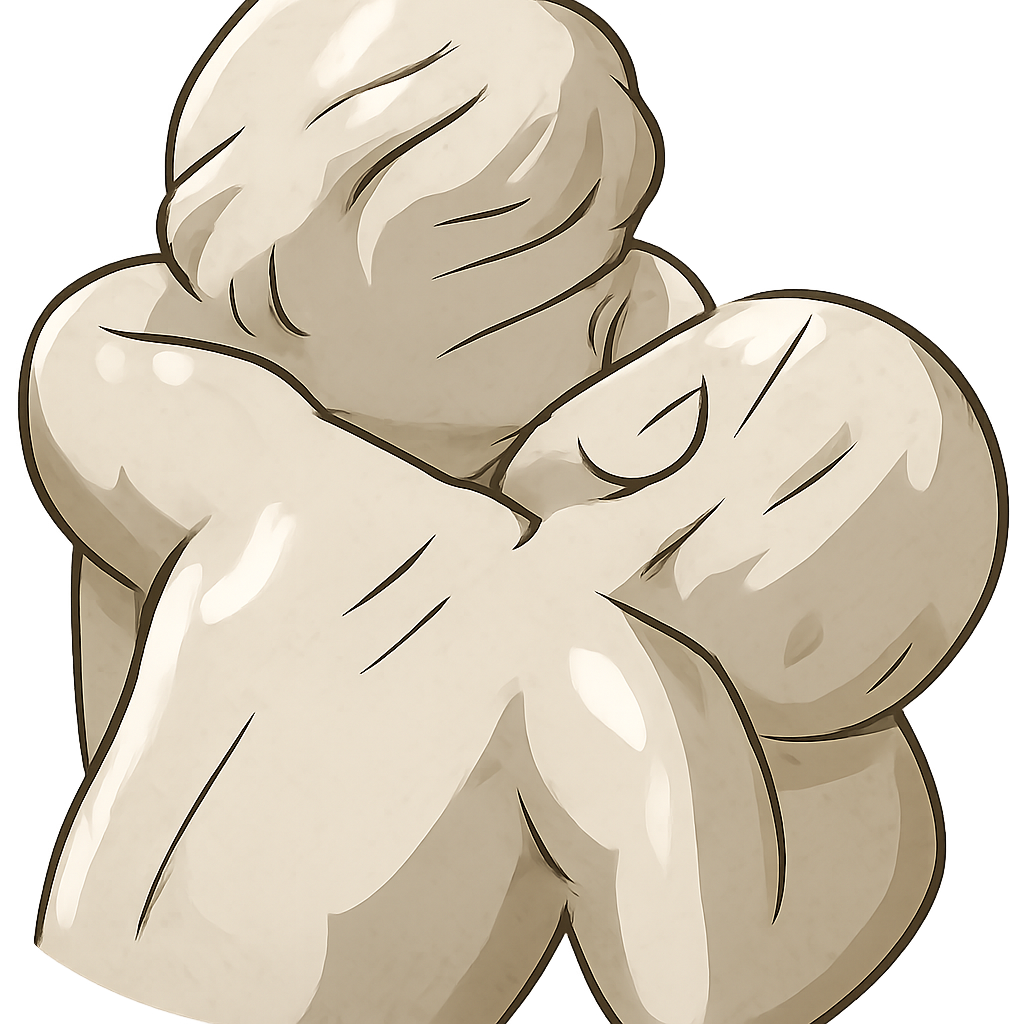
For a long time, I was just silence and coldness, a colossal block of white marble waiting in a busy Paris studio. My world was the echo of footsteps on wooden floors, the distant clang of a blacksmith's hammer, and the scent of clay and dust. Then came a new sound, sharp and rhythmic. Chip. Chip. Crack. A man with a thoughtful gaze and a wild beard began to study me, his hands tracing lines only he could see. His name was Auguste Rodin, and he was a sculptor with a powerful vision. With his mallet and chisel, he and his assistants began their attack. At first, it was a jarring intrusion, a violent shattering of my peaceful existence. Dust filled the air, a fine white powder that coated everything. But slowly, with each passing day, the violent chipping gave way to a more delicate touch. A shape began to emerge from my core. It was not one form, but two, tangled together in a way that felt both powerful and gentle. I felt the curve of a back take shape, the smooth line of an arm, the gentle turn of a head. I was no longer just a block of stone. I was becoming something more. I was awakening to a story that had been locked inside me, a story of two people caught in a single, breathless moment. I am The Kiss.
My story began around the year 1882. My creator, Monsieur Rodin, was working on the most ambitious project of his life: a pair of gigantic bronze doors for a new museum. He called them 'The Gates of Hell,' and they were inspired by a famous epic poem from the Middle Ages called Dante's 'Inferno.' This poem describes a journey through the underworld, and the doors were meant to be covered with hundreds of small, writhing figures representing lost souls and their eternal torment. My original purpose was to be one of these small groups on the massive doors. I was to represent Francesca da Rimini and her lover, Paolo Malatesta, two characters from Dante’s poem who were condemned for their forbidden love. Rodin sculpted a small version of us in clay, poised in a tender embrace. But as he worked on us, he realized something profound. The emotion I held was not one of suffering or damnation. It was one of pure, unashamed joy and passionate love. I did not belong among the tormented souls of his 'Gates.' My story was different. He decided I deserved to be told on my own terms. So, he set me aside and dreamed of a new future for me, a life-sized sculpture carved from a single, magnificent block of marble. It was a painstaking process that took years. Rodin and his talented assistants worked tirelessly, transforming the unyielding stone. They had to make my marble surface look like soft, warm skin. They captured the subtle tension in our muscles and the gentle way our bodies press together, making a moment of fleeting passion feel permanent and monumental.
When I was finally finished and presented to the world at the Paris Salon in 1898, I caused quite a stir. The reaction was immediate and divided. In those days, most public sculptures were of gods, goddesses, or heroic figures from history, often depicted in stoic, idealized poses. I was different. I was simply a man and a woman, their names and stories stripped away, caught in an intensely private and human moment. Some people were shocked, even scandalized. They thought I was too realistic, too passionate for public display. They whispered that such an intimate scene should not be carved in stone for all to see. But for every person who was shocked, many more were completely captivated. They saw past the initial surprise and recognized the universal truth I represented. They saw not a scandal, but the beauty and power of love itself. I was no longer Paolo and Francesca from an old poem. I had become a symbol for every pair of lovers, for every secret glance, for every heartfelt connection. My fame grew quickly. People wanted to see me, to stand before me and feel the emotion I held. Recognizing this, Rodin’s workshop began to produce other versions of me. Three large marble copies were carved, and many smaller replicas were cast in bronze, allowing my story of love to travel far beyond Paris and into museums and collections across the globe.
For more than a century, I have stood silently in galleries, a permanent resident of a world that is always changing outside my doors. I have watched generations of people walk past. I have seen their fashions change from long dresses and top hats to jeans and t-shirts. I have watched them marvel at me, their faces reflecting the same awe and wonder year after year. Couples often stop before me, and I see them reach for each other's hands, their own stories reflected in my marble embrace. Some people smile, others look thoughtful, and a few have even wiped away a quiet tear, moved by the feeling I represent. My form has inspired poets to write verses, musicians to compose melodies, and other artists to explore the same powerful themes of love and connection in their own work. My story is no longer just about two people, or even about my famous creator. It is about the timeless, universal language of human affection. I am more than just carved stone. I am a feeling frozen in time, a silent whisper from the past reminding everyone who sees me that art has the power to capture our most profound emotions and share them across centuries, connecting us all through the simple, beautiful, and enduring idea of love.
Activities
Take a Quiz
Test what you learned with a fun quiz!
Get creative with colors!
Print a coloring book page of this topic.
















 Free for Educators