

 English

My Sunshine Picture: The World's First Photograph
Hello there. My name is Joseph Nicéphore Niépce, and I have always loved inventing things. Ever since I was a boy in France, my head has been full of ideas for new machines and wonderful contraptions. But my biggest, most exciting dream wasn't about a machine that could fly or a boat that could go faster. My dream was to capture a picture made by the sun itself. Imagine that. A picture made with light, not with paints or pencils. I called it a “sun-drawing,” or heliograph. I lived in a beautiful country house called Le Gras. From the window of my workshop on the top floor, I had the most wonderful view. I could see the slanted roof of the pigeon house, the tall pear tree in the courtyard, and the roof of the open-sided barn. Every day I looked at that view and thought, “I wish I could keep this picture forever, exactly as it is right now.” That’s when I decided I would use my inventing skills to make my sunshine picture dream come true, right from that very window.
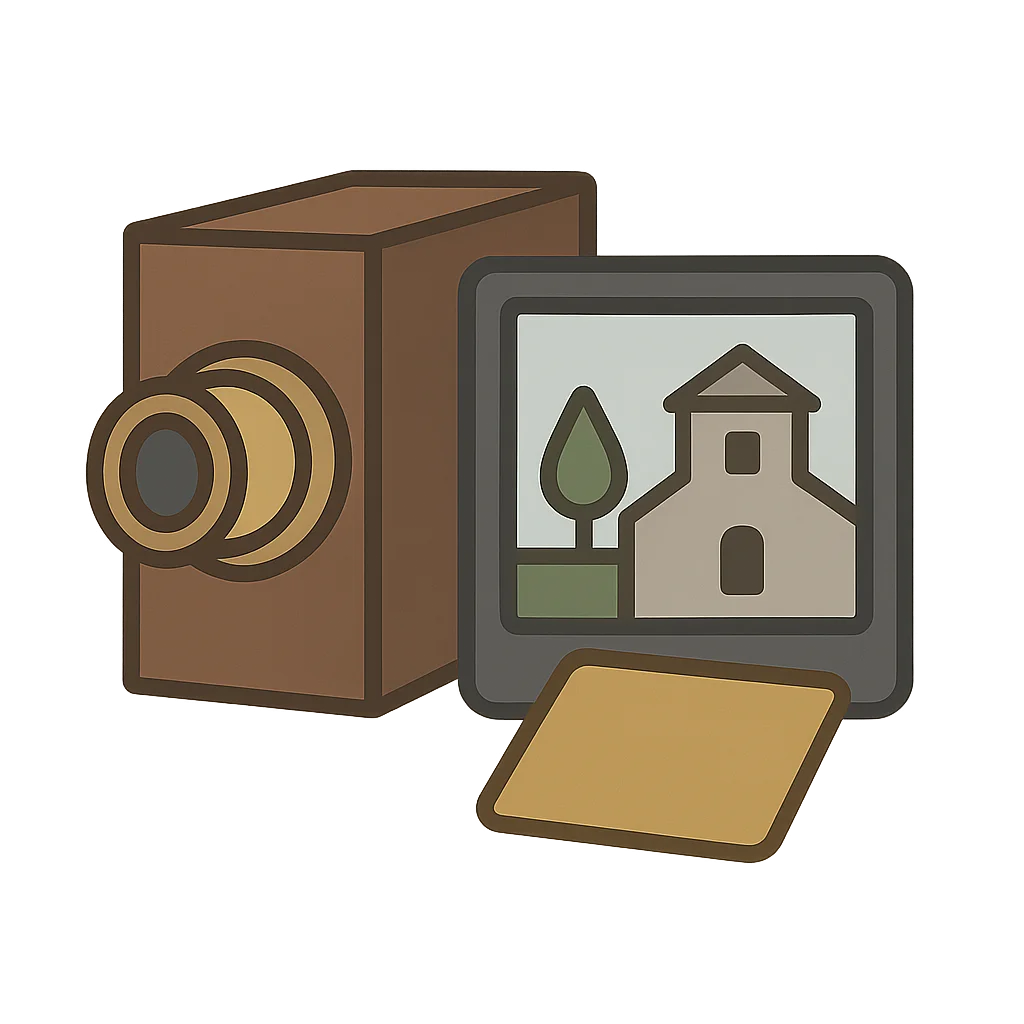
To catch the sunlight, I needed a special box. I used something called a camera obscura, which is a fancy name for a dark box with a tiny hole and a lens in the front. It worked like a little dark room that could project a picture of the outside world onto the back wall. But how could I make the picture stick. That was the tricky part. After many tries, I came up with a secret recipe. I took a flat, shiny plate made of metal and coated it with a gooey, sticky stuff called bitumen of Judea. It was a bit like tar. When this goo sat in the bright sunlight, it would become hard. My plan was to put the coated plate inside my camera obscura and point it at the view I loved so much. On a sunny day in 1826, I did just that. I carefully placed my plate in the box, aimed it out my workshop window, and opened the shutter. Then, the hardest part of my experiment began. I had to wait. And wait. And wait. The sun had to do all the work, and the sun takes its time. For eight whole hours, my camera sat perfectly still, soaking in the light. I watched the sun slowly creep across the sky, feeling nervous and excited all at once.
When eight hours had finally passed, my heart was thumping like a drum. It was time. I carefully took the plate out of the box. At first, it just looked like a sticky, dark plate. But I knew the magic was hiding. I took the plate to my workshop table and gently washed it with lavender oil and white petroleum. This part was very important, because the oil washed away all the gooey parts that had been in the shadows, leaving only the hardened parts that the sun had touched. Slowly, like a secret message appearing, I saw it. A faint, blurry image. But it was there. I could see the lines of the rooftops and the shape of the pear tree. I had done it. I had captured a moment in time using only light. It was the world’s very first photograph. I felt a huge wave of joy and wonder looking at that fuzzy picture on the metal plate. It might not look like the clear photos you see today, but that little experiment was the very beginning of photography, and it showed everyone that we could save our memories with the magic of sunshine.
Activities
Take a Quiz
Test what you learned with a fun quiz!
Get creative with colors!
Print a coloring book page of this topic.















 Free for Educators