

 English

My Fight Against the Speckled Monster
My name is Edward Jenner, and for most of my life, I have been a humble country doctor in the green and rolling hills of Berkeley, England. I have always loved the countryside, with its ancient trees, gentle streams, and the lowing of cattle in the fields. It was a peaceful place, but in the late 1700s, a dark shadow hung over even the most beautiful landscapes. This shadow had a name: smallpox. We sometimes called it the “speckled monster,” and it was a terrifying and relentless enemy. It did not care if you were rich or poor, old or young. It would arrive in a village like a thief in the night, bringing with it a raging fever and a terrible rash that covered the entire body in painful sores. Many who caught it did not survive. Those who did were often left with deep, permanent scars that we called pockmarks, and some were even left blind. As a doctor, it broke my heart to see families torn apart by this dreadful disease. We had one method to try and fight it, called variolation. It involved taking matter from a smallpox sore and scratching it into a healthy person's skin. The hope was that they would get a mild case of the disease and then be protected for life. But this was a dangerous gamble. The procedure was risky, and sometimes, it gave the person a full, deadly case of smallpox instead. I knew there had to be a better, safer way to protect people from the speckled monster.
I spent my days traveling from farm to farm, treating all sorts of ailments. I always made a point to listen to the people I cared for, not just to their chests with my stethoscope, but to their stories and their local wisdom. It was during these conversations that I began to notice something truly curious. I often spoke with the local milkmaids, women and girls who spent their days milking the cows. They would sometimes catch a mild illness from the cows called cowpox. It wasn't serious at all, just a few sores on their hands that healed quickly. But these milkmaids would often say something that stuck in my mind. With a confident smile, they would declare, “I shall never have smallpox, for I have had cowpox.” At first, it sounded like an old country tale. But the more I listened, and the more I observed, the more I realized they were right. I never saw a milkmaid who had suffered from cowpox fall ill with the dreaded smallpox. An incredible idea began to form in my mind, a hypothesis that felt both simple and revolutionary. What if the gentle cowpox was a cousin to the deadly smallpox? What if catching the mild disease could teach a person’s body how to defeat the terrible one? Perhaps cowpox could serve as a safe training ground for the body's defenses. When I shared this idea with my esteemed colleagues in London, they scoffed. They dismissed it as folklore, the unscientific chatter of country folk. But I could not let it go. For years, I gathered evidence, documenting every case I could find, my conviction growing stronger with each observation. I was determined to prove that this simple country wisdom held the key to saving millions of lives.
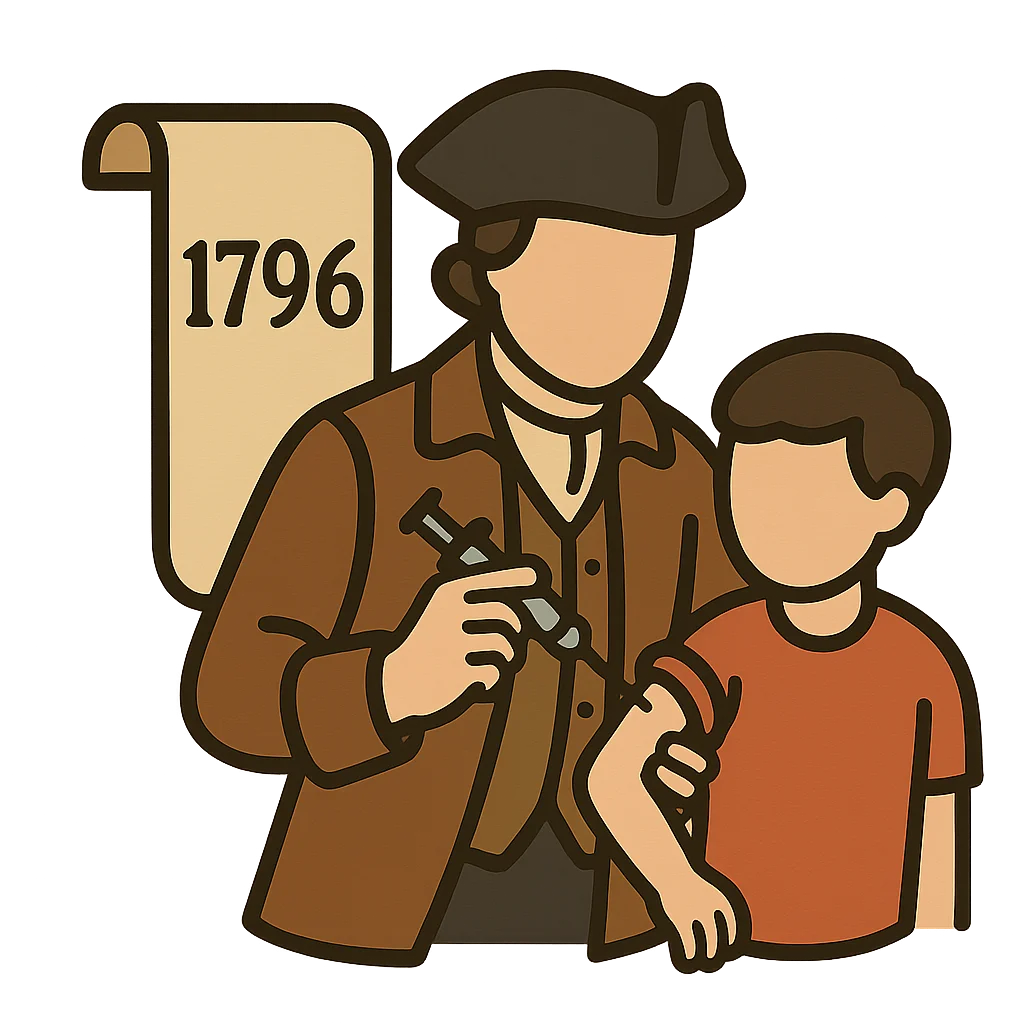
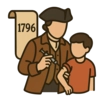
My moment of truth arrived on a spring day, May 14th, 1796. It was a day that required all my courage and a great deal of trust from others. I learned of a young milkmaid named Sarah Nelmes who had a fresh cowpox sore on her hand, contracted from one of her cows. This was the opportunity I had been waiting for. Now, I needed a volunteer, someone who had never had smallpox and was brave enough to test my theory. I found that courage in a young boy, an eight-year-old named James Phipps. James was the son of my gardener, a healthy and bright child. I explained my idea to his parents with painstaking honesty, telling them of the potential risks and the world-changing hope I held. The weight of responsibility I felt for this boy’s life was immense. If I was wrong, the consequences would be unthinkable. But I believed so strongly in my observation, and thankfully, his parents believed in me. With a steady hand and a pounding heart, I took a sterile lancet and collected a small amount of fluid from Sarah Nelmes’s cowpox sore. Then, I approached young James. I gently made two small scratches on his arm, just deep enough to break the skin, and applied the fluid from the sore. The first part of my great experiment had begun. For the next few days, I watched over James like a hawk. As I had predicted, he felt a little under the weather. He had a slight fever and felt a bit achy, but he never became truly sick. The scratches on his arm formed a sore, which healed and disappeared within a couple of weeks. He had successfully recovered from cowpox, just as the milkmaids did. My heart swelled with relief, but I knew the most terrifying test was still ahead.
Six weeks later, on July 1st, 1796, the time came for the second, and most dangerous, part of the experiment. To know for certain if James was protected, I had to do the unthinkable: I had to expose him directly to the speckled monster itself. This was the moment that would define my life’s work. I took matter from a fresh smallpox sore and, using the same method as before, I scratched it into James’s arm. The days that followed were the most anxious of my life. Every moment felt like an hour as we watched and waited for any sign of fever or rash. But none came. James played in the garden, ate his meals, and slept soundly. He remained perfectly, completely healthy. He was immune. My theory was correct. A gentle disease from a cow had protected a human boy from one of history’s deadliest plagues. I was overcome with a joy and relief so profound it is difficult to describe. I knew I had to give this procedure a name. I called it 'vaccination,' after the Latin word for cow, 'vacca,' in honor of the gentle animals that gave us this gift. At first, the scientific community was slow to accept my findings. But I published my research, and soon, the proof was undeniable. Vaccination spread from England to the rest of the world, a shield against the speckled monster. My work showed me that the greatest discoveries can come from the quietest observations. By listening, by being curious, and by having the courage to test an idea, we can find ways to help all of humanity.
Activities
Take a Quiz
Test what you learned with a fun quiz!
Get creative with colors!
Print a coloring book page of this topic.












 Free for Educators