

 English

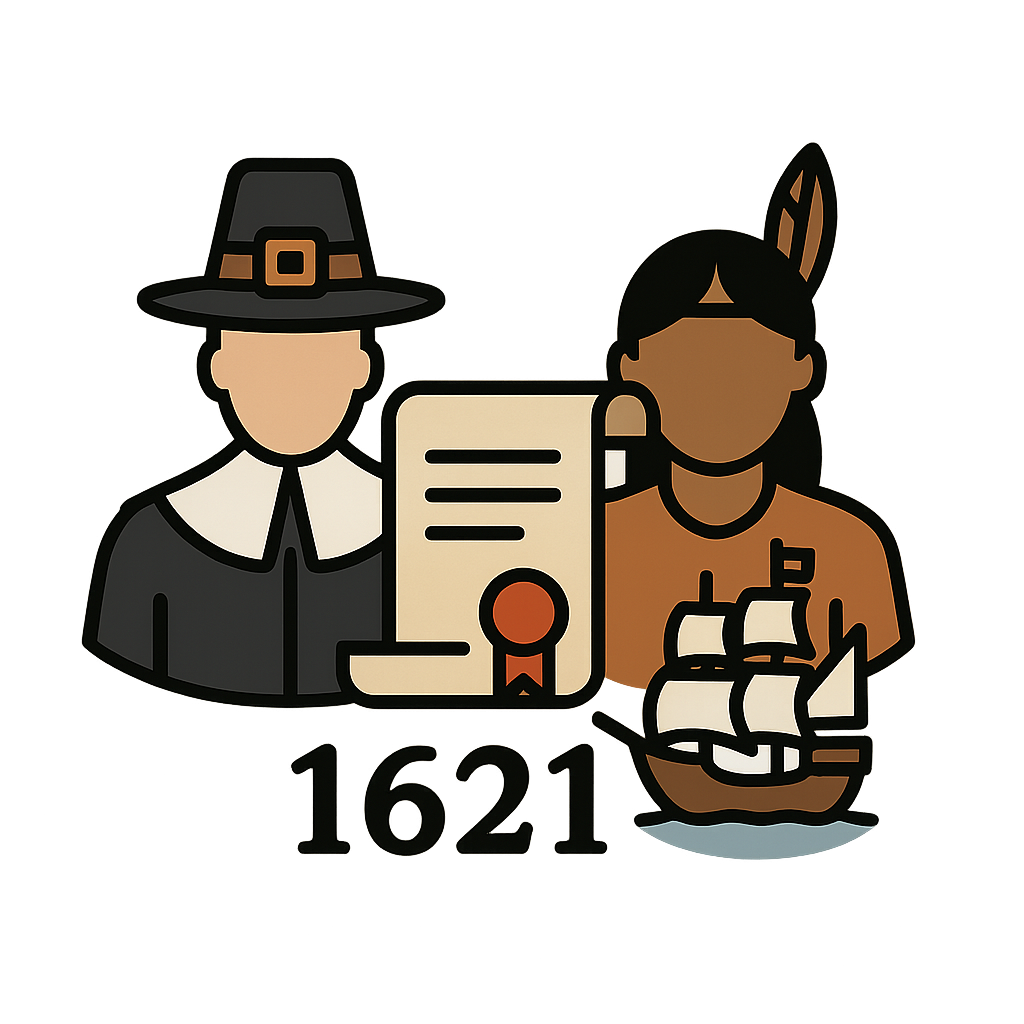
A Harvest of Hope: My Story of the First Thanksgiving
My name is William Bradford, and I was chosen to be the governor of our small community, which we called Plymouth Colony. It is a title I held with a heavy heart but a determined spirit. Our journey to this new world was anything but easy. For 66 long, grueling days, we were tossed about on the great Atlantic Ocean aboard a small, creaking ship called the Mayflower. The waves were like mountains, and the wind howled a constant, mournful song. We were packed so tightly below deck that it was hard to breathe, and many fell ill. When we finally saw land in November of 1620, it was not the gentle, welcoming shore we had dreamed of. Instead, we were met with what I described in my journal as a "hideous and desolate wilderness, full of wild beasts and wild men." The trees were bare, and a biting wind cut through our thin clothes. That first winter was a time of immense trial. We struggled to build simple shelters against the relentless cold, but the snow and frost were merciless. Food was scarce, and our supplies from the ship dwindled quickly. A terrible sickness swept through our small company, and scarcely a day went by when we did not have to mourn the loss of a friend or family member. At our lowest point, only about half of our original number remained. It was a time of profound sorrow and desperation. We huddled together for warmth and comfort, praying for a sign of hope. Even in that darkness, a small flame of faith burned within us. We had come here seeking freedom, and we would not give up.
As the harsh winter finally began to recede, giving way to a cautious spring in 1621, we were filled with a fragile hope. The snow melted, and the birds began to sing again, but we were still weak and unsure of how to survive in this unfamiliar land. We had seen the Native people from a distance, and our encounters had been wary and brief. We did not know if they were friends or foes. Then, on March 16th, a truly astonishing thing happened. A tall man walked boldly into our settlement, all alone. We were startled, but what he said next left us speechless. "Welcome, Englishmen," he said, in English. His name was Samoset, and he told us he had learned some of our language from fishermen who had visited the coast. This was the beginning of a turning point for our colony. Samoset returned a few days later, and with him was another man named Tisquantum, though we came to call him Squanto. Squanto’s story was one of great sadness; he had been taken to Europe and sold into slavery, only to find his way back to his homeland years later. Tragically, he returned to find his entire Patuxet tribe had been wiped out by a plague. Despite his own sorrow, he chose to help us. He became, as I wrote, "a special instrument sent of God for our good." Squanto was our teacher. He showed us how to plant our corn by placing a fish in each mound to fertilize the soil, a method we never would have imagined. He led us to streams teeming with eels and taught us how to catch them. He knew the forest paths, the best places to hunt, and which plants were safe to eat. A few days later, on March 22nd, 1621, Squanto arranged a meeting of great importance. He brought us before the great sachem, or leader, of the Wampanoag people, Massasoit. We were nervous, but we offered gifts and spoke of peace. That day, we established a treaty of mutual friendship and protection. We promised not to harm one another and to help each other if attacked by enemies. This alliance was the foundation upon which our survival was built.
The lessons Squanto taught us, combined with our own hard work, yielded results beyond our wildest hopes. As the summer of 1621 turned to a golden autumn, our fields were heavy with corn, our storehouses were filling with smoked fish and dried berries, and our hunters had been successful. The sight of this bounty was a powerful medicine for our weary souls. It stood in such stark contrast to the gnawing hunger and despair of the previous winter. We had not only survived; we were beginning to thrive. Our governor at the time, John Carver, had sadly passed away that spring, and I had been elected to take his place. Looking at our harvest, I felt a deep, overwhelming sense of gratitude—to God for his mercy, and to our Wampanoag friends for their guidance. We decided that we must set aside a time to rejoice and give thanks for our blessings. We planned a special harvest celebration. I sent a few of our men out to hunt for wild fowl, and they returned with ducks, geese, and even wild turkeys. When the day came, we were surprised and honored when our friend, the sachem Massasoit, arrived with 90 of his men. It was far more guests than we had expected, but it was a welcome sight. His hunters went into the forest and returned with five deer, which they generously added to our feast. For three days, we celebrated together. The long tables were filled with roasted meats, corn bread, shellfish, and vegetables from our gardens. The air, which had once been filled with sounds of sorrow, was now filled with laughter and cheerful conversation, even though we spoke different languages. Our children played games with the Wampanoag children, and our men held shooting contests with them. It was a time of true community and shared joy.
Looking back on that celebration in the autumn of 1621, I see that it was so much more than just a feast to celebrate a good harvest. It was a powerful symbol of our endurance. We had faced a perilous ocean, a brutal winter, and devastating sickness, yet here we were, sharing a meal in peace and plenty. More importantly, it was a moment of beautiful harmony between two very different peoples. We were strangers in this land, and the Wampanoag could have easily seen us as a threat. Instead, through the kindness of individuals like Samoset, Squanto, and Massasoit, a bridge of friendship was built. That feast represented hope. It showed that even after great hardship, people from different worlds could come together, share what they had, and live in peace. It was a testament to the power of reaching out a hand in friendship rather than clenching it into a fist. The lesson from that shared meal is as important for you today as it was for us all those centuries ago. Remember that gratitude for what you have, and kindness toward others, can overcome even the greatest of challenges and create moments of true and lasting peace.
Activities
Take a Quiz
Test what you learned with a fun quiz!
Get creative with colors!
Print a coloring book page of this topic.














 Free for Educators