

 English

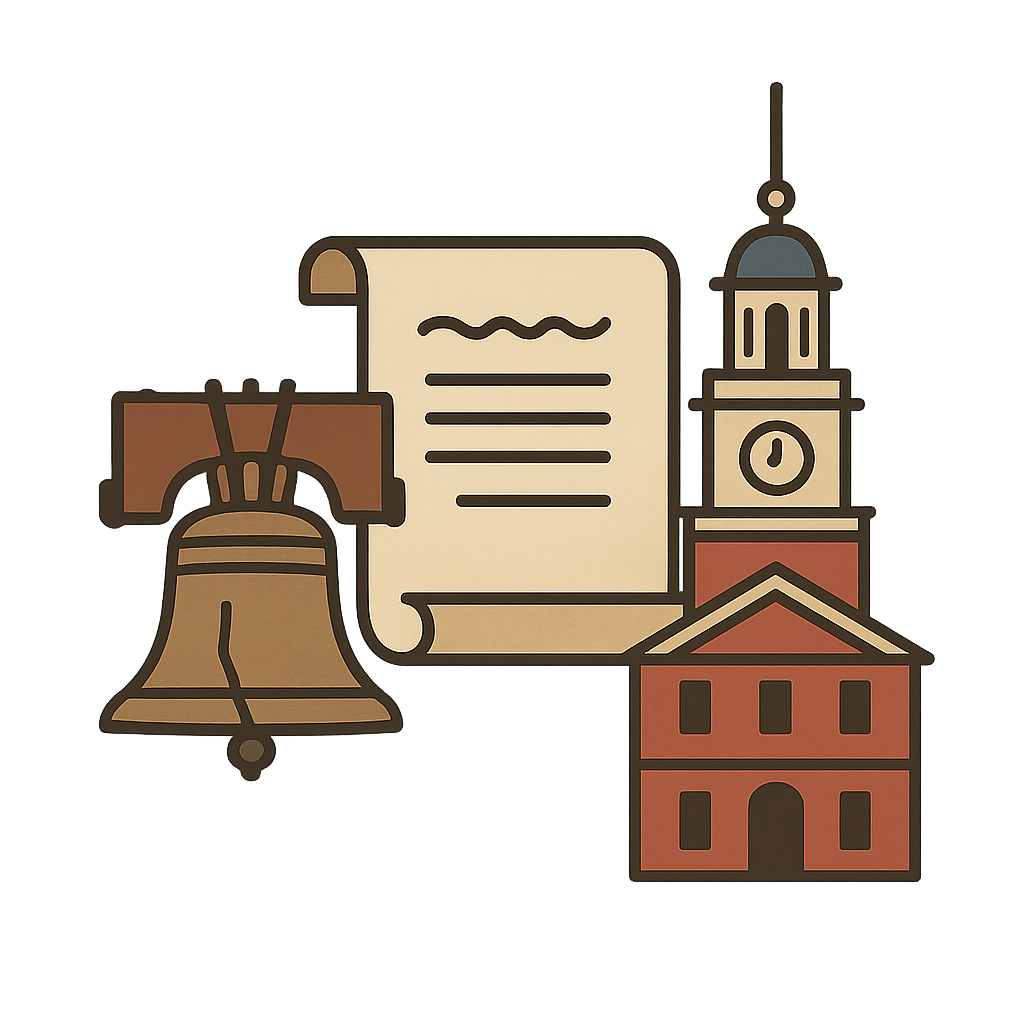
Thomas Jefferson and the Declaration of Independence
My name is Thomas Jefferson, and I want to tell you about a summer that changed the world. Imagine the city of Philadelphia in the year 1776. The air was thick with humidity, the cobblestone streets were buzzing with worried whispers, and inside the Pennsylvania State House, history was about to be made. For years, we thirteen American colonies had grown more and more frustrated with the rule of King George III of Great Britain. He lived an entire ocean away, yet he made laws that affected our daily lives, imposed taxes on us without our consent, and sent soldiers to watch over our towns. It felt as if we were children being told what to do by a parent who did not understand us at all. By that summer, many of us believed we could no longer remain part of the British Empire. Representatives from all the colonies, myself included, gathered for what was called the Second Continental Congress. The main question before us was as enormous as it was dangerous: should we declare ourselves a brand new, independent nation. This was not a small decision. To do so would mean war against the most powerful military force on Earth. It was an idea that was both terrifying and absolutely necessary.
After much debate, Congress decided that we needed a formal document to explain our decision to the world. A committee of five men was chosen to create it, and my colleagues on that committee, including the clever Benjamin Franklin and the passionate John Adams, asked me to write the first draft. I can still remember the weight of that responsibility settling upon my shoulders. How could I find the words to capture the hopes and dreams of an entire people. I spent many long nights in my rented rooms, sitting at my small wooden desk with only a flickering candle for light. The only sound was the scratch of my quill pen on the parchment. I knew this document had to be more than just a list of our complaints against the King. It had to explain the very idea of freedom itself. I wrote that there are certain truths that are obvious to everyone. The most important of these is that all men are created equal and that they are given certain rights by their Creator that can never be taken away. I called these 'unalienable Rights', and among them were the rights to Life, Liberty, and the pursuit of Happiness. I argued that governments are created by people to protect these rights, not to take them away. When a government becomes destructive, the people have the right to change it. On June 28th, 1776, I presented my completed draft to Congress. For several days, the delegates debated every single sentence. They changed words, removed entire paragraphs, and argued fiercely. It was difficult for me to watch my work be altered, especially when they removed a section I had written that condemned the evil of the slave trade. But this was a necessary compromise to ensure all thirteen colonies would stand together. Finally, on July 2nd, 1776, the moment of truth arrived. The colonies voted for independence. We had officially broken away from Great Britain. My document, our Declaration, was now ready for its final approval.
Two days later, on the famous date of July 4th, 1776, Congress formally adopted the final version of the Declaration of Independence. Bells rang out across Philadelphia, and people celebrated in the streets. I felt a surge of pride, but it was mixed with a deep sense of dread. With this declaration, we were no longer just angry colonists. In the eyes of King George III, we were traitors. If we lost the war that was now unavoidable, every one of us who supported this cause could be captured and hanged. The official signing of the large, elegant copy of the Declaration took place on August 2nd, 1776. I watched as man after man walked to the front of the room to affix his signature. John Hancock, the president of the Congress, famously signed his name in large, bold letters so the king would not need his glasses to read it. Each signature was a profound act of bravery, a personal pledge of life and honor to our new nation. The Declaration of Independence was not an ending. It was a beginning. It was a promise of what America could be—a nation where the people hold the power and where everyone has the right to seek a better life. We did not perfectly achieve these ideals in my lifetime, and the nation has struggled with them ever since. But the words we wrote that summer became a guiding star, a reminder of the promise of liberty and justice for all, a promise that it is now up to every new generation, including yours, to uphold.
Activities
Take a Quiz
Test what you learned with a fun quiz!
Get creative with colors!
Print a coloring book page of this topic.
















 Free for Educators