

 English

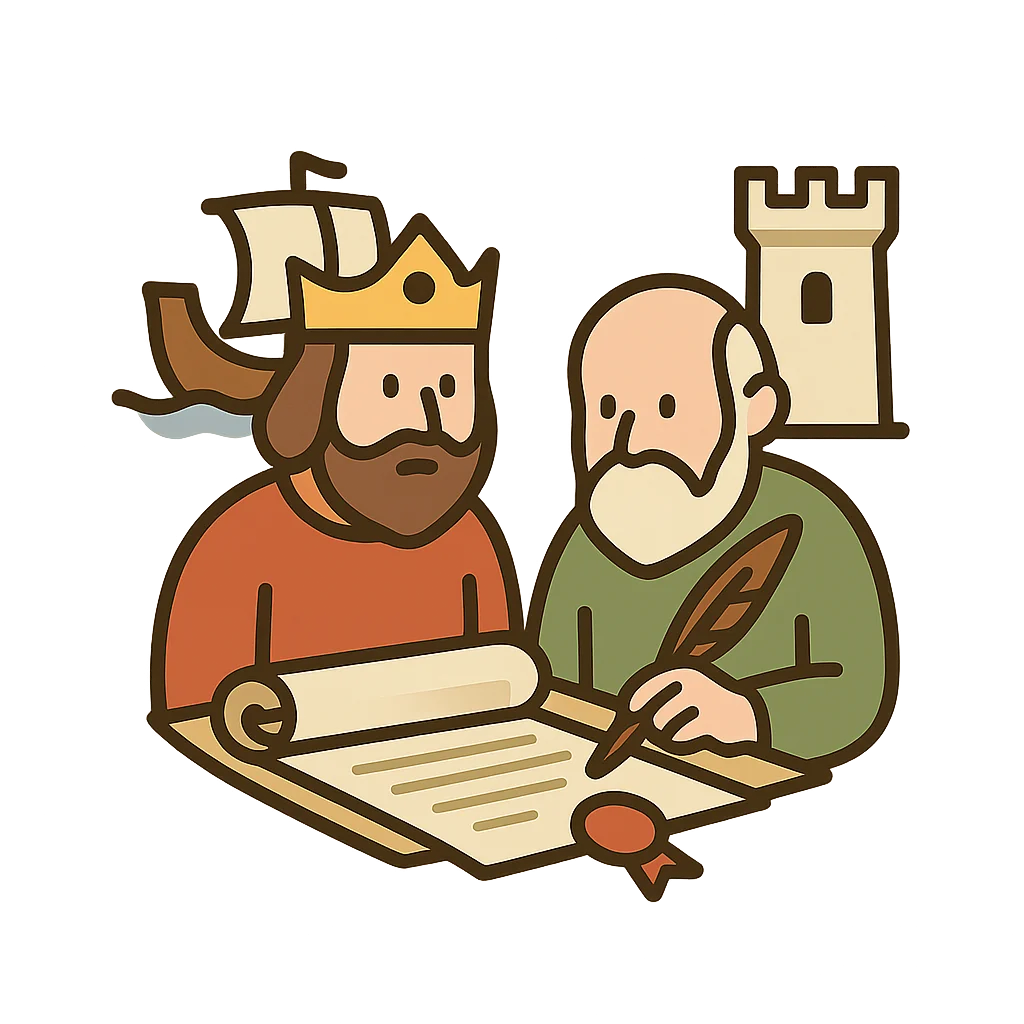
King John and the Great Charter
My name is John, and for a time, I was the King of England. When you picture a king, you might imagine grand feasts and glittering jewels, but I can tell you the crown is heavier than it looks. Mine was a constant weight, a reminder of the endless troubles of my kingdom in the early 13th century. A king needs money to rule. He needs it for roads, for castles, and most of all, for armies. My greatest struggle was with my lands across the sea in France. Losing them was a deep wound to my pride, and I was determined to win them back. This required soldiers, and soldiers required gold. Where does a king get gold. He demands it from his people, especially from the wealthy and powerful barons who own vast stretches of England.
I believed, as kings had for generations, in the divine right to rule. I was chosen by God, and my decisions were absolute. When I needed money for my wars, I demanded it through taxes. When the barons questioned me, I grew angry. Who were they to question their king. But my demands grew heavier, and their patience grew thin. They began to whisper in the dark halls of their castles, their whispers turning to defiant shouts. They said I was being a tyrant, that I was taking their money and their rights without a thought. They were tired of my wars and my taxes. They began to gather their own armies, not to fight for me in France, but to stand against me, here in England. A storm was brewing in my own kingdom, and I was at its center.
A King's Troubles
The morning of June 15th, 1215, was a day I will never forget. I rode out not with a grand army to a glorious battle, but with a small group of advisors to a damp meadow by the River Thames. The place was called Runnymede. It was a journey I did not want to make, each hoofbeat of my horse sounding like a drum of defeat. Waiting for me were my barons. They were not kneeling as subjects should. They stood in lines, their armor glinting in the pale sun, their own knights and soldiers behind them. Their faces were like stone, hard and unmoving. I was their king, the ruler of all England, yet in that moment, I felt more like their prisoner. The air was thick with tension; you could almost taste the anger and mistrust between us. They had cornered me, and they knew it.
They did not waste time with pleasantries. One of the leading barons, a man named Robert Fitzwalter, stepped forward and unrolled a long sheet of parchment. It was not a request. It was a list of demands, a set of rules they insisted I follow. They called it a charter of liberties. I called it an insult to my crown. As I read the clauses, my fury grew. They demanded that no “free man” could be imprisoned or have his property taken away without a proper trial by his peers. This meant I could no longer throw a troublesome noble into a dungeon on a whim. They insisted that I could not create new taxes without the agreement of the kingdom’s council. My ability to fund my armies was being chained by their words.
But the most outrageous, most revolutionary idea was woven throughout the entire document. It was the idea that the law was not just for them, but for me, too. The King of England had to obey the law. This was unheard of. The king was the law. Yet, I had no choice. My kingdom was on the brink of civil war, and their army was larger than mine. With a heavy heart and a hand that shook with humiliation, I ordered for the royal seal to be brought. I pressed the intricate design into a pool of warm, green wax at the bottom of the parchment. With that simple act, I had given my royal agreement to this ‘Great Charter,’ or as it would later be known in Latin, the Magna Carta.
A Promise for the Future
I will be honest with you. The moment I rode away from Runnymede, I had no intention of honoring that document. I was a king, forced to bend to the will of my subjects. I immediately sent a letter to the Pope in Rome, who declared the charter invalid. My defiance plunged England into a bloody civil war, with the barons fighting against me. I spent the last year of my life crisscrossing the country, fighting to reclaim the power they had forced me to sign away. I died in 1216, a king at war with his own people, and you might think the story of the Magna Carta ended there, a failed promise forgotten in the mud of war.
But an idea, especially an idea about fairness, is a powerful thing. After my death, the regents for my young son, Henry III, needed to make peace. They brought the charter back. They changed parts of it, but its most important ideas remained. The Magna Carta became more than just a peace treaty. It became a symbol. For centuries to follow, whenever people felt their rulers were becoming too powerful, they would point back to the promise made at Runnymede. It was a seed that grew into a mighty tree of liberty, influencing laws not just in England, but in countries I had never even dreamed of, like the United States of America. Though it was born from my personal failure and a bitter struggle, that document I sealed so reluctantly became a gift to the future, a promise that no one, not even a king, is above the law.
Activities
Take a Quiz
Test what you learned with a fun quiz!
Get creative with colors!
Print a coloring book page of this topic.









 Free for Educators