English

Eyeglasses
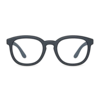
A device consisting of glass or hard plastic lenses mounted in a frame that holds them in front of a person's…
Reads at Grades 3–5 Listens at Grades 1–5
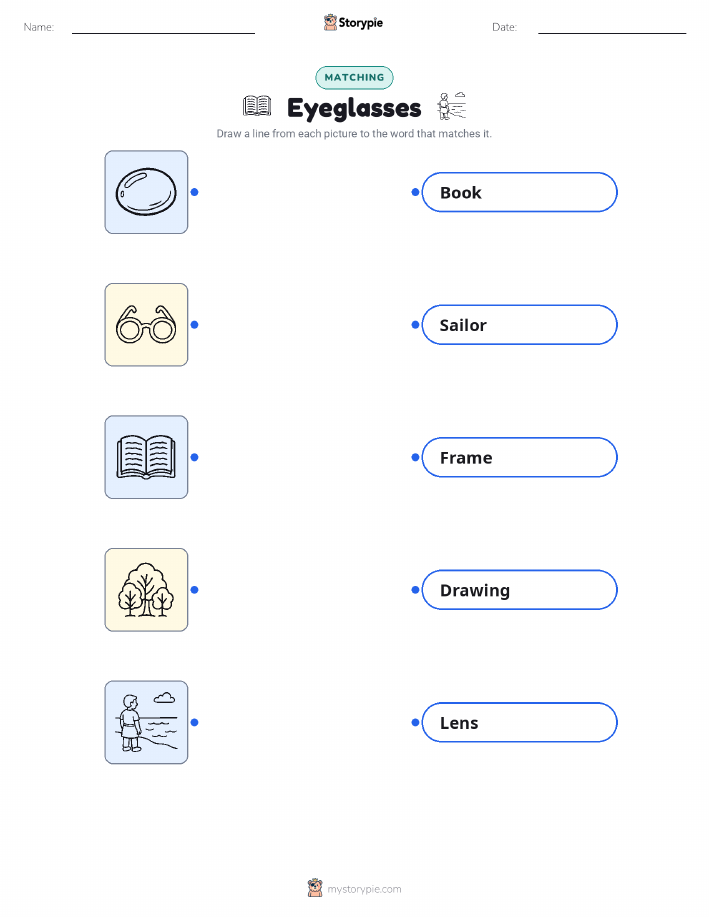
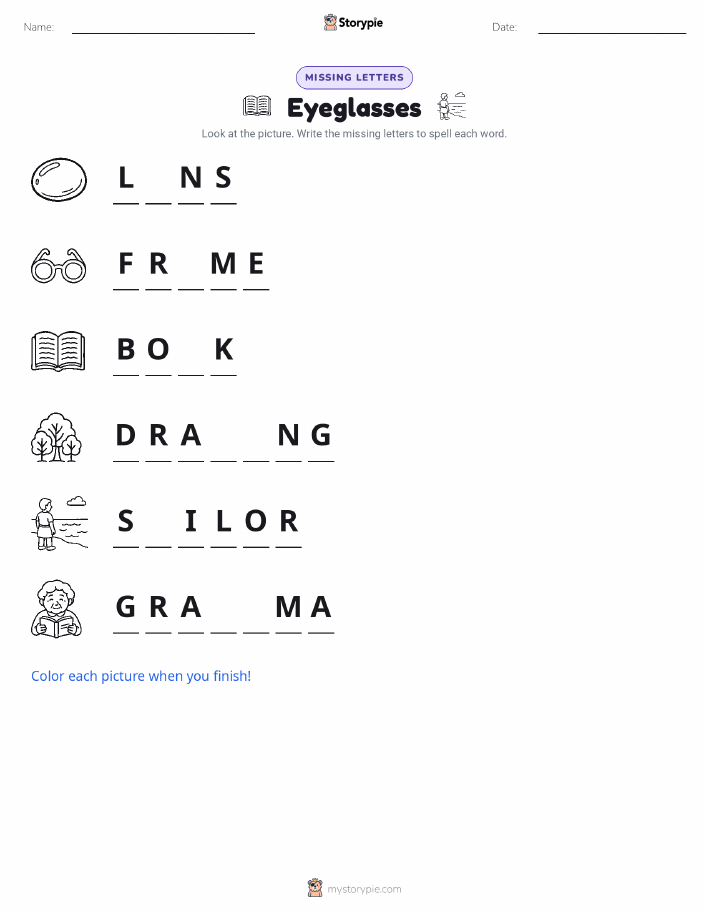
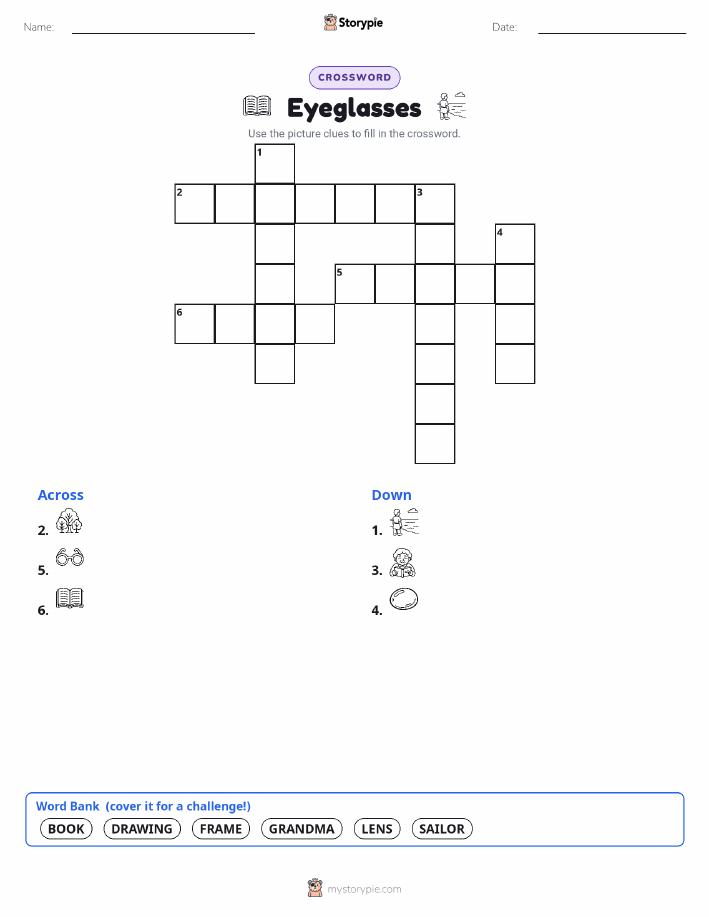
Print & create
Answer keys·No prep·Free with an account
28 worksheets · answer keys · full story · quiz · Ages 8-10 · CEFR B1
Plus adds 279,000+ more stories in 27 languages, audio for every one, and printables for all of them.
Just want Eyeglasses?
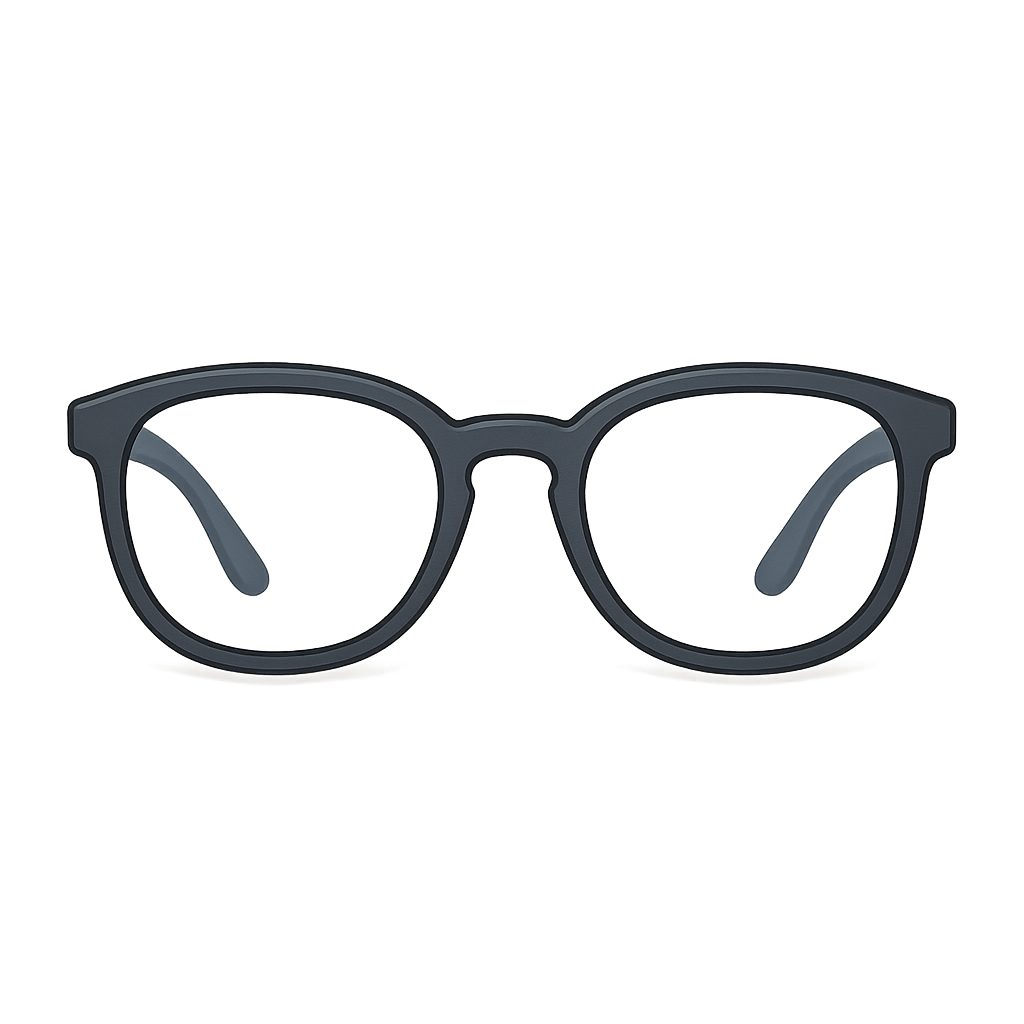
Hello there. My name is Eyeglasses, and I want to tell you my story. Before I was born, the world was a very fuzzy place for many people. Imagine trying to read your favorite graphic novel, but all the words and pictures wiggled and blurred together into a confusing mess. That’s what it was like for wise scholars in 13th-century Italy. They had precious, handwritten books filled with amazing knowledge, but as their eyes grew older, the tiny, elegant letters became impossible to decipher. It was incredibly frustrating. Think of a talented dressmaker trying to thread a needle, or a jeweler attempting to set a sparkling gem, but their own eyes betrayed them. The world was full of beauty, detail, and information that was just out of focus for so many. People would squint and strain, holding books far away and then close up, trying everything to make sense of the blur. Many skilled craftspeople had to give up the work they loved simply because they couldn't see clearly anymore. It was a problem waiting for a solution, a blurry world waiting for someone to bring it into focus. That's where my story begins, in a place of bright sunshine, incredible art, and a growing need for clear sight.
My story truly begins around the year 1286, in the heart of Italy. No one knows the exact name of the clever person who first invented me, but they were a true genius. This person discovered something that felt like pure magic. They found that if you looked through a specially shaped piece of glass that was thicker in the middle and thinner at the edges—what you call a convex lens—it bent the light just right. It made things look bigger. Suddenly, those blurry, swimming letters in the old books became crisp, sharp, and perfectly still. It was a breathtaking moment of discovery. My first form was quite simple and a little wobbly. I was made of two of these magical magnifying lenses, which were sometimes carved from clear quartz or a pretty, pale green stone called beryl. The lenses were carefully set into a frame made of polished bone, strong metal, or sturdy leather. I didn't have any arms, or 'temples' as you call them, to rest on your ears. Instead, you had to either hold me up to your eyes with a handle, like a mask at a fancy party, or carefully perch me on the bridge of your nose, hoping you didn't sneeze. It was a bit clumsy, but for the scholars and monks who first used me, I was a true miracle. A kind man, a Dominican friar named Alessandro della Spina, heard about this amazing invention. In those days, a secret like me could have made someone very rich. But Alessandro was not interested in money. He saw how much I could help people. He learned how to make me and then, instead of keeping it a secret, he shared the knowledge with everyone he could. He believed the gift of sight should be for everyone. Thanks to his generosity, the idea of me spread quickly through Italy and then across Europe. For the first time, older people didn't have to give up their passions. I gave them back their books, their crafts, and their world.
The Story of Eyeglasses
Hello there. My name is Eyeglasses, and I want to tell you my story. Before I was born, the world was a very fuzzy place for many people. Imagine trying to read your favorite graphic novel, but all the words and pictures wiggled and blurred together into a confusing mess. That’s what it was like for wise scholars in 13th-century Italy. They had precious, handwritten books filled with amazing knowledge, but as their eyes grew older, the tiny, elegant letters became impossible to decipher. It was incredibly frustrating. Think of a talented dressmaker trying to thread a needle, or a jeweler attempting to set a sparkling gem, but their own eyes betrayed them. The world was full of beauty, detail, and information that was just out of focus for so many. People would squint and strain, holding books far away and then close up, trying everything to make sense of the blur. Many skilled craftspeople had to give up the work they loved simply because they couldn't see clearly anymore. It was a problem waiting for a solution, a blurry world waiting for someone to bring it into focus. That's where my story begins, in a place of bright sunshine, incredible art, and a growing need for clear sight.
My story truly begins around the year 1286, in the heart of Italy. No one knows the exact name of the clever person who first invented me, but they were a true genius. This person discovered something that felt like pure magic. They found that if you looked through a specially shaped piece of glass that was thicker in the middle and thinner at the edges—what you call a convex lens—it bent the light just right. It made things look bigger. Suddenly, those blurry, swimming letters in the old books became crisp, sharp, and perfectly still. It was a breathtaking moment of discovery. My first form was quite simple and a little wobbly. I was made of two of these magical magnifying lenses, which were sometimes carved from clear quartz or a pretty, pale green stone called beryl. The lenses were carefully set into a frame made of polished bone, strong metal, or sturdy leather. I didn't have any arms, or 'temples' as you call them, to rest on your ears. Instead, you had to either hold me up to your eyes with a handle, like a mask at a fancy party, or carefully perch me on the bridge of your nose, hoping you didn't sneeze. It was a bit clumsy, but for the scholars and monks who first used me, I was a true miracle. A kind man, a Dominican friar named Alessandro della Spina, heard about this amazing invention. In those days, a secret like me could have made someone very rich. But Alessandro was not interested in money. He saw how much I could help people. He learned how to make me and then, instead of keeping it a secret, he shared the knowledge with everyone he could. He believed the gift of sight should be for everyone. Thanks to his generosity, the idea of me spread quickly through Italy and then across Europe. For the first time, older people didn't have to give up their passions. I gave them back their books, their crafts, and their world.
For hundreds of years, I sat on people's noses or was held in their hands. It worked, but it wasn't always comfortable. Then, in the early 1700s, an English optician had a brilliant idea. He attached two stiff rods to my sides, designed to rest on a person's ears. At last, I had arms. People could wear me all day without having to hold me. This changed everything. I could help people while they walked, worked, and went about their lives. My evolution didn't stop there. A very famous American inventor, Benjamin Franklin, had a particular problem in the late 1700s. His eyes needed two different kinds of help. He needed one pair of my lenses to help him read books up close, and another pair to see things far away. He grew tired of constantly switching between two different pairs of glasses. So, around the year 1784, he came up with an ingenious solution. He took a lens from his reading glasses and a lens from his distance glasses and carefully cut them both in half. Then, he fitted the two different halves into one single frame, with the reading part on the bottom and the distance part on the top. He called his creation 'bifocals.' Now, he could just lower his eyes to read a document on his desk, and then look up to see who was walking into the room, all without changing his glasses. It was a simple, yet revolutionary, idea that made me even more helpful to people with complex vision needs.
Today, you can find me everywhere, and I've never been more stylish. I'm no longer just made of bone and quartz. I come in every shape, size, and color you can imagine, made from lightweight plastics and sleek metals. I can be bold and bright red, or cool and clear. My job, however, has stayed the same: to help you see. I sit in classrooms, helping students read the board and learn about the world. I am in laboratories, helping scientists make groundbreaking discoveries through microscopes. I'm on the faces of artists, pilots, doctors, and grandparents reading stories to their grandchildren. Every time you put me on, you are part of my long and wonderful story. I am a small, simple tool, but I open up a world of clarity, knowledge, and connection for everyone. I help you see your dreams more clearly.
Wow facts
About
A device consisting of glass or hard plastic lenses mounted in a frame that holds them in front of a person's eyes, used to correct or assist defective vision.
Take a Quiz
Question 1 of 5
What problem did people in the 13th century have that led to the invention of eyeglasses?
Explore next






Want to do even more?
Go beyond exploring. Unlock tools that turn every story into real learning.

Storypie Plus for families
Full stories, quizzes, and printables. Nights and car rides, sorted.
- Unlimited audio stories
- Create Mode: your child stars in the story
- Offline downloads
- Printable worksheets & coloring pages

Why Storypie for Schools
Students engaged. Prep in seconds. Evenings back to you.
- Worksheets & Quizzes
- Classroom Management
- Formative Assessment
- Custom Curriculum & Lesson Plans
- 27 Languages

Why Storypie for Homeschool
Curriculum done. They'll ask for more. Hours back in your day.
- Worksheet Generator
- First-Person Audio Stories
- Built-in Comprehension Quizzes
- Custom Curriculum & Lesson Plans
- Print & Go Activities