English

Groundhog Day - American
Groundhog Day is a North American tradition celebrated on February 2nd…
Reads at Grades 3–5 Listens at Grades 1–5
Print & create
Answer keys·No prep·Free with an account
28 worksheets · answer keys · full story · quiz · Ages 8-10 · CEFR B1
Plus adds 279,000+ more stories in 27 languages, audio for every one, and printables for all of them.
Just want Groundhog Day - American?
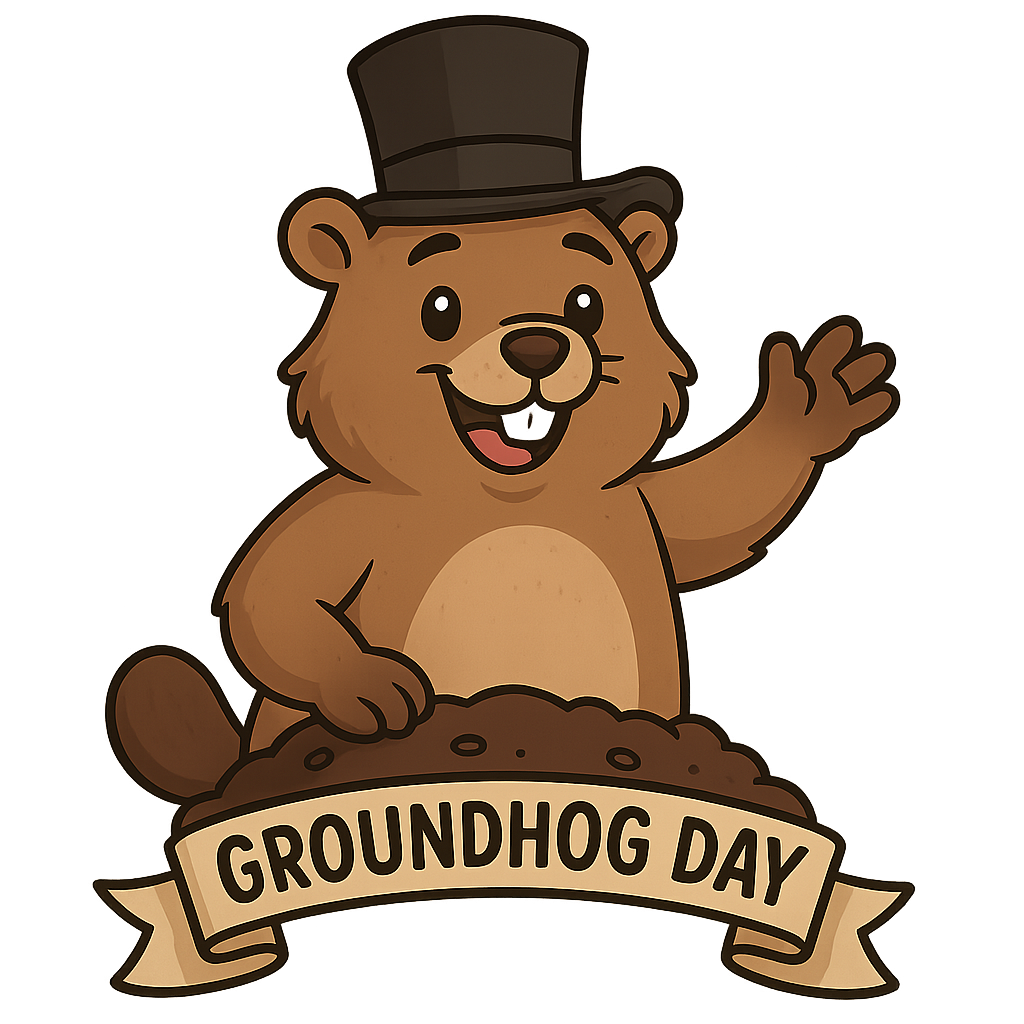
Hello! I am Groundhog Day, an American tradition that people observe every year on February 2nd. My main purpose is to help people predict whether spring will arrive early or if winter will last just a little bit longer. Though I am most famous in the United States, my story actually begins many centuries ago in Europe with an old Christian festival known as Candlemas. On this day, there was a popular saying that gave a clue about the weather. The folk wisdom claimed that if Candlemas was sunny and bright, it was a sign that winter would hold on for six more weeks. To get an even better hint, some people would watch for a hibernating animal, like a badger or a hedgehog, to see if it would come out of its den.
My journey from a European belief to an American tradition started when German immigrants traveled across the ocean to build new lives in the United States. Many of these settlers made their homes in the state of Pennsylvania, and this community became known as the Pennsylvania Dutch. They brought many of their customs with them, including the tradition of watching an animal on February 2nd to forecast the weather. However, when they looked for the badgers they used to watch back in Europe, they couldn't find any. They needed a new animal for their tradition, and they soon found the perfect one. They noticed that groundhogs, which are also hibernating animals, were very common in the fields and forests of Pennsylvania. They chose the groundhog to be their new furry weather predictor, continuing their old custom in a new land.
The Story of Groundhog Day
Hello! I am Groundhog Day, an American tradition that people observe every year on February 2nd. My main purpose is to help people predict whether spring will arrive early or if winter will last just a little bit longer. Though I am most famous in the United States, my story actually begins many centuries ago in Europe with an old Christian festival known as Candlemas. On this day, there was a popular saying that gave a clue about the weather. The folk wisdom claimed that if Candlemas was sunny and bright, it was a sign that winter would hold on for six more weeks. To get an even better hint, some people would watch for a hibernating animal, like a badger or a hedgehog, to see if it would come out of its den.
My journey from a European belief to an American tradition started when German immigrants traveled across the ocean to build new lives in the United States. Many of these settlers made their homes in the state of Pennsylvania, and this community became known as the Pennsylvania Dutch. They brought many of their customs with them, including the tradition of watching an animal on February 2nd to forecast the weather. However, when they looked for the badgers they used to watch back in Europe, they couldn't find any. They needed a new animal for their tradition, and they soon found the perfect one. They noticed that groundhogs, which are also hibernating animals, were very common in the fields and forests of Pennsylvania. They chose the groundhog to be their new furry weather predictor, continuing their old custom in a new land.
For many years, this was a quiet tradition passed down through families. But my first official, public celebration took place on February 2nd, 1887, in a small town called Punxsutawney, Pennsylvania. A local newspaper editor named Clymer H. Freas had a brilliant idea. He was part of a group of groundhog hunters, and he convinced them to turn their tradition into a special event for the whole town. On that morning, they all traveled to a nearby hillside called Gobbler's Knob. Their mission was to observe a groundhog and report its weather prediction back to the people of Punxsutawney. To make the event even more special, they gave the groundhog a unique name: Punxsutawney Phil. This marked the beginning of my life as a well-known American holiday.
The most important part of my day, and the moment everyone waits for, is the groundhog's famous prediction. The tradition has a very specific set of rules. Early in the morning, the groundhog emerges from its burrow. If the sun is shining brightly, the groundhog will see its shadow on the ground. According to the legend, this sight frightens the groundhog, causing it to retreat back into its den. This is taken as a sign that there will be six more weeks of winter weather. However, if the day is cloudy, the groundhog will not see its shadow. In this case, it is believed that the groundhog will stay outside, which signals that spring is on its way and will arrive early.
Today, what started as a small gathering on Gobbler's Knob has turned into a huge festival. Every year, thousands of visitors travel to Punxsutawney, Pennsylvania, to see Punxsutawney Phil make his prediction live. The ceremony is managed by a group called the Punxsutawney Groundhog Club's "Inner Circle." The members of this group wear formal coats and top hats, making the early morning event feel very grand and official. They are the ones who have the special job of communicating with Phil and announcing his forecast to the world. My traditions have also spread far beyond this one town. Inspired by the celebration in Punxsutawney, many other communities across the United States and Canada now have their own weather-predicting groundhogs, each with its own local fans who gather to see what their forecast will be. From a simple European saying, I have grown into a fun and lighthearted way for people to look forward to the changing seasons.
Wow facts
About
Groundhog Day is a North American tradition celebrated on February 2nd, based on a tradition where a groundhog's emergence from its burrow is said to predict the arrival of spring.
Take a Quiz
Question 1 of 5
According to the story, from which European festival did my traditions originate?
Want to do even more?
Go beyond exploring. Unlock tools that turn every story into real learning.

Storypie Plus for families
Full stories, quizzes, and printables. Nights and car rides, sorted.
- Unlimited audio stories
- Create Mode: your child stars in the story
- Offline downloads
- Printable worksheets & coloring pages

Why Storypie for Schools
Students engaged. Prep in seconds. Evenings back to you.
- Worksheets & Quizzes
- Classroom Management
- Formative Assessment
- Custom Curriculum & Lesson Plans
- 27 Languages

Why Storypie for Homeschool
Curriculum done. They'll ask for more. Hours back in your day.
- Worksheet Generator
- First-Person Audio Stories
- Built-in Comprehension Quizzes
- Custom Curriculum & Lesson Plans
- Print & Go Activities