English
 For Schools
 For Homeschool

The Story of the Electric Guitar
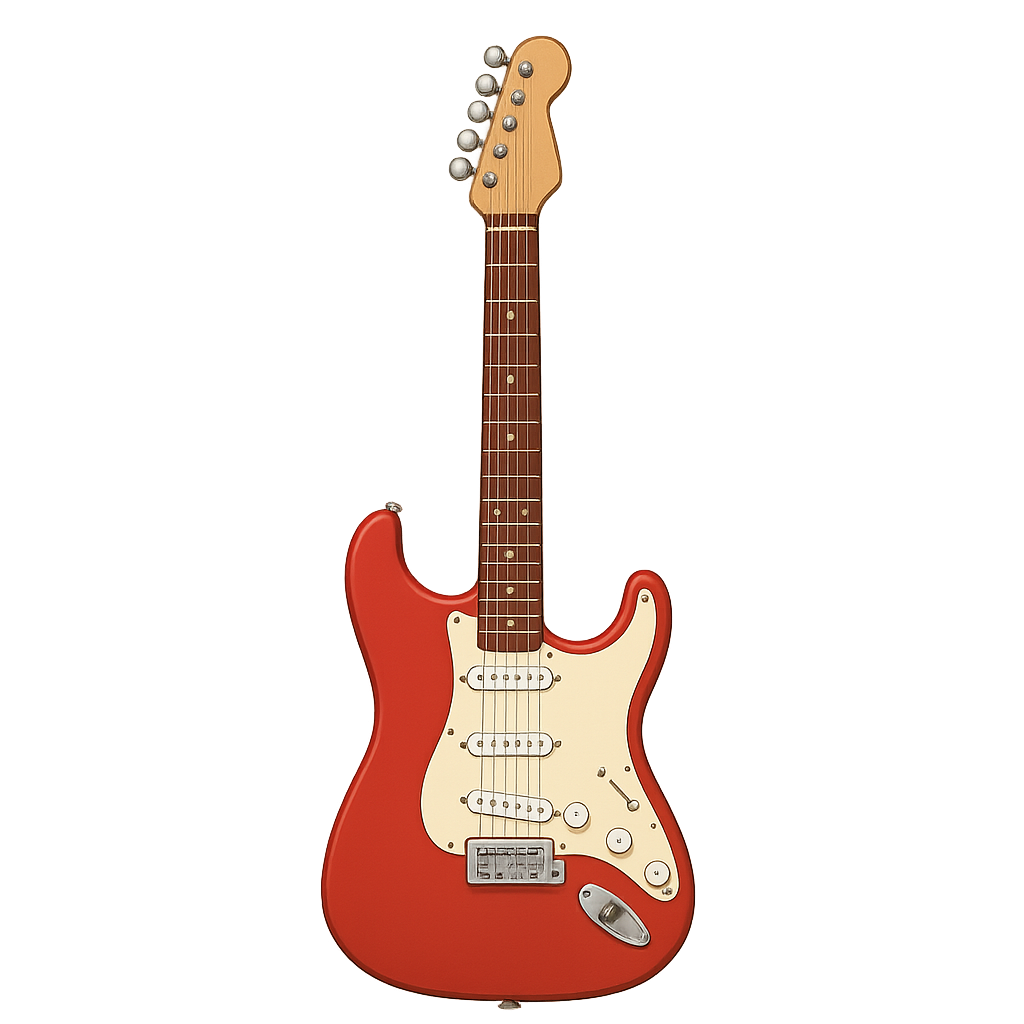
Hello there. You have probably seen me on a stage, shining under bright lights while a musician plays an amazing solo. My name is the Electric Guitar, and my story is all about finding my voice. Before I came along, my family was much quieter. My ancestor, the acoustic guitar, had a beautiful, warm voice that came from its hollow wooden body. For many years, its gentle sound was perfect for small rooms and campfires. But as the world got louder in the 1920s and 1930s, so did the music. Big dance bands with powerful drums, trumpets, and saxophones became very popular. My poor acoustic cousin tried its best to be heard, strumming as hard as it could, but its soft voice was often lost in the crowd of loud instruments. Imagine trying to whisper to a friend during a noisy parade. That’s what it felt like for the guitar. Musicians and inventors knew something had to change. They needed a guitar with a voice that could not just join the band, but lead it.
Many clever people dreamed of a guitar with a bigger voice. The breakthrough finally came in 1931. An inventor named George Beauchamp and his partner, Adolph Rickenbacker, had a brilliant idea. What if, instead of using a hollow body to make sound, they could capture the wiggle of my strings and turn it into electricity? They created a special set of magnets they called a 'pickup.' When my metal strings vibrated over the pickup, they created a tiny electrical signal. This signal traveled through a wire to a speaker called an amplifier, which made it loud enough for everyone to hear. The very first version of me was nicknamed the 'Frying Pan' because it had a round body and a long neck. It was not very fancy, but it worked. My voice could finally cut through the noise. But my journey was not over. A musician and inventor named Les Paul knew I could be even better. Around 1941, he noticed that hollow guitars could make a terrible, high-pitched squeal called 'feedback' when they were amplified. To solve this, he built a guitar with a solid block of wood right through the middle. He called his creation 'The Log.' It looked a little strange, but it proved a very important point: a solid body was the secret to a clean, powerful sound. Then, on August 3rd, 1950, a man named Leo Fender took all these great ideas and created the first solid-body me that could be built for musicians everywhere. My solid body meant I could sing out with pure, long notes without any unwanted buzzing or feedback. I had finally found my true, strong voice.
Once I was perfected and plugged into the world, music was never the same again. My powerful, versatile voice was exactly what musicians had been waiting for. I helped create whole new kinds of music that were full of energy and emotion. The soulful sound of the blues became even more expressive, and then came rock and roll, a new kind of music full of excitement and rebellion that was perfect for me. I could be played with a gentle touch one moment, then roar with power the next. Musicians discovered they could do amazing things with me. They could bend my strings to make my notes cry and soar, or play lightning-fast solos that made entire stadiums of people cheer. I gave artists a brand new way to express their feelings and tell their stories through sound. From the early rock and rollers to the biggest stars of today, I have been there to help them create. Looking back, I see I did more than just get louder. I gave a voice to new generations of dreamers. I am proud that I am still rocking all over the world, helping people share a piece of their heart through the power of music.
Activities
Take a Quiz
Test what you learned with a fun quiz!
Get creative with colors!
Print a coloring book page of this topic.