English

The Great Depression
The Great Depression was a severe worldwide economic depression that took place mostly during the 1930s…
Reads at Grades 3–5 Listens at Grades 1–5
Print & create
Answer keys·No prep·Free with an account
28 worksheets · answer keys · full story · quiz · Ages 8-10 · CEFR B1
Plus adds 280,000+ more stories in 27 languages, audio for every one, and printables for all of them.
Just want The Great Depression?
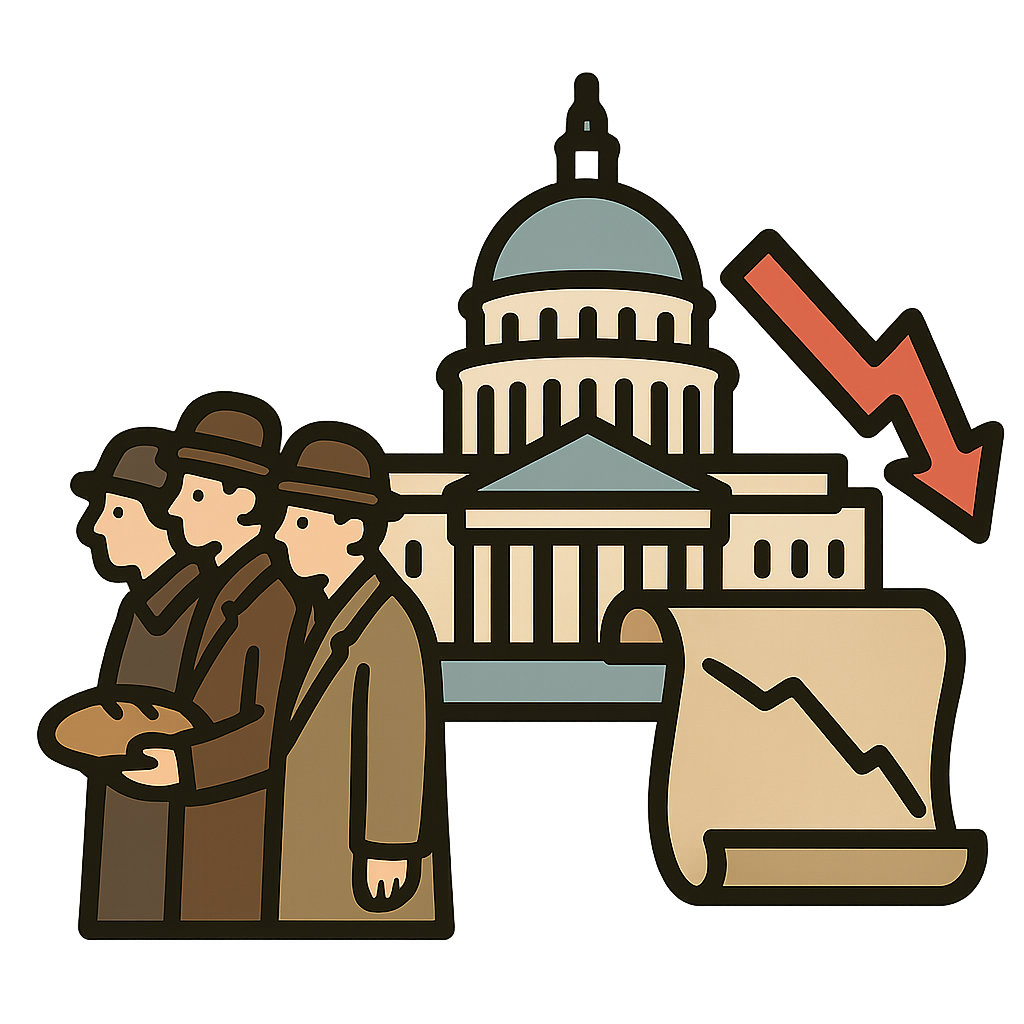
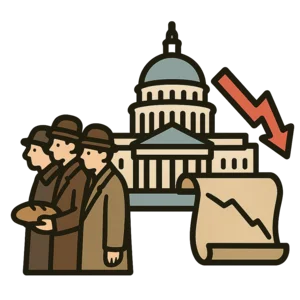
Hello there. My name is Franklin Delano Roosevelt, and I had the great honor of serving as the president of the United States during one of its most challenging times. Before the trouble began, America was living through a very exciting period called the 'Roaring Twenties.' It felt like a wonderful, long party. New cars zipped down newly paved roads, families gathered around radios to listen to music and stories, and everyone felt a great sense of optimism, a belief that things would just keep getting better and better. People were buying things and investing their money in businesses, which we call the stock market. It seemed like the prosperity would never end. But then, it did. On a day I'll never forget, October 29, 1929, something happened that shook our country to its very core. The Stock Market crashed. Imagine our whole country had a giant piggy bank where everyone's savings and investments were kept. Now, imagine that one day, someone dropped that piggy bank and it shattered into a million pieces. The money, the value, was suddenly gone. That’s what it felt like. The happy music of the Roaring Twenties stopped. Businesses and factories that had been humming with activity went silent. People who had jobs one day found themselves without one the next. The lines at banks were long with worried people, but often the money just wasn't there. Soon, the lines were for bread and soup, as families struggled to find enough to eat. The country’s bright smile had faded, replaced by a look of worry and fear. It was a time we called the Great Depression.
Franklin D. Roosevelt and the Promise of a New Deal
Hello there. My name is Franklin Delano Roosevelt, and I had the great honor of serving as the president of the United States during one of its most challenging times. Before the trouble began, America was living through a very exciting period called the 'Roaring Twenties.' It felt like a wonderful, long party. New cars zipped down newly paved roads, families gathered around radios to listen to music and stories, and everyone felt a great sense of optimism, a belief that things would just keep getting better and better. People were buying things and investing their money in businesses, which we call the stock market. It seemed like the prosperity would never end. But then, it did. On a day I'll never forget, October 29, 1929, something happened that shook our country to its very core. The Stock Market crashed. Imagine our whole country had a giant piggy bank where everyone's savings and investments were kept. Now, imagine that one day, someone dropped that piggy bank and it shattered into a million pieces. The money, the value, was suddenly gone. That’s what it felt like. The happy music of the Roaring Twenties stopped. Businesses and factories that had been humming with activity went silent. People who had jobs one day found themselves without one the next. The lines at banks were long with worried people, but often the money just wasn't there. Soon, the lines were for bread and soup, as families struggled to find enough to eat. The country’s bright smile had faded, replaced by a look of worry and fear. It was a time we called the Great Depression.
By the time I was elected president in 1932, the American people were desperate for a change. They were tired of being scared and hungry. They wanted hope. I felt the weight of their trust on my shoulders, and I promised them a 'New Deal.' This wasn't just a slogan; it was a promise of action, a promise to try new, bold ideas to fight the Depression. I knew I couldn't just sit in the White House; I had to speak directly to the people. We had this wonderful invention, the radio, and I decided to use it to talk to families right in their living rooms. We called these talks my 'fireside chats.' I would sit by a fireplace and imagine I was a guest in your home, explaining my plans in a calm, clear voice. I wanted everyone to understand what we were doing and to feel that we were all in this together. My New Deal was a collection of programs designed to solve specific problems. The biggest problem was that people had no jobs. So, we created the Civilian Conservation Corps, or the CCC. We hired thousands of young men and sent them to our national parks and forests. They planted over three billion trees, carved hiking trails, and built campgrounds. They earned money to send home to their families, and they made our country more beautiful. We also started the Works Progress Administration, the WPA. This program hired people to do all sorts of things. They built thousands of schools, hospitals, and bridges that we still use today. But it wasn't just about construction. The WPA also hired artists to paint colorful murals in post offices and libraries, and writers to travel the country and record the stories of everyday Americans. We were not just rebuilding our country with bricks and steel, but also lifting its spirit with art and culture.
Those years were difficult, but I saw something remarkable happen. In the face of hardship, the American people came together. Neighbors shared what little food they had. Communities organized to help those who had lost their homes. This spirit of cooperation was the most powerful tool we had. I couldn't be everywhere at once, but my wonderful wife, Eleanor, became my eyes and ears. She traveled all over the nation, visiting coal mines in the mountains, small farms on the dusty plains, and crowded neighborhoods in the big cities. She would sit and talk with people, listen to their worries, and hear about their courage. She would then come back and tell me everything, ensuring that the voices of the forgotten were heard in the White House. Her reports helped me understand where our New Deal was working and where we needed to do more. Looking back, I see that the Great Depression taught us a hard but valuable lesson. We learned that we are at our strongest not when we stand alone, but when we stand together. We rebuilt our country, not just with government programs, but with a renewed sense of community and care for one another. We proved that even after the darkest storm, the sun can and will shine again, especially when we help each other find the light.
Wow facts
About
The Great Depression was a severe worldwide economic depression that took place mostly during the 1930s, beginning in the United States.
Take a Quiz
Question 1 of 5
In the story, I said the Stock Market Crash was like a 'giant piggy bank for the country suddenly breaking.' What does this phrase really mean?
Explore next


Want to do even more?
Go beyond exploring. Unlock tools that turn every story into real learning.

Storypie Plus for families
Full stories, quizzes, and printables. Nights and car rides, sorted.
- Unlimited audio stories
- Create Mode: your child stars in the story
- Offline downloads
- Printable worksheets & coloring pages

Why Storypie for Schools
Students engaged. Prep in seconds. Evenings back to you.
- Worksheets & Quizzes
- Classroom Management
- Formative Assessment
- Custom Curriculum & Lesson Plans
- 27 Languages

Why Storypie for Homeschool
Curriculum done. They'll ask for more. Hours back in your day.
- Worksheet Generator
- First-Person Audio Stories
- Built-in Comprehension Quizzes
- Custom Curriculum & Lesson Plans
- Print & Go Activities