

 English

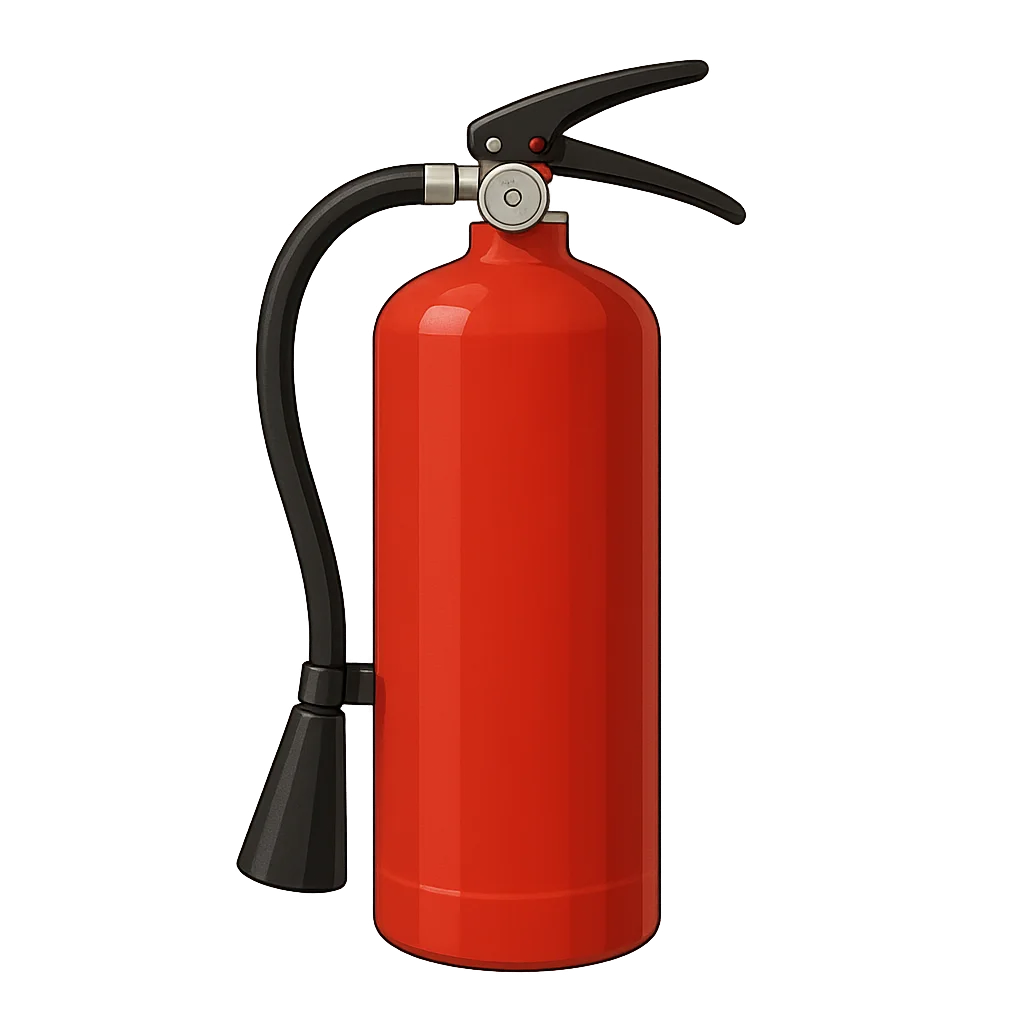
The Silent Guardian: My Story as the Fire Extinguisher
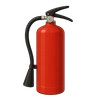
You’ve probably seen me a hundred times, hanging silently on a wall in your school hallway, in a restaurant kitchen, or tucked away in a corner of an office. I am the Fire Extinguisher, a bright red cylinder with a nozzle and a handle, waiting for an emergency that I hope never comes. But before I became a common sight, the world was a very different, and often more dangerous, place. Imagine a time when the flicker of a single candle could spell doom for an entire city block. In those days, fire was a terrifying, untamed beast. When it awoke, people were armed with little more than leather buckets filled with water or sand. They would form long lines, passing buckets from hand to hand from the nearest well or river, a frantic and often futile race against the consuming flames. A small kitchen fire could quickly devour a home, and then a neighbor's, and then the whole street, all because there was no way to stop it at its source. I was born from a question that arose from the ashes of such disasters: what if people didn't have to wait for the fire to become a monster? What if they had a tool, right there with them, to extinguish the spark before it became an inferno? That simple, yet revolutionary, idea was my beginning.
My first true form was conceived in the mind of a compassionate and clever man named Captain George William Manby. He was an English inventor who, in 1813, witnessed a terrible fire that broke out in Edinburgh, Scotland. He stood among the crowds, watching helplessly as the flames climbed higher and higher, and he was struck by the inefficiency of the bucket brigades. He knew there had to be a better way. His frustration turned into inspiration, and he dedicated himself to finding a solution. By 1818, after much thought and experimentation, he brought me to life. I wasn't as sleek as my descendants are today; I was a heavy, three-gallon copper vessel. Inside, I held a solution of potassium carbonate—an alkali salt also known as pearl ash—mixed with water. But the real genius was what else was inside: compressed air. When someone turned my valve, this compressed air would forcefully expel the chemical solution in a powerful jet, directly at the base of the fire. For the first time, a single person could confront a small fire with a tool specifically designed to smother it quickly and effectively. I was the first modern, portable fire extinguisher, a handheld guardian ready to stand against the flames.
Like any new invention, I had room to grow. My initial design was effective, but inventors are always seeking to improve. The world was changing rapidly, and I had to change with it. A major leap forward came in the 1880s, thanks to an American inventor named Almon M. Granger. He created what became known as the soda-acid extinguisher. His design was ingenious because it created its own pressure. Inside, a small vial of sulfuric acid was suspended above a solution of sodium bicarbonate and water. When I was turned upside down, the acid mixed with the solution, creating a furious chemical reaction that produced carbon dioxide gas. This gas built up immense pressure, forcing the water out with great velocity. It was a clever, self-contained system. But as the 20th century dawned, new challenges arose. Electricity became common, and with it came the risk of electrical fires. Spraying water on such a fire was incredibly dangerous. Factories began using flammable liquids, which water often just spread around. I needed to evolve again. This led to the creation of my specialized cousins. For electrical fires, carbon dioxide extinguishers were developed, which smother flames without conducting electricity. For flammable liquids, my foam and dry chemical powder versions were born. They work by creating a barrier that starves the fire of oxygen. I learned that to be a true guardian, I couldn't be a one-size-fits-all solution; I had to adapt to protect people from every new danger that arose.
Today, I am a universal symbol of safety and preparedness. I stand watch in nearly every building you enter, a quiet promise of protection. My bright red color is designed to catch your eye, a constant reminder that while we hope for the best, we must always be prepared for the worst. My purpose has grown beyond simply putting out fires. I represent empowerment. I give ordinary people—teachers, office workers, homeowners—the ability to take immediate action in the first critical moments of a fire, potentially saving not just property, but lives. I am the result of over two centuries of human ingenuity, a testament to our relentless drive to solve problems and protect one another. So the next time you see me on the wall, give me a little nod. I may be silent, but I am always ready. My story is one of innovation and adaptation, but most importantly, it's a story about how one good idea, refined over time, can help make the entire world a safer place for everyone. My greatest hope is that you will never need me, but it is my greatest honor to be there if you do.
Activities
Take a Quiz
Test what you learned with a fun quiz!
Get creative with colors!
Print a coloring book page of this topic.








 Free for Educators