

 English

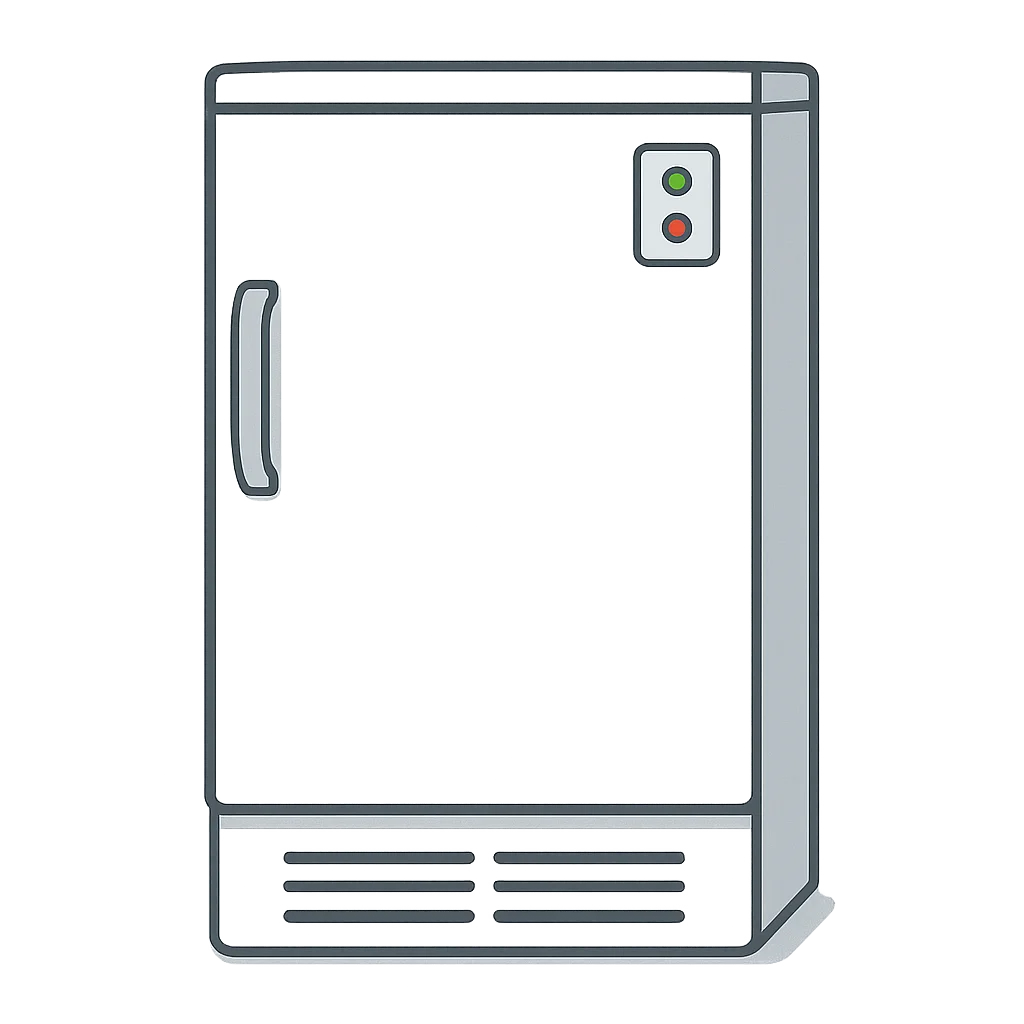
A Cool Story: The Tale of the Freezer
Hello there. You might know me by my gentle hum or the frosty puff of air that greets you when you open my door. I am a freezer, the chilly, humming box in your kitchen full of wonderful treasures. I hold onto everything from sweet summer strawberries to frosty pizza pops, keeping them perfectly preserved for you. But it wasn't always so easy to keep food fresh. Before I came along, the world was a much warmer, and often, a much smellier place. Families had to rely on cool, dark cellars or iceboxes, which were just cupboards with a big block of ice inside. The ice would melt and drip, and food would still spoil quickly. A treat like ice cream was something you could only have on a very special occasion, right after it was made, because there was no way to keep it frozen for tomorrow. The race against time was constant, and losing meant wasting precious food.
My story didn't start in a kitchen, but in the curious minds of scientists long ago. My earliest ancestors were just chilly ideas. A very clever man named William Cullen started it all. On April 15th, 1710, he showed the world a little bit of magic. He demonstrated that when a liquid evaporates, or turns into a gas, it pulls heat away and makes its surroundings colder. It’s the same reason you feel a chill when you get out of a swimming pool on a breezy day. Then, many years later on August 14th, 1834, an inventor named Jacob Perkins took that idea and built my great-great-grandfather: the very first working machine that could make ice. It was a clunky, strange-looking contraption, but it worked. It proved that humans didn't have to wait for winter to get ice. These were the first frosty steps, the sparks of genius that would one day lead to me.
But the person who truly brought me to life for your food was a man with a wonderful name for a cold-weather adventurer: Clarence Birdseye. Around the year 1912, his work took him to the frosty, windswept land of Labrador in Canada. It was incredibly cold there, with temperatures dropping far below zero. While there, he spent time with the Inuit people and watched them fish. He was amazed by what he saw. In the biting wind, the fish they pulled from the icy water froze almost instantly. They became solid in just a few minutes. Months later, when these fish were thawed and cooked, Mr. Birdseye tasted one. It was delicious. It tasted just as fresh as the day it was caught. This was his brilliant, world-changing idea. He realized that freezing food very, very quickly—what he called 'flash-freezing'—was the secret. Slow freezing created large, sharp ice crystals that would tear the food apart and make it mushy. But flash-freezing made tiny, smooth crystals that kept the food perfect. He was so excited, he rushed back home to his workshop and by 1925, he had invented my direct parent, the Quick-Freeze Machine.
After Mr. Birdseye perfected his idea, it was only a matter of time before I found my way into kitchens everywhere. Starting in the 1940s, families began welcoming me into their homes. I brought so much joy and convenience. Suddenly, you could buy food when it was on sale and save it for weeks. You could cook a big pot of soup and save the leftovers for another night, without any worry. Best of all, you could enjoy the taste of summer sunshine by eating frozen strawberries in the middle of a snowy winter. My job today is more important than ever. I help families save money and stop good food from being wasted. I keep meals ready for busy nights and, of course, I am the trusted guard of your favorite ice cream, popsicles, and other delicious treats. I am proud to be a helpful, reliable, and very cool friend in your kitchen, always humming away and ready with a frosty surprise.
Activities
Take a Quiz
Test what you learned with a fun quiz!
Get creative with colors!
Print a coloring book page of this topic.












 Free for Educators