English

The Refrigerator
A household and commercial appliance that uses refrigeration to keep food and drinks cold…
Reads at Grades 3–5 Listens at Grades 1–5
Print & create
Answer keys·No prep·Free with an account
28 worksheets · answer keys · full story · quiz · Ages 8-10 · CEFR B1
Plus adds 244,000+ more stories in 27 languages, audio for every one, and printables for all of them.
Just want The Refrigerator?
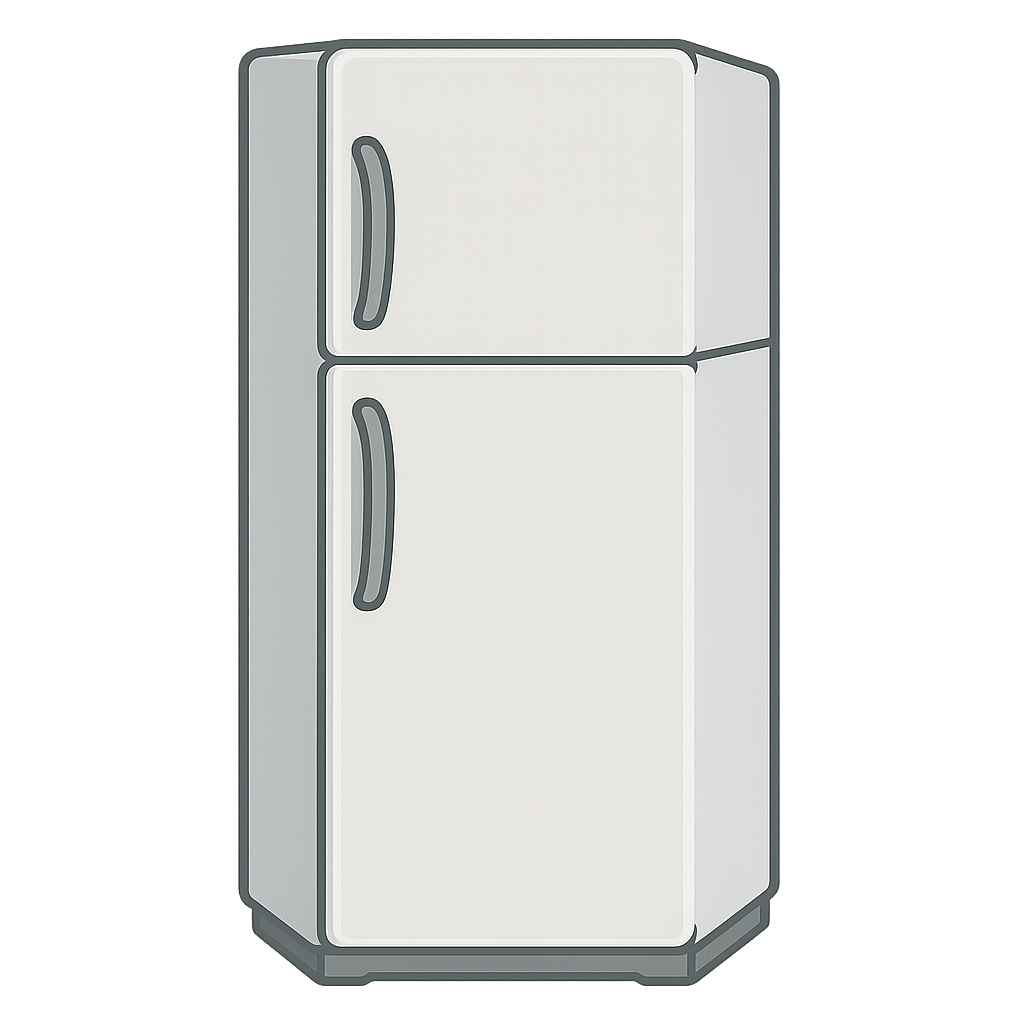
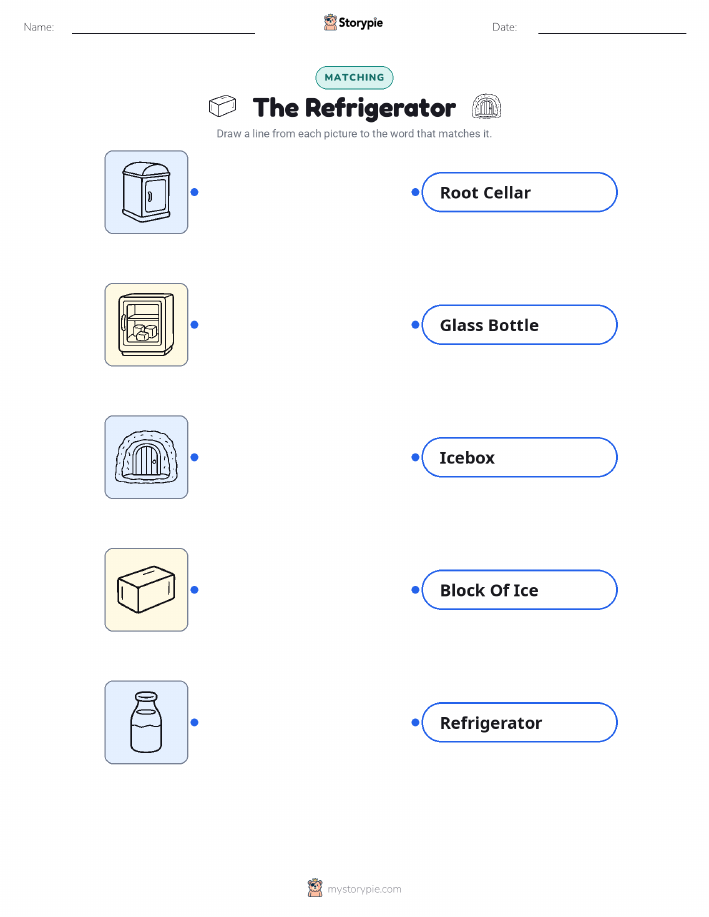
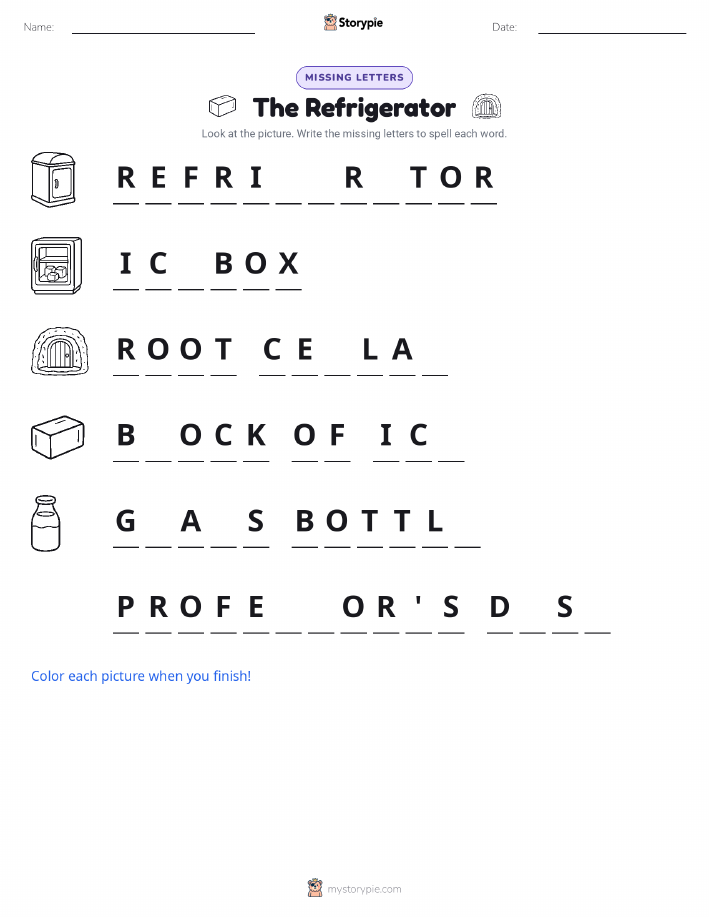
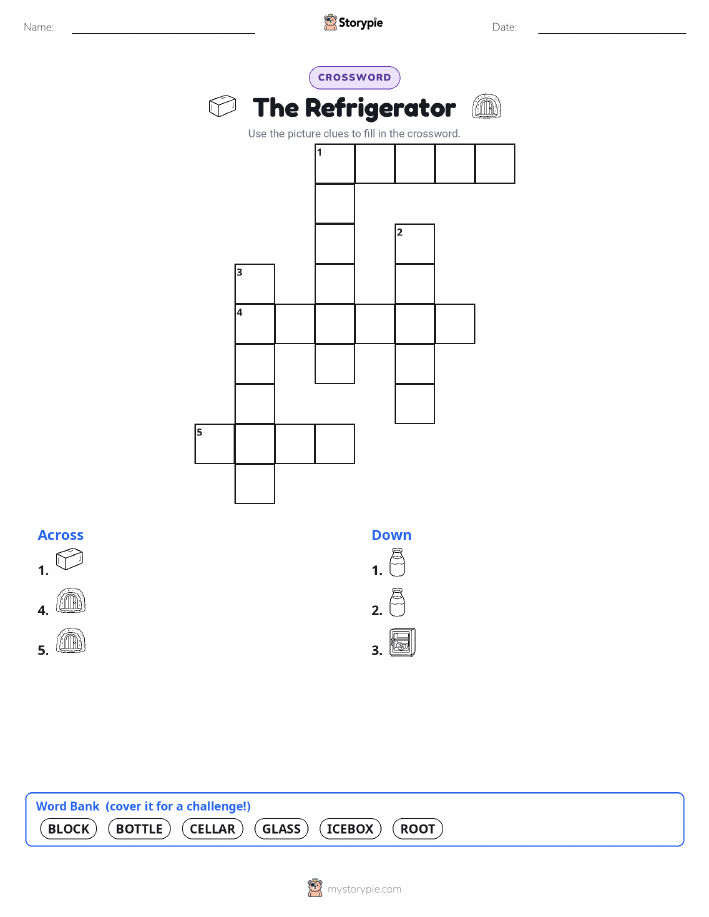
Hello there. You probably see me every day, standing quietly in your kitchen, humming a happy, gentle tune. I'm your refrigerator, the cool, humming friend who keeps your yogurt tangy, your carrots crunchy, and your juice perfectly chilled. But have you ever stopped to wonder what life was like before I came along? Can you imagine a world without me? It was a constant, tricky race against time to keep food from spoiling. Long ago, families had to be very clever. They would dig cool, dark rooms under their houses called root cellars, where they stored potatoes, onions, and apples in the damp earth. In places with cold winters, they would pack snow into deep pits, cover it with straw, and use the frozen block to keep things chilly through the spring. The closest thing to me was a wooden cabinet called an 'icebox.' It looked a bit like me, but it had a secret: it couldn't make its own cold. Every few days, a strong person called the 'iceman' would arrive in a horse-drawn wagon or a truck, carrying a giant, glistening block of ice. He would hoist it onto his shoulder and put it into a special compartment at the top of the icebox. As the ice melted, cold air would sink down and cool the food. But it was messy, with a drip pan that always needed emptying, and the ice never lasted long enough. Food still spoiled much faster than it does today. That was the big, sticky, melty problem I was born to solve.
My story didn't begin with a single flash of genius. It was more like a long, chilly journey with many brilliant minds helping to shape me into who I am today. You could say my family tree is full of very cool inventors. It all started with a whisper of an idea way back in 1755 with a Scottish professor named William Cullen. He discovered the secret ingredient to my magic. He noticed that when a liquid evaporates—that is, when it turns from a liquid into a gas, like a puddle drying up on a hot day—it absorbs heat and makes everything around it colder. He proved this in a little demonstration, but he didn't build a machine. He was like my great-great-great-grandfather of coolness, the one who first understood my secret power. Decades later, in 1805, an American inventor named Oliver Evans drew up detailed plans for a cooling machine that used vapor instead of ice. He was a dreamer who saw the future, but he was too busy with his other inventions, like steam engines, to actually build it. The first person to take these ideas and create a real, working version of me was another American, Jacob Perkins, in 1834. His machine was a true spectacle. It was an enormous, noisy contraption of pipes and pumps that could churn out ice day and night. But it was far too big and clunky for a family kitchen. It was more suited for big businesses like breweries or meatpacking plants. For many years, I was just a big, industrial machine, working hard behind the scenes. The real turning point, when I started dreaming of a home, came in 1913. A clever man named Fred W. Wolf from Chicago, Illinois, had a brilliant thought: what if every family could have their own personal cooling machine? He created the first electric refrigerator designed for a home kitchen, calling it the 'DOMELRE.' It was a small unit that sat on top of a family's old icebox, turning it into a modern marvel. He was the one who first imagined me standing in your home. Finally, in 1927, a big company called General Electric made me a star with their famous 'Monitor-Top' model. They put my motor and compressor in a funny-looking round container on top, which made me look like I was wearing a neat metal hat. They made thousands of me, and soon, families everywhere wanted a reliable, humming friend like me in their kitchen.
The Refrigerator's Cool Story
Hello there. You probably see me every day, standing quietly in your kitchen, humming a happy, gentle tune. I'm your refrigerator, the cool, humming friend who keeps your yogurt tangy, your carrots crunchy, and your juice perfectly chilled. But have you ever stopped to wonder what life was like before I came along? Can you imagine a world without me? It was a constant, tricky race against time to keep food from spoiling. Long ago, families had to be very clever. They would dig cool, dark rooms under their houses called root cellars, where they stored potatoes, onions, and apples in the damp earth. In places with cold winters, they would pack snow into deep pits, cover it with straw, and use the frozen block to keep things chilly through the spring. The closest thing to me was a wooden cabinet called an 'icebox.' It looked a bit like me, but it had a secret: it couldn't make its own cold. Every few days, a strong person called the 'iceman' would arrive in a horse-drawn wagon or a truck, carrying a giant, glistening block of ice. He would hoist it onto his shoulder and put it into a special compartment at the top of the icebox. As the ice melted, cold air would sink down and cool the food. But it was messy, with a drip pan that always needed emptying, and the ice never lasted long enough. Food still spoiled much faster than it does today. That was the big, sticky, melty problem I was born to solve.
My story didn't begin with a single flash of genius. It was more like a long, chilly journey with many brilliant minds helping to shape me into who I am today. You could say my family tree is full of very cool inventors. It all started with a whisper of an idea way back in 1755 with a Scottish professor named William Cullen. He discovered the secret ingredient to my magic. He noticed that when a liquid evaporates—that is, when it turns from a liquid into a gas, like a puddle drying up on a hot day—it absorbs heat and makes everything around it colder. He proved this in a little demonstration, but he didn't build a machine. He was like my great-great-great-grandfather of coolness, the one who first understood my secret power. Decades later, in 1805, an American inventor named Oliver Evans drew up detailed plans for a cooling machine that used vapor instead of ice. He was a dreamer who saw the future, but he was too busy with his other inventions, like steam engines, to actually build it. The first person to take these ideas and create a real, working version of me was another American, Jacob Perkins, in 1834. His machine was a true spectacle. It was an enormous, noisy contraption of pipes and pumps that could churn out ice day and night. But it was far too big and clunky for a family kitchen. It was more suited for big businesses like breweries or meatpacking plants. For many years, I was just a big, industrial machine, working hard behind the scenes. The real turning point, when I started dreaming of a home, came in 1913. A clever man named Fred W. Wolf from Chicago, Illinois, had a brilliant thought: what if every family could have their own personal cooling machine? He created the first electric refrigerator designed for a home kitchen, calling it the 'DOMELRE.' It was a small unit that sat on top of a family's old icebox, turning it into a modern marvel. He was the one who first imagined me standing in your home. Finally, in 1927, a big company called General Electric made me a star with their famous 'Monitor-Top' model. They put my motor and compressor in a funny-looking round container on top, which made me look like I was wearing a neat metal hat. They made thousands of me, and soon, families everywhere wanted a reliable, humming friend like me in their kitchen.
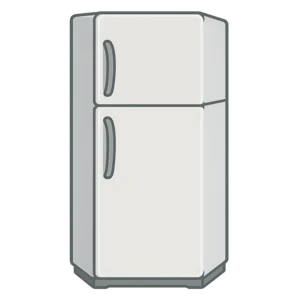
Once I started arriving in homes, the world became a fresher, more delicious place. Suddenly, families could say goodbye to the constant worry of food spoiling and the drippy mess of the icebox. Leftovers from Sunday dinner could be safely enjoyed on Tuesday. Milk, cheese, and butter stayed fresh for weeks instead of days. Can you imagine being able to have a scoop of ice cream on a hot afternoon, right from your own freezer? Or enjoying crisp lettuce for a salad even when it wasn't growing in the garden? I made all of that possible. People could buy more groceries at once, saving them time and money on daily trips to the market. This meant less wasted food, which was good for family budgets and for the planet. I didn't just keep things cold; I changed how people ate. I brought families new flavors, healthier choices, and the simple joy of a cold drink on a summer day. And my story isn't over. I’m still changing and getting better. My newer cousins are much smarter than I am. They use far less electricity, which is called being 'energy-efficient,' and some can even connect to the internet to tell you when you're running low on milk. My mission, however, has always been the same: to keep your food safe, fresh, and tasty for you and your family. It’s a very cool job, and I’m proud to do it every single day.
Wow facts
About
A household and commercial appliance that uses refrigeration to keep food and drinks cold, preserving them and preventing spoilage.
Take a Quiz
Question 1 of 5
The story says early refrigerators were 'enormous' and 'clunky.' What do you think 'clunky' means in this sentence?
Explore next




Want to do even more?
Go beyond exploring. Unlock tools that turn every story into real learning.

Storypie Plus for families
Full stories, quizzes, and printables. Nights and car rides, sorted.
- Unlimited audio stories
- Create Mode: your child stars in the story
- Offline downloads
- Printable worksheets & coloring pages

Why Storypie for Schools
Students engaged. Prep in seconds. Evenings back to you.
- Worksheets & Quizzes
- Classroom Management
- Formative Assessment
- Custom Curriculum & Lesson Plans
- 27 Languages

Why Storypie for Homeschool
Curriculum done. They'll ask for more. Hours back in your day.
- Worksheet Generator
- First-Person Audio Stories
- Built-in Comprehension Quizzes
- Custom Curriculum & Lesson Plans
- Print & Go Activities