English

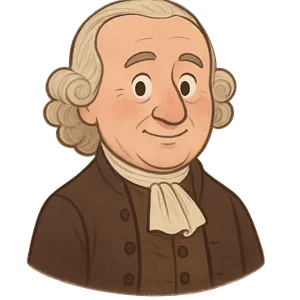
William Cullen
A Scottish physician, chemist, and agriculturalist who was a key figure in the Scottish Enlightenment.
Reads at Grades 3–5 Listens at Grades 1–5
Print & create
Answer keys·No prep·Free with an account
28 worksheets · answer keys · full story · quiz · Ages 8-10 · CEFR B1
Plus adds 244,000+ more stories in 27 languages, audio for every one, and printables for all of them.
Just want William Cullen?
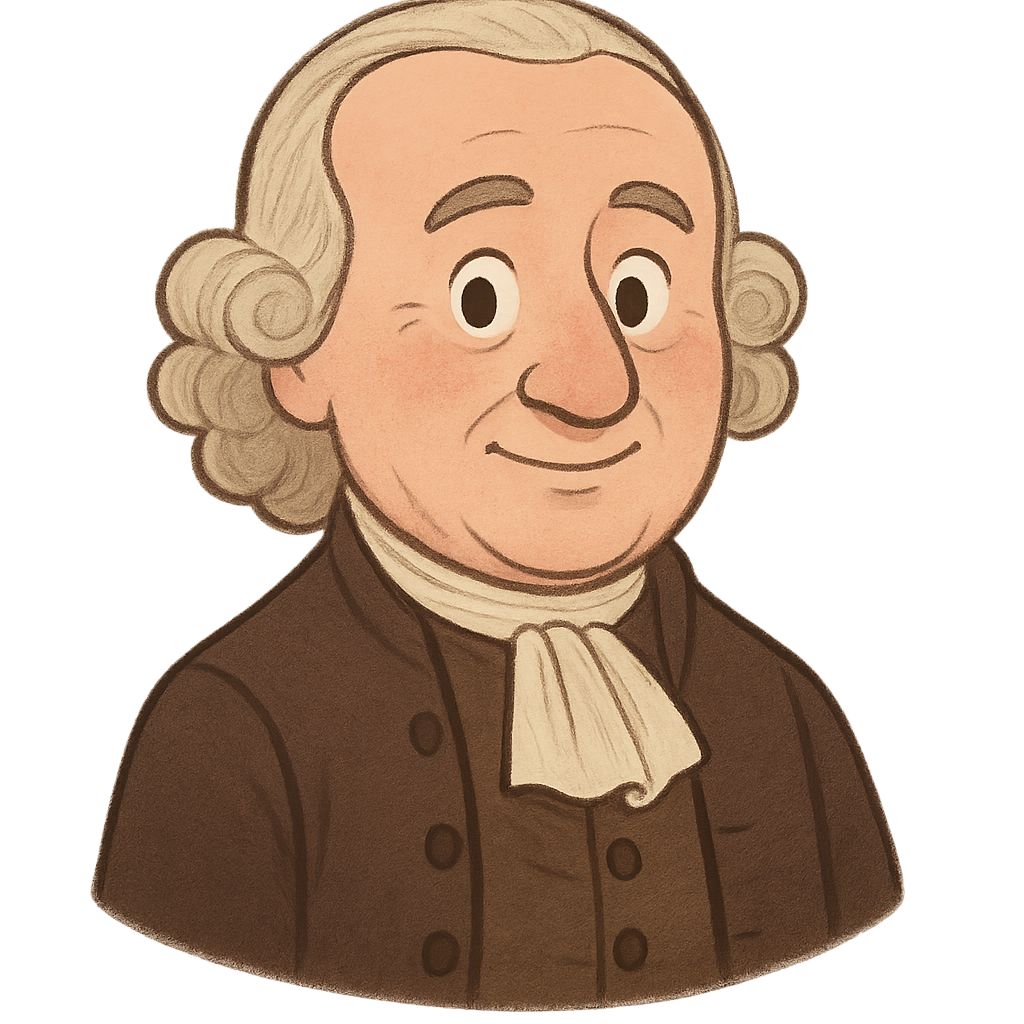
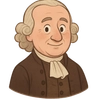
Hello there. My name is William Cullen, and I was a doctor and a scientist who loved to ask questions. I was born on April 15th, 1710, in a town called Hamilton, in Scotland. Even as a boy, I was fascinated by how the world worked. I would look at a plant and wonder, 'How does it grow?' or feel the cool evening air and think, 'Why does it get chilly when the sun goes down?'. This curiosity was a powerful guide for me. In 1726, it led me to the University of Glasgow to study medicine, which was the perfect way to learn about the science of life and find answers to my many questions.
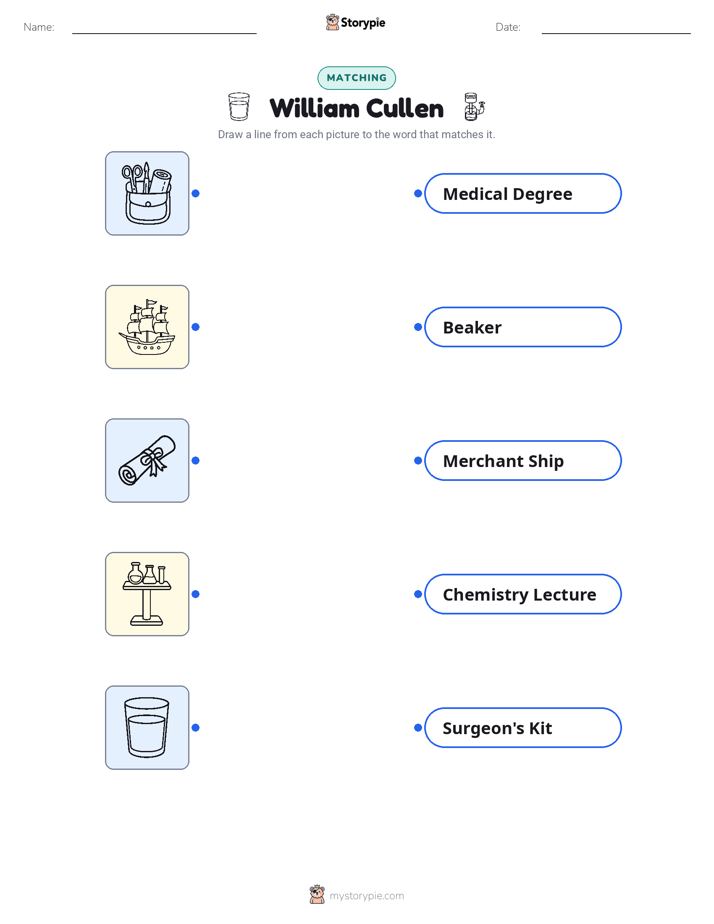
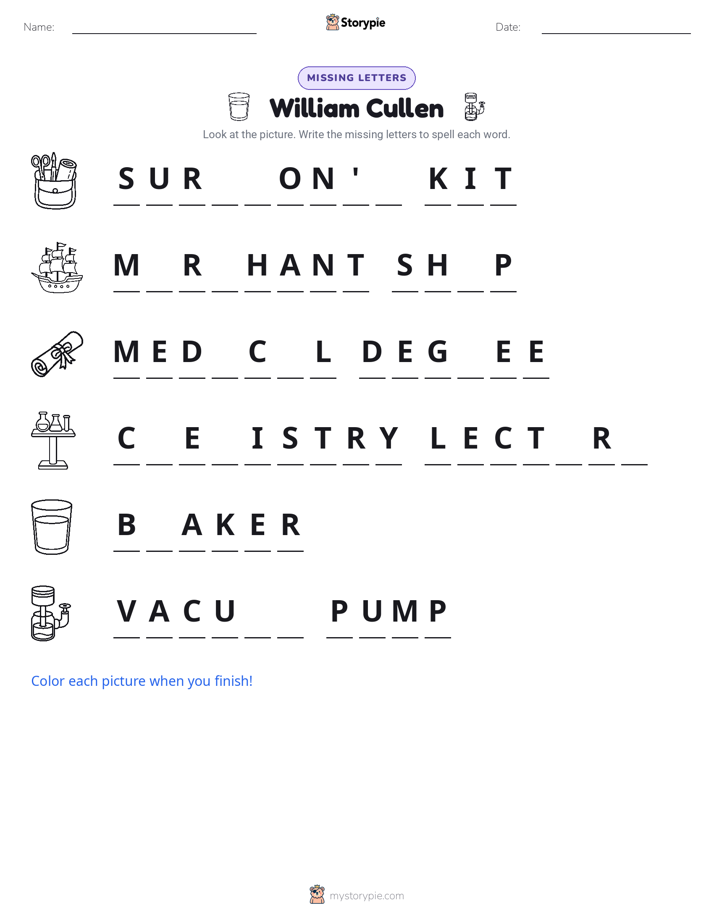
After becoming a doctor, I discovered something else I loved just as much as science: teaching. In 1747, I became a lecturer in chemistry at the University of Glasgow. Back then, chemistry wasn't taught the way it is today, and I wanted to make it exciting and easy to understand for everyone. I organized my lessons carefully, did live experiments in front of my students, and wrote books so that they could see the magic of chemistry for themselves. My classes became very popular. In 1755, I moved to the famous University of Edinburgh to teach both chemistry and medicine. I was so proud to share my knowledge with bright young students, like my famous pupil Joseph Black, who also became a great scientist.
One of my biggest 'I wonder...' moments led to my most famous discovery. I had noticed that when a liquid evaporates—like when a puddle dries up—it makes the surface underneath it feel cooler. I wanted to see if I could use this idea to make something really cold. So, in 1756, I set up an experiment. I took a liquid called diethyl ether and put it under a glass container. Then, I used a pump to remove the air from the container. With less air pressing down on it, the ether started to boil very quickly, even though it wasn't hot. As it boiled and turned into a gas, it pulled all the heat from the air around it. It got so cold that a little bit of ice formed on the outside of the container. It was the first time anyone had ever shown how to make ice artificially. I had demonstrated the basic idea behind refrigeration.
The Story of William Cullen
Hello there. My name is William Cullen, and I was a doctor and a scientist who loved to ask questions. I was born on April 15th, 1710, in a town called Hamilton, in Scotland. Even as a boy, I was fascinated by how the world worked. I would look at a plant and wonder, 'How does it grow?' or feel the cool evening air and think, 'Why does it get chilly when the sun goes down?'. This curiosity was a powerful guide for me. In 1726, it led me to the University of Glasgow to study medicine, which was the perfect way to learn about the science of life and find answers to my many questions.
After becoming a doctor, I discovered something else I loved just as much as science: teaching. In 1747, I became a lecturer in chemistry at the University of Glasgow. Back then, chemistry wasn't taught the way it is today, and I wanted to make it exciting and easy to understand for everyone. I organized my lessons carefully, did live experiments in front of my students, and wrote books so that they could see the magic of chemistry for themselves. My classes became very popular. In 1755, I moved to the famous University of Edinburgh to teach both chemistry and medicine. I was so proud to share my knowledge with bright young students, like my famous pupil Joseph Black, who also became a great scientist.
One of my biggest 'I wonder...' moments led to my most famous discovery. I had noticed that when a liquid evaporates—like when a puddle dries up—it makes the surface underneath it feel cooler. I wanted to see if I could use this idea to make something really cold. So, in 1756, I set up an experiment. I took a liquid called diethyl ether and put it under a glass container. Then, I used a pump to remove the air from the container. With less air pressing down on it, the ether started to boil very quickly, even though it wasn't hot. As it boiled and turned into a gas, it pulled all the heat from the air around it. It got so cold that a little bit of ice formed on the outside of the container. It was the first time anyone had ever shown how to make ice artificially. I had demonstrated the basic idea behind refrigeration.
Besides my work as a teacher and scientist, I was also a busy doctor. I cared for many people throughout my life and was considered one of the most important physicians in Scotland. My work was so respected that I even became the First Physician to the King in Scotland, which was a great honor. I always believed that understanding science, especially chemistry, made me a better doctor. It helped me understand how the human body works and how medicines could help people feel better.
I lived a long and curious life, filled with experiments and teaching. I lived to be 79 years old, passing away in 1790. I never built a refrigerator for your kitchen, but my cooling experiment in 1756 showed other scientists and inventors that it was possible. My work was like the first small snowball that started an avalanche of ideas, leading to the refrigerators and air conditioners that keep your food fresh and your homes cool today. I hope you'll always stay curious, just like I did, and never stop asking 'I wonder...'
Wow facts
About
A Scottish physician, chemist, and agriculturalist who was a key figure in the Scottish Enlightenment. He is best known for his pioneering work in artificial refrigeration and for giving the first-ever public demonstration of artificial refrigeration in 1748.
Take a Quiz
Question 1 of 5
In the story, William Cullen says his curiosity was a 'powerful guide.' What does this mean?
Explore next

Want to do even more?
Go beyond exploring. Unlock tools that turn every story into real learning.

Storypie Plus for families
Full stories, quizzes, and printables. Nights and car rides, sorted.
- Unlimited audio stories
- Create Mode: your child stars in the story
- Offline downloads
- Printable worksheets & coloring pages

Why Storypie for Schools
Students engaged. Prep in seconds. Evenings back to you.
- Worksheets & Quizzes
- Classroom Management
- Formative Assessment
- Custom Curriculum & Lesson Plans
- 27 Languages

Why Storypie for Homeschool
Curriculum done. They'll ask for more. Hours back in your day.
- Worksheet Generator
- First-Person Audio Stories
- Built-in Comprehension Quizzes
- Custom Curriculum & Lesson Plans
- Print & Go Activities