English

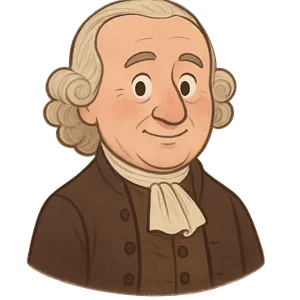
William Cullen
A Scottish physician, chemist, and agriculturalist who was a key figure in the Scottish Enlightenment.
Reads at Grades 6–8 Listens at Grades 4–8
Print & create
Answer keys·No prep·Free with an account
28 worksheets · answer keys · full story · quiz · Ages 10-12 · CEFR B2
Plus adds 244,000+ more stories in 27 languages, audio for every one, and printables for all of them.
Just want William Cullen?
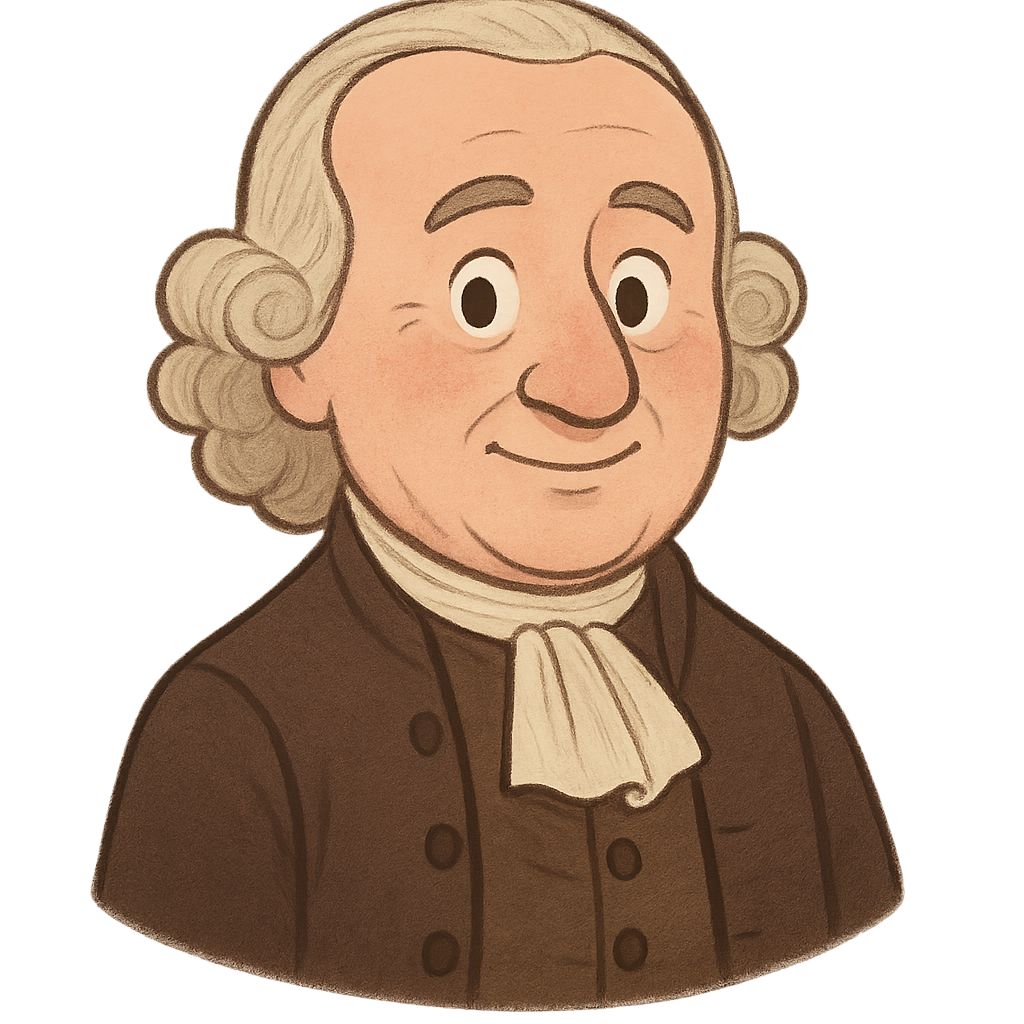
Hello! My name is William Cullen, and I’d like to tell you my story. I was born on April 15th, 1710, in a town called Hamilton, in Scotland. Even as a boy, I was fascinated by how the world worked, especially the human body and the mysterious substances that made up everything around us. This curiosity led me to become an apprentice to a surgeon in Glasgow, where my journey into the world of science and medicine truly began.
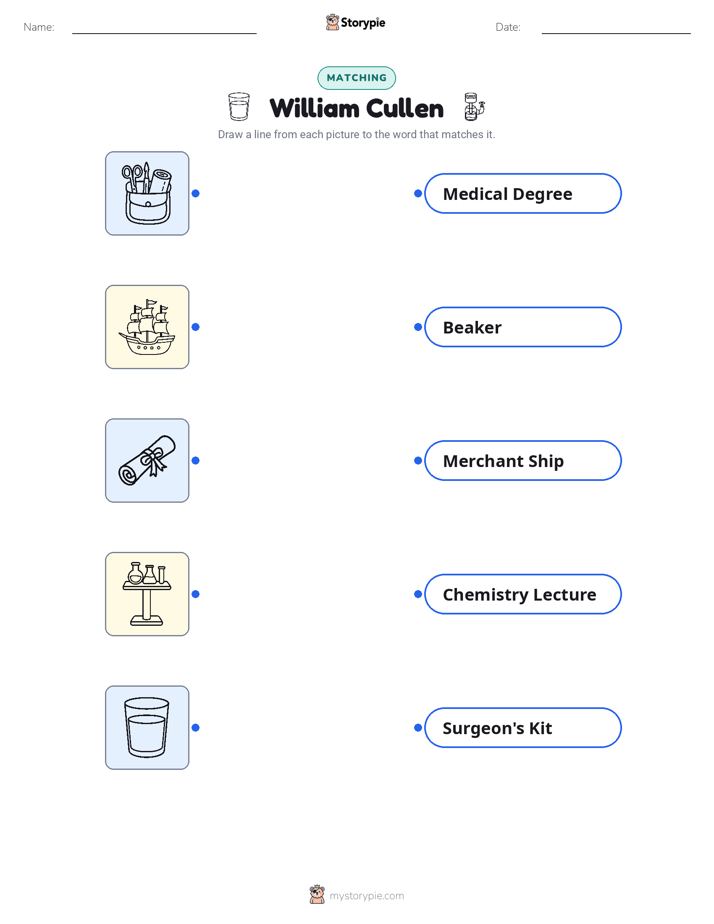
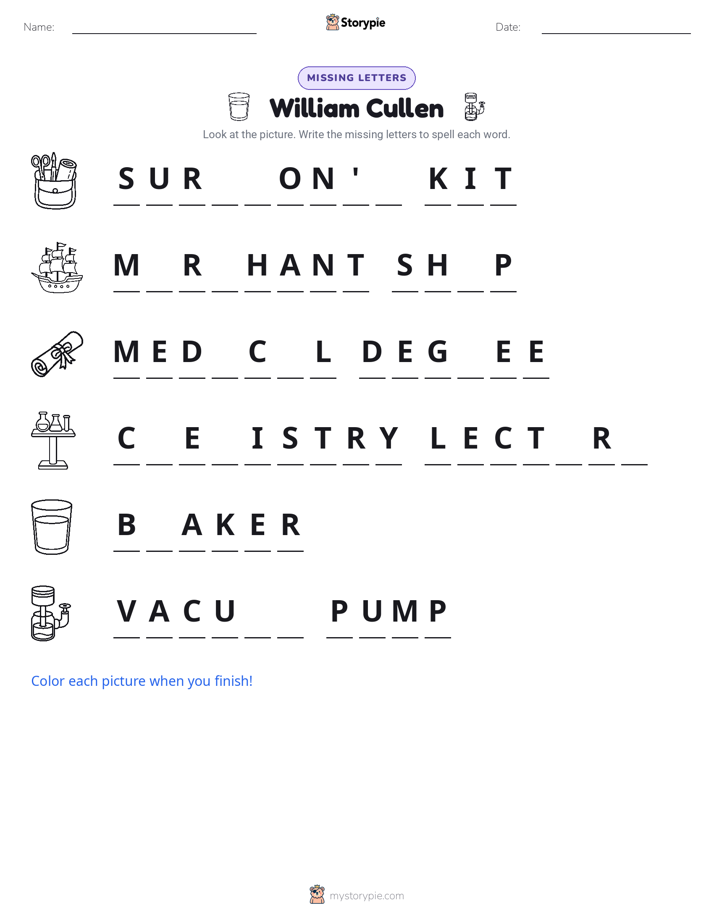
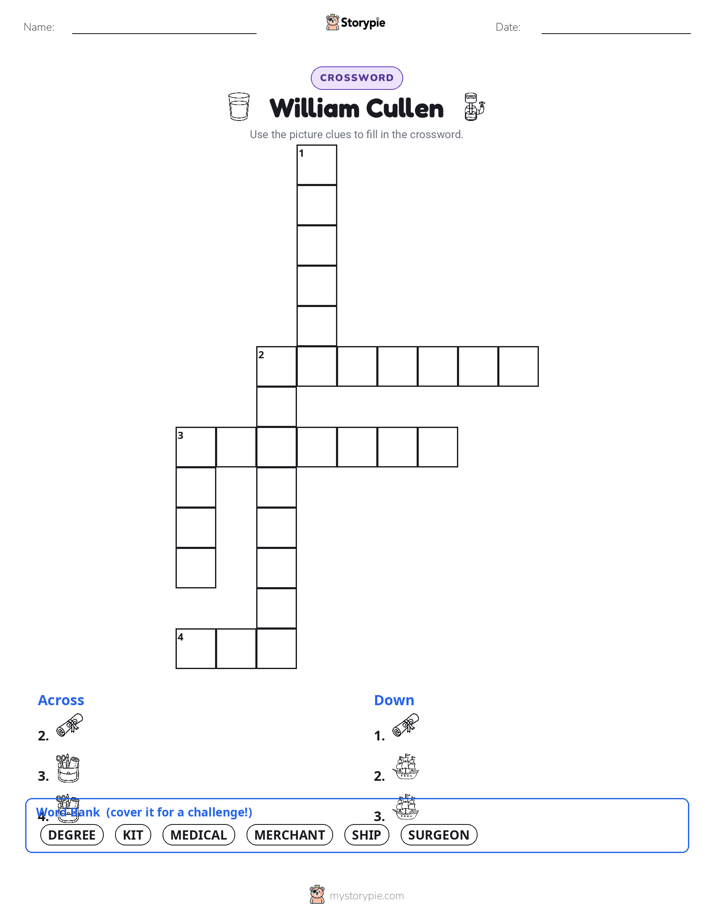
My thirst for knowledge was unquenchable. Around 1726, I enrolled at the University of Glasgow, but I also sought adventure and practical experience as a surgeon on a merchant ship sailing to the West Indies. After my travels, I returned to Scotland, determined to become a doctor. I started my own medical practice in Hamilton in 1736 and officially earned my medical degree from the University of Glasgow in 1740. I soon discovered that I loved teaching as much as I loved learning. In 1747, I began giving lectures in chemistry at the University of Glasgow—the very first of their kind at the university! It was exciting to share my passion and make science understandable and useful for my students.
One of my most exciting discoveries happened in 1756, after I had become a professor at the famous University of Edinburgh. I was experimenting with a liquid called diethyl ether and a vacuum pump. I wondered what would happen if I removed the air from a container with the ether inside. As the pump created a partial vacuum, the ether began to boil very quickly, even though it wasn't hot. This rapid evaporation needed energy, and it took that energy in the form of heat from the air around the container. I watched in amazement as a small amount of ice formed on the outside of the container! I had shown that the process of evaporation could create intense cold. This was the first-ever public demonstration of artificial refrigeration. It was a groundbreaking moment that laid the foundation for the refrigerators and air conditioners we all use today.
William Cullen: The Father of Refrigeration
Hello! My name is William Cullen, and I’d like to tell you my story. I was born on April 15th, 1710, in a town called Hamilton, in Scotland. Even as a boy, I was fascinated by how the world worked, especially the human body and the mysterious substances that made up everything around us. This curiosity led me to become an apprentice to a surgeon in Glasgow, where my journey into the world of science and medicine truly began.
My thirst for knowledge was unquenchable. Around 1726, I enrolled at the University of Glasgow, but I also sought adventure and practical experience as a surgeon on a merchant ship sailing to the West Indies. After my travels, I returned to Scotland, determined to become a doctor. I started my own medical practice in Hamilton in 1736 and officially earned my medical degree from the University of Glasgow in 1740. I soon discovered that I loved teaching as much as I loved learning. In 1747, I began giving lectures in chemistry at the University of Glasgow—the very first of their kind at the university! It was exciting to share my passion and make science understandable and useful for my students.
One of my most exciting discoveries happened in 1756, after I had become a professor at the famous University of Edinburgh. I was experimenting with a liquid called diethyl ether and a vacuum pump. I wondered what would happen if I removed the air from a container with the ether inside. As the pump created a partial vacuum, the ether began to boil very quickly, even though it wasn't hot. This rapid evaporation needed energy, and it took that energy in the form of heat from the air around the container. I watched in amazement as a small amount of ice formed on the outside of the container! I had shown that the process of evaporation could create intense cold. This was the first-ever public demonstration of artificial refrigeration. It was a groundbreaking moment that laid the foundation for the refrigerators and air conditioners we all use today.
My work wasn't just about chemistry experiments. I was a dedicated physician and a professor at the University of Edinburgh starting in 1755. I cared deeply for my patients and my students. I organized my ideas about diseases into a system that helped other doctors understand and treat illnesses more logically. I was lucky to live during a time of incredible discovery in Scotland, now known as the Scottish Enlightenment. I was surrounded by brilliant thinkers, and I had the privilege of teaching many students who went on to become great scientists themselves, including the famous chemist Joseph Black. I believed that science should be used to improve people's lives, and I spent my career trying to do just that.
I lived a long and fulfilling life dedicated to science and teaching, and I lived to be 79 years old. While I never built a machine to keep food cold, my 1756 experiment was the scientific seed from which all modern refrigeration grew. My greatest legacy, I believe, is in the minds of the thousands of students I taught. I helped change medicine from a practice based on old traditions to one based on careful observation and scientific thinking. My work helped pave the way for a healthier and more comfortable world.
Wow facts
About
A Scottish physician, chemist, and agriculturalist who was a key figure in the Scottish Enlightenment. He is best known for his pioneering work in artificial refrigeration and for giving the first-ever public demonstration of artificial refrigeration in 1748.
Take a Quiz
Question 1 of 5
In your own words, retell the key events of William Cullen's 1756 experiment.
Explore next

Want to do even more?
Go beyond exploring. Unlock tools that turn every story into real learning.

Storypie Plus for families
Full stories, quizzes, and printables. Nights and car rides, sorted.
- Unlimited audio stories
- Create Mode: your child stars in the story
- Offline downloads
- Printable worksheets & coloring pages

Why Storypie for Schools
Students engaged. Prep in seconds. Evenings back to you.
- Worksheets & Quizzes
- Classroom Management
- Formative Assessment
- Custom Curriculum & Lesson Plans
- 27 Languages

Why Storypie for Homeschool
Curriculum done. They'll ask for more. Hours back in your day.
- Worksheet Generator
- First-Person Audio Stories
- Built-in Comprehension Quizzes
- Custom Curriculum & Lesson Plans
- Print & Go Activities